Sea Turtles Hatch

Finnegan Flynn
| 26-11-2026
 · Animal team
An unexpected wildlife event has brought a new chapter to California’s coastal environment. For the first time on record, olive ridley sea turtles nested on the US west coast, and two months later, dozens of hatchlings successfully made their way into the Pacific Ocean.
The arrival of the young turtles is significant not only because of the unusual location, but also because it gives researchers an opportunity to understand why the species has appeared so far north of its typical nesting areas.
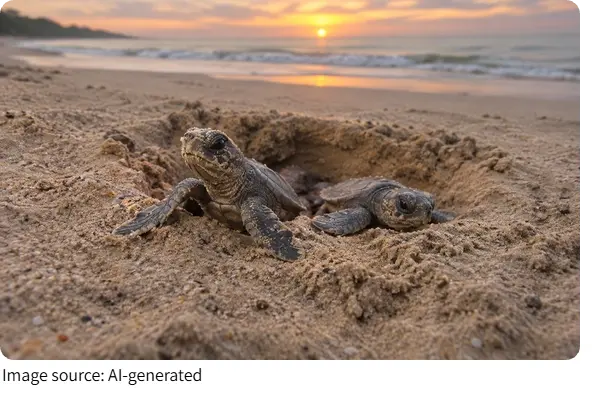
A total of 75 hatchlings emerged from two nests in southern California. Their eggs were carefully incubated at the Aquarium of the Pacific in Long Beach before the young turtles were released near the beaches where their nests had originally been found.
A Rare Nesting Event on the West Coast
The first nest was recorded on 16 September 2026 at Seal Beach. An olive ridley turtle was seen digging into the sand and laying eggs, marking the first documented occasion of a sea turtle nesting on the US west coast.
Just three days later, another turtle was observed nesting at Huntington Beach. The discovery of two separate nests within such a short period attracted attention from researchers and wildlife specialists because olive ridley turtles are generally associated with warmer tropical waters. The species is found across the Pacific, Indian and Atlantic oceans. It is also known to nest around the southern end of Baja California, but California's beaches represent a notable extension of the locations recorded in this event.
75 Hatchlings Return to the Ocean
The eggs were transferred to the Aquarium of the Pacific's animal care facility for incubation. The decision followed concerns about changing weather conditions and the need to protect the developing eggs. The aquarium reported that the first group emerged after an incubation period of 58 days. On Saturday, 54 hatchlings from the Seal Beach nest were released into the Pacific during the early morning hours. Another 21 young turtles from Huntington Beach followed the next day.
Together, the two groups brought the total to 75 hatchlings. Their release marked an important moment for the teams involved, who had monitored the eggs and coordinated the process with local and federal partners. The successful emergence of the young turtles also provided an opportunity to observe a species completing an unusual nesting journey in a new location.
What Brought the Turtles to California?
Researchers have not established one definite explanation for the unusual nesting activity. However, the Aquarium of the Pacific suggested that several environmental factors may have played a role. One possibility is the development of El Niño conditions during 2026. This climate pattern can influence ocean temperatures and weather across different regions, potentially affecting the conditions experienced by marine species.
A recent tropical storm may also have contributed to the circumstances surrounding the turtles' arrival. Other possibilities include the gradual expansion of the species' range or navigational errors that brought individual turtles to unfamiliar beaches. Olive ridley turtles are also known for their behavioural flexibility. This may help explain why they can sometimes appear in places outside their more familiar nesting areas.
Weather Created Additional Challenges
The eggs required careful attention as weather conditions developed along the coast. When Hurricane Polo began forming in late September, researchers and their partners relocated 204 eggs from the two nests to the aquarium's animal care facility. Moving the eggs provided a more controlled environment for incubation and reduced their exposure to unpredictable conditions on the beaches.
The successful hatching of 75 young turtles was encouraging, although it did not mean every egg produced a hatchling. The process demonstrated the importance of monitoring unusual nesting locations and responding when environmental conditions create additional risks.
A Third Nest Raises More Questions
The monitoring effort continued beyond the first two discoveries. On 1 November, another nest was recorded in Ventura County, further indicating that the unusual nesting activity was not limited to Seal Beach and Huntington Beach. However, the third nest faced a different outcome. Unusually high tides swept away its eggs before they could complete development. Researchers considered El Niño conditions a possible contributor to the elevated tides.
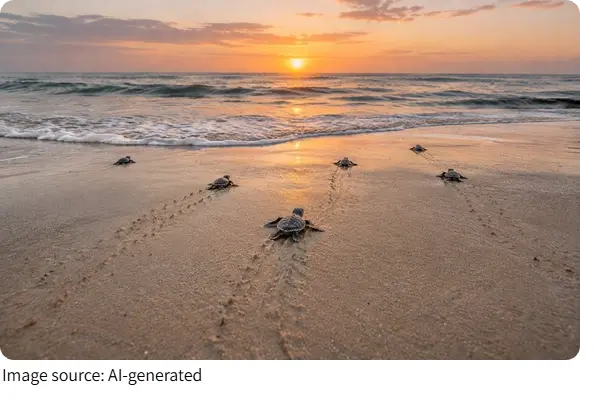
California's first recorded olive ridley sea turtle nests have created a valuable opportunity for researchers to learn more about the species and its changing nesting patterns. Whether the turtles return to California in future seasons remains uncertain. For now, continued monitoring and careful protection of nesting areas will help researchers understand this unusual event and prepare for any further appearances along the coast.