Why Horses Love Open Ground

Naveen Kumar
| 24-11-2026
 · Animal team
You'd think a horse would head for shade or a quiet corner of the field, but watch a herd for ten minutes and they'll drift toward the widest, flattest stretch of grass they can find.
That's not random. Their body is built for open ground, and the preference runs deeper than habit.
The Eyes Are Set Wide Apart
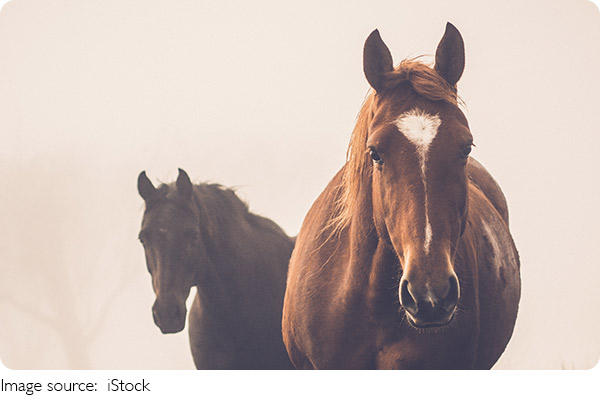
A horse's eyes sit on the sides of its head, which gives it close to 350 degrees of vision. That's a prey animal's layout, and it works best when nothing blocks the view. Put a horse in a treed paddock and every trunk and fence post becomes a blind spot it has to keep turning its head to check. Out on open grass, that problem mostly disappears. The one gap it can't see is right in front of its nose, which is why it lifts its head and looks around between bites.
Running Is the First Defense
Horses don't fight when something startles them. They run. The legs are long, the hooves are hard, and the whole body is tuned for a quick sprint across flat ground. Rough terrain slows that down. A field full of holes, roots, and gullies is a liability, and horses tend to avoid it once they've learned where the bad footing is. Open, even grass lets them hit top speed in a few strides, and that's the point.
The Stomach Wants Small, Steady Meals
A horse's digestive system is designed for near-constant grazing. The stomach is small relative to body size, and food moves through quickly, so a horse on good pasture will spend 14 to 16 hours a day eating. Open grassland supports that schedule. There's room to spread out, plenty of grass at a consistent height, and no need to compete for a narrow band. Turn a group out onto a large field and they'll fan across it, each one claiming a patch.
Herds Read the Field Together
Watch a group and you'll notice they don't all eat at once. At any moment, a few heads are up, scanning. That's how a herd stays safe, and it only works when the group has clear sightlines and space to spread. In a tight pen, one horse's movement sets off the whole group. On open ground, the alarm travels more slowly because each animal can see the source. It's a practical arrangement that keeps the group calm.
Heat and Flies Change the Picture
Open ground isn't always the answer. On a hot, still afternoon, horses will move to shade and stand nose to tail, swishing flies off each other's faces. Midday in summer, you'll often find them under trees or along a fence line rather than out in the middle. The preference for open grass is real, but it competes with comfort, and comfort usually wins when the sun is high.
What This Means for Your Paddock
If you're setting up a field, give them room. A bare minimum of about 1 to 2 acres per horse is the common figure for pasture, and more is better if you want the grass to hold up. Keep the middle open and put hay, water, and shelter toward the edges so the center stays clear for movement. Check for holes and uneven ground before you turn them out. And watch the herd for a few days. Where they choose to stand tells you more about the field than any chart will.
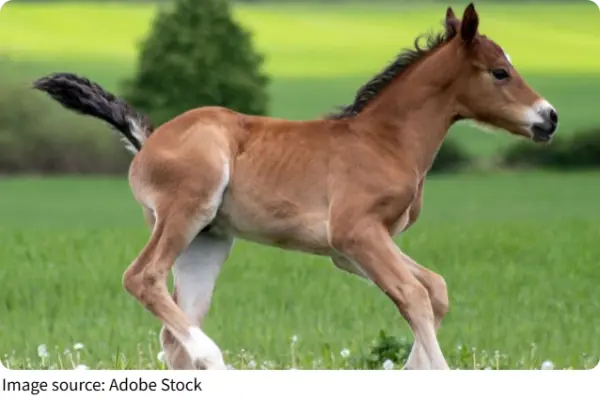
Next time you drive past a field and see horses strung out across the middle, heads down, you'll know it's not laziness or luck. That's a body doing exactly what it was shaped to do. Take a walk along the fence line and look at where the grass is worn down. The horses have already told you which part of the field they trust.