Automatic or Manual?

Maya
| 17-11-2026
 · Automobile team
The choice between an automatic and a manual affects more than changing gears. It shapes how a car feels, how much attention driving demands, and what to check before buying.
Neither suits every driver or every journey. Comparing how they work, the effort they require, and their upkeep helps explain which differences matter in everyday use.
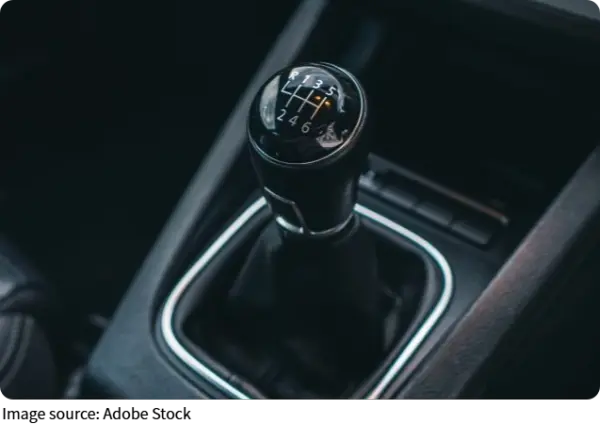
Who actually does the shifting
A manual gearbox has gears you select by hand using a clutch pedal and gear lever. Press the clutch, move the lever, then release the pedal to reconnect the engine through the selected ratio. The driver decides when to make that change.
An automatic chooses its ratio based on factors such as speed and accelerator input. Traditional automatics use a torque converter, while other designs use different mechanisms, including dual clutches. Automatic does not describe one single mechanical layout; the shared feature is that routine shifting does not require a clutch pedal.
The clutch pedal changes everything
In a manual, the clutch pedal controls engagement. Release it too fast when moving away and the car can lurch or stall. Learning to coordinate the pedal and accelerator is part of becoming comfortable with the car, particularly when traffic repeatedly stops and starts.
An automatic has no clutch pedal, so stop-and-go driving involves less pedal work. A manual asks your left leg to disengage and engage the clutch as traffic moves. That's the trade: direct involvement in each change, but more work when a queue keeps interrupting your progress.
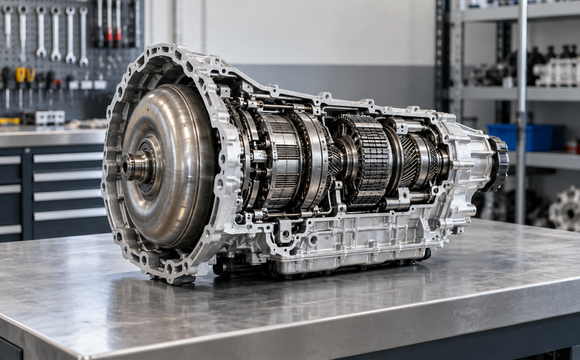
Cost and upkeep differ
A manual transmission is generally mechanically simpler, but that does not make every repair inexpensive. Clutch replacement costs and clutch life depend on the car, driving conditions, and use. Treat a seller's claim that a clutch will last for a particular distance cautiously unless its condition has been assessed.
Automatic transmission maintenance and repair costs also vary. A routine fluid service is not the same job as a rebuild, so comparing them as one expense is misleading. Ask for estimates for the specific model rather than assuming that either transmission will always be cheaper to own.
Manuals often offered better fuel economy in older models, but modern automatics have narrowed or reversed that advantage in many comparisons. Compare the actual versions you are considering. The gearbox label alone is not enough to tell you which car will use less fuel.
Control versus convenience
A manual lets you hold a gear on a long downhill grade, using engine braking rather than relying only on the brakes. You can also choose a ratio before a corner. Many automatics offer a manual-selection mode or lower-range setting, so they do not necessarily remove that choice.
The distinction is how often you want to make those decisions yourself. A manual can appeal to someone who enjoys coordinating the controls. An automatic can suit someone who wants less shifting work in traffic. Neither preference makes one transmission better for every driver.
What to check before you buy
Drive both versions of the same model if you can. Pay attention to clutch weight in the manual and how quickly the automatic downshifts when you ask for power. Include the kind of roads you normally use, rather than judging either car only on an unfamiliar route.
Ask about clutch condition and replacement history on a manual. For an automatic, check its service records against the manufacturer's maintenance requirements. These questions help identify gaps in the history, but they cannot rule out every expensive problem; an inspection matters when the condition is uncertain.
Before committing, request the service history and an itemized estimate for any work identified during inspection. Use those costs alongside your test-drive impressions when comparing the cars.