Read Your Cat's Mood

Kai
| 17-11-2026
 · Animal team
Hi there. You probably already know when your cat is annoyed.
The tail puffs up, the ears go flat, and you back off. But the eyes and ears alone give you a running commentary all day, and most people miss it because they're waiting for a meow instead.
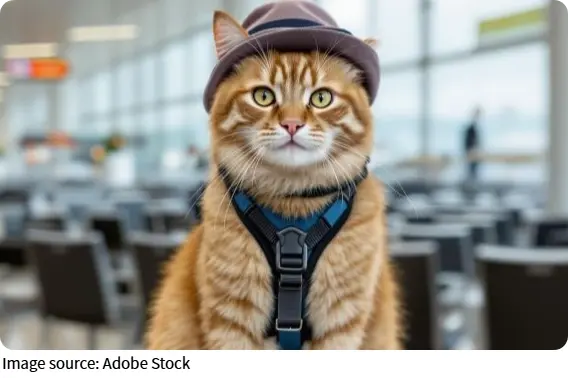
Blinking means trust, not sleepiness
A slow blink is the closest thing a cat has to saying "I'm fine with you." Watch for it when your cat is relaxed on the couch and you catch its gaze. It closes both eyes partway, holds for a second or two, then opens them. Cat behavior researchers call this a slow blink, and studies at the University of Sussex found that cats blink back more often when a person slow-blinks at them first. In the feline world, voluntarily closing your eyes near another creature proves you feel completely safe. Try it yourself: sit still, soften your gaze, blink slowly, and wait. If your cat returns the gesture, you've just shared a quiet conversation.
Dilated pupils are not always fear
Dilated pupils get a bad reputation. People see them and assume the cat is about to pounce or panic. Sometimes that's true, especially if the eyes stay wide in bright light while the body crouches low. But pupils also expand during play, right before a leap onto a feather toy, or when a treat bag rustles. The trick is reading the rest of the face: big pupils paired with forward ears signal playful excitement, whereas big pupils with ears pinned back mean fear—so step away slowly and give your cat space to cool down.
The ear positions that matter most
Powered by more than two dozen tiny muscles, cat ears swivel roughly 180 degrees, and each one moves independently. That flexibility makes ear position one of your most reliable mood indicators. Ears pointing forward and slightly out mean your cat is curious and comfortable. Ears turned sideways, flat against the head like airplane wings, signal fear or defensiveness. One ear back and one forward is a mixed state, often seen when a cat is unsure. You'll notice this at the vet's office more than anywhere else. And ears that flick toward a sound while the body stays loose? That's just listening. Nothing to worry about.
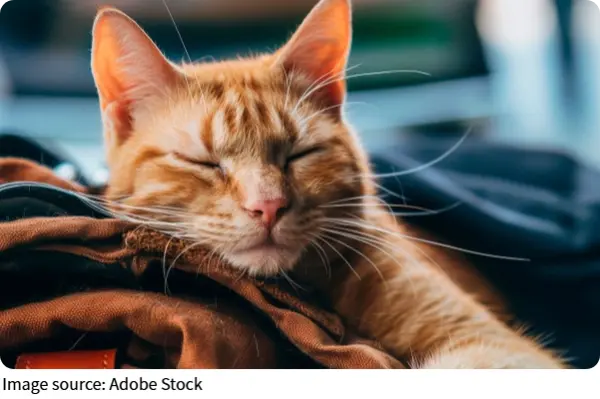
Watch the whole face together
No single signal works alone. A relaxed cat has soft eyes, half-closed lids, ears facing forward, and whiskers that drape naturally out to the sides. A stressed or defensive cat pulls its whiskers flat against the cheeks, turns its ears sideways, and keeps its pupils wide even in bright light. During hunting or intense play, those same whiskers fan forward to sense nearby movement. Your cat sends several cues at once, so read them as a set—and if the eyes look calm while the ears stay tense, trust the ears.
Why Cheek and Ear Rubs Matter
Head posture works alongside touch when your cat is feeling affectionate. When your cat presses its forehead, cheeks, or ears against your hand or shin—a behavior known as bunting—it is doing much more than asking for a scratch. Cats carry specialized scent glands along their cheeks, chin, and the base of their ears. Rubbing against you deposits calming pheromones that mark you as familiar, safe, and part of their trusted social group—a genuine feline compliment, even if it leaves fur on your jeans.
Put These Signals Into Practice
The next time your cat stares at you from across the room, don't just call its name and walk away. Pause to check where the ears are angled, notice the size of the pupils, and offer a slow, relaxed blink in return. Once you start reading those quiet, silent signals together, you'll understand your cat's mood far better than any meow could explain—and your cat will notice you're finally speaking its language.