Iguanas Under Threat!

Caroll Alvarado
| 16-11-2026
 · Animal team
The Galápagos Islands are home to some of the world's most unusual wildlife, including marine iguanas found nowhere else on Earth. These remarkable reptiles have adapted to life around the ocean, but their survival is facing growing pressure from illegal international trade.
Scientists are now urging Ecuador to strengthen its conservation measures and address weaknesses that allow protected iguanas to reach overseas collectors. Recent cases involving confiscated animals have raised concerns about how these reptiles are being removed from their natural environment and transported across borders.
Rising Concerns Over Marine Iguana Trade
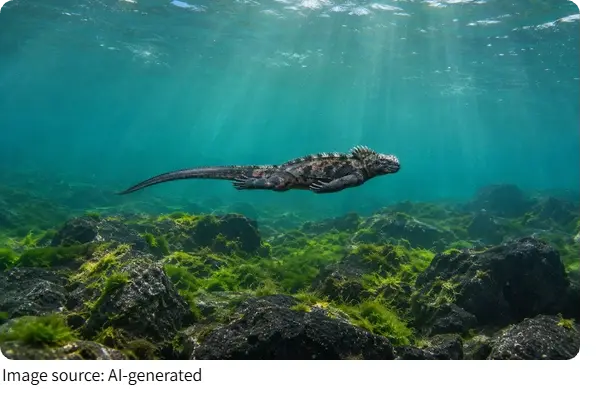
Marine iguanas (Amblyrhynchus cristatus) are unusual reptiles because they can swim in the ocean and feed on marine algae. Around 11 recognised subspecies inhabit different parts of the Galápagos archipelago, with some restricted to particular islands.
Their limited natural distribution makes them especially vulnerable to activities that remove individuals from the wild. Ecuadorian law prohibits taking wildlife from the Galápagos, while international commercial trade in these iguanas is also prohibited under the Convention on International Trade in Endangered Species of Wild Fauna and Flora (CITES). Despite these protections, demand from exotic animal collectors continues to create problems.
In August 2026, authorities at Quito airport intercepted a shipment containing 32 live marine iguanas. The animals had been placed inside eight plastic containers and were being transported towards Iceland. Officials reported that many were dehydrated when discovered, and they were transferred to a specialised conservation facility for treatment. Twenty-four surviving iguanas were later returned to the Galápagos.
Another case occurred in May, when three Thai nationals were arrested in Ecuador while carrying 12 young marine iguanas believed to be intended for overseas markets. Authorities have confiscated nearly 50 marine iguanas during 2026. However, conservation specialists warn that the number of animals recovered may represent only a small portion of the actual illegal trade.
Scientists Call for Stronger Monitoring
Marine conservationist Juan José Alava, based at Simon Fraser University in Canada, is among the scientists calling for more effective action. In a letter published in the journal Science, he and other researchers outline weaknesses that they believe need urgent attention.
Their recommendations include reviewing airport inspection procedures, improving systems for identifying wildlife shipments and investigating how illegal networks continue operating despite existing restrictions. The Galápagos already has strict visitor controls. Passenger belongings are inspected when people enter and leave the islands, while visitors must travel with authorised naturalist guides and maintain a minimum distance of two metres from wildlife.
However, recent confiscations suggest that regulations alone are not enough. The researchers argue that Ecuador should examine how prohibited animals pass through inspection systems and whether existing procedures are being properly followed. They also recommend greater oversight of airport operations and personnel responsible for protecting the islands. According to the researchers, identifying weaknesses throughout the inspection process is essential to preventing future cases.
Supporting Local Communities
The scientists also highlight the economic conditions that can make illegal wildlife collection attractive to some local residents. Artisanal fishing communities in the Galápagos and coastal Ecuador face difficulties linked to declining fish availability and limited income opportunities.
Sandra Altherr, co-founder of the German conservation organisation Pro Wildlife, says international traders may depend on local contacts to locate animals rather than collecting them personally. This arrangement can involve people who know the islands and their wildlife supplying information or helping external buyers obtain protected species.
Alava argues that conservation efforts should therefore include practical economic support for fishing communities. Providing alternative sources of income could reduce the financial pressure that makes illegal activities appealing. Environmental conditions may add to these difficulties. The scientists point to the possibility of a strong El Niño event in 2027, which could affect fishing opportunities and create further uncertainty for coastal households.
Closing Gaps in International Trade Rules
Another concern involves the way captive-bred animals are sometimes traded internationally. Although Ecuador has not declared legal exports of its endemic iguanas, other countries have issued CITES permits for specimens described as captive-bred. Previous investigations have raised questions about whether the origins of some animals were properly verified.
Protecting Galápagos marine iguanas requires more than declaring them a protected species. Ecuador must ensure that airport inspections work effectively, while international authorities need reliable systems for checking the origins of animals offered for trade.
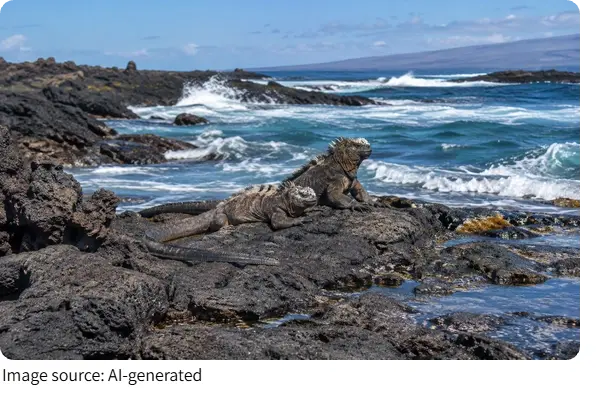
Supporting local communities is equally important because conservation becomes more sustainable when people have realistic economic opportunities that do not depend on collecting protected wildlife. Marine iguanas are a distinctive part of the Galápagos ecosystem. Stronger national enforcement, improved international regulations and continued scientific attention could help safeguard their populations and preserve the islands' remarkable natural heritage for future generations.