Baby Seals on Ice

Mukesh Kumar
| 10-11-2026
 · Animal team
For harp seals, not all sea ice offers the same conditions for raising a newborn pup. The location and quality of the ice can make a difference during the early stages of a young seal’s life. Females need a suitable floating platform where they can give birth, nurse their pups, and provide a place for them to rest after weaning.
Researchers studying these seals have found that they tend to favor thicker ice rather than simply choosing areas with the greatest overall ice coverage.

Why Sea Ice Matters to Harp Seals
Harp seals depend on drifting pack ice during their breeding season. Unlike animals that raise their young on land, these seals use floating ice as a platform for several important stages of early development. Newborn pups have limited mobility, so the surface beneath them needs to remain suitable for an extended period. Females also need access to the water while caring for their young. The ice therefore serves several purposes, providing a place for birth, nursing, and resting.
Not All Ice Is Equally Suitable
A study published in the Canadian Journal of Zoology in 2011 examined the types of sea ice preferred by harp seals in the Gulf of St. Lawrence. Researchers C. E. Bajzak, M. O. Hammill, G. B. Stenson, and S. Prinsenberg investigated whether females selected particular ice conditions for breeding. Their findings showed that harp seals preferred the thickest ice stages available in the region. These included grey-white ice and first-year ice.
Grey-white ice is a developing stage of sea ice, while first-year ice has formed during a single winter season. Both types can provide a more substantial platform than thinner ice. The results suggest that female harp seals do not simply settle on any available floating surface. Instead, their choice reflects the physical qualities of the ice and its suitability for supporting newborn pups.
What Researchers Examined
To understand these preferences, the researchers examined records of harp seal breeding locations in the Gulf of St. Lawrence. Their dataset covered the years 1977 through 2011. They compared the annual locations of breeding areas with information about sea ice thickness and the length of the ice season.
Rather than looking at the entire region as one uniform area, they considered three different scales: the whole Gulf of St. Lawrence, its southern section, and a traditional breeding area near the northwestern coast of the Magdalen Islands. This approach helped reveal differences that might have been overlooked by examining total ice coverage alone.
The researchers found that years with below-normal amounts of the preferred grey-white and first-year ice occurred more frequently when the entire gulf was considered. The pattern was less frequent when they focused on the traditional breeding area. This difference shows why the location of suitable ice deserves attention alongside the overall amount available.
Why Thickness and Timing Matter
One of the study's important findings was that the timing and distribution of suitable ice can be just as significant as its total extent. A region might have a considerable amount of sea ice, but that does not automatically mean the conditions are appropriate for harp seal breeding. If much of the available ice is too thin or located away from the areas where females traditionally gather, its usefulness may be limited.
The duration of the ice season also matters. The researchers reported that the frequency of lighter ice years increased during the last decade of the period they examined. They also observed a shorter ice season.
Looking Beyond Total Ice Coverage
The research offers a more detailed way to understand the relationship between harp seals and their icy habitat. Measuring the overall area covered by sea ice provides useful information, but it does not tell the whole story. For a species that relies on floating platforms during breeding, the characteristics of individual ice areas are especially relevant. Thickness, seasonal duration, and geographic distribution all help explain whether suitable conditions are available.
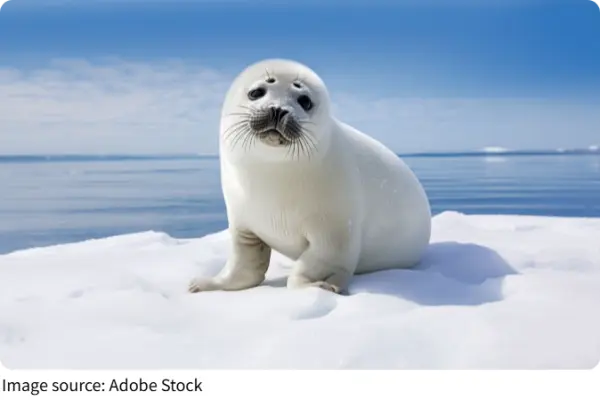
Harp seals depend on carefully selected ice conditions during one of the most important stages of their lives. Their preference for thicker grey-white and first-year ice shows that the quality of a breeding platform matters just as much as its presence. The study's central message is simple: for newborn harp seals, having plenty of ice is not enough. Having the right kind of ice, in the right place, for long enough is what matters.