Bolivia's Viral Cat!

Isla
| 10-11-2026
 · Animal team
A small spotted wild cat from Bolivia has become an international sensation after scientists confirmed that it belongs to a previously undescribed species.
Known as the tilcayo, this little feline has attracted attention from researchers, photographers and nature enthusiasts around the world. Its sudden popularity has also brought renewed interest to Senda Verde, the Bolivian wildlife sanctuary where the only currently known individual is living.
A New Addition to the Cat Family
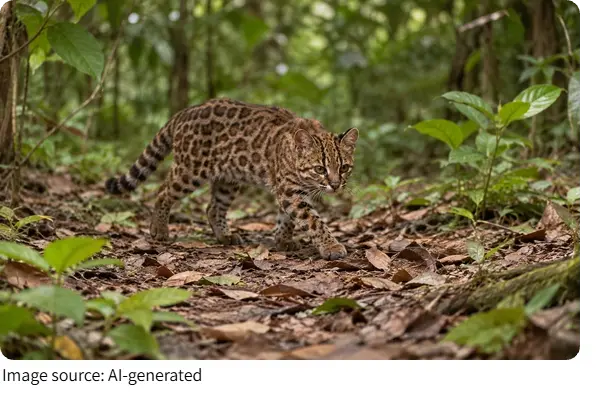
The animal's scientific name is Leopardus tilcayo. It belongs to the tiger cat group, a collection of small wild felines found across parts of Central and South America. The tilcayo is smaller than an average domestic cat, with a slender build, rounded ears and a light brown coat decorated with irregular dark markings. Its appearance may resemble other spotted wild cats, which helps explain why its distinct identity was not immediately recognised.
Researchers confirmed the species through genetic analysis published in the scientific journal Current Biology on September 17, 2026. It is the first newly described living cat species in more than a century. The previous example was the Uruguayan pampas cat, formally described in 1923.
What the Genetic Research Revealed
The scientific team examined genetic material from 38 tiger cats collected across South America, including specimens preserved in museum collections. Their work revealed that the group previously treated as a smaller number of species actually contains five distinct species.
One of the most important findings concerned the tilcayo's evolutionary history. Its lineage appears to have separated from other tiger cats approximately 1.4 million years ago. This long period of separation helped researchers establish that the Bolivian animal was not simply a regional variation of an already recognised species. Its genetic differences were substantial enough to support a separate classification.
The research also identified a previously unrecognised subspecies of tiger cat in Peru. Together, the findings demonstrate how modern genetic tools can improve scientists' understanding of animal relationships.
How the Tilcayo Became Famous
The announcement quickly attracted attention far beyond the scientific community. Photographs and videos of the small feline circulated widely online, while news organisations contacted the researchers and the team at Senda Verde. Paola Nogales-Ascarrunz, a Bolivian biologist and National Geographic Explorer who helped lead the research, found herself receiving requests for interviews from international media.
The Story Behind Its Unusual Name
The name tilcayo has an interesting connection to local knowledge. Scientists chose it because people in the Bolivian region had already used the word when referring to this particular type of wild cat. However, its exact meaning was initially unclear. Nogales-Ascarrunz investigated whether the word had an established meaning in Spanish or Quechua but did not find a clear explanation.
Later, a linguist suggested that it might have roots in Aymara, another language spoken in the region. The proposed interpretation connects one part of the name with the idea of something small and the other with a paw or foot. Although the explanation remains an interpretation, the name preserves a connection between the scientific classification and the communities familiar with the animal.
Why This Discovery Matters Beyond One Animal
The tilcayo's popularity has encouraged more people to take an interest in small wild cats, a group that receives less public attention than larger and more familiar felines. Scientists still have many questions about the species, including its distribution, population size, behaviour and everyday needs. More research will be necessary to establish how widely it occurs and what measures may help maintain suitable habitat.
The attention surrounding the discovery could also make it easier for researchers to communicate the importance of biodiversity studies. Members of the public have already begun sharing photographs of small spotted cats with scientists, hoping to contribute useful observations. While many images show other known species, this participation demonstrates growing interest in wildlife identification.
The tilcayo's rise to international attention began with a scientific finding that reshaped how researchers understand South America's small wild cats. Genetic evidence confirmed its distinct identity, while its local name connected the discovery with knowledge held in Bolivia for generations.
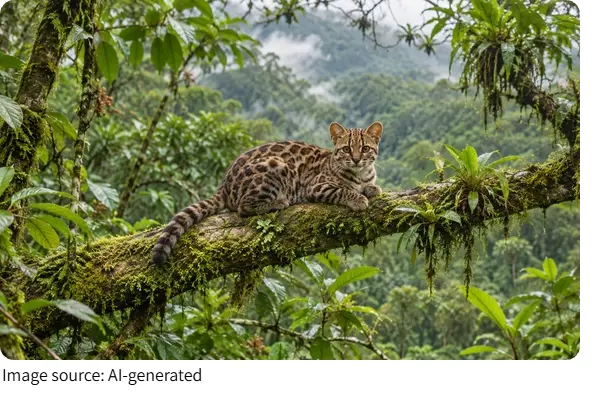
Although much remains unknown about the species, the worldwide response has created fresh opportunities for research and public awareness. The story is a reminder that nature still holds important scientific questions, sometimes waiting to be answered by a single remarkable discovery.