Bridges Saving Wildlife

Zoe
| 02-11-2026
 · Animal team
In the Brazilian Amazon, an innovative conservation project is proving that protecting endangered wildlife does not always require expensive technology. Specially designed rope bridges are allowing monkeys and other animals to travel safely between forest areas separated by busy roads.
Since eight aerial crossings were installed near Alta Floresta in 2024, monitoring cameras have recorded approximately 15,000 successful animal crossings over 15 months.
No roadkill incidents were recorded along the monitored stretch during that period, making the project a promising example of practical wildlife conservation.
A Simple Solution To A Serious Problem
Brazil's extensive road network creates major challenges for animals living in its tropical forests. Highways divide habitats, forcing wildlife to cross dangerous roads while searching for food, mates and shelter.
Research published in 2022 estimated that nearly nine million mammals die on Brazilian roads annually.
The consequences extend beyond individual animals. When forests become disconnected, populations can become isolated, reducing genetic diversity and making vulnerable species less resilient.
The new bridges address both problems by creating safer routes between woodland habitats.
How The Wildlife Bridges Work
The crossings were developed by Projeto Reconecta, an initiative founded by conservation biologist Fernanda Abra.
Instead of constructing expensive concrete structures, researchers designed lightweight bridges using several interconnected layers of rope.
Different species can move across them according to their natural behaviour. Spider monkeys swing using their arms, while marmosets and capuchins can walk along the ropes.
Sloths and opossums have also been observed using similar structures.
Each bridge has two monitoring cameras, helping scientists identify which animals cross successfully and which approach without using the structure.
Endangered Monkeys Find Safer Routes
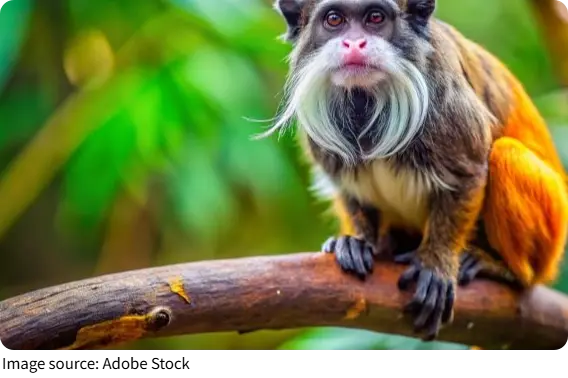
Among the animals recorded in Alta Floresta are black-faced black spider monkeys, Schneider's marmosets and Purús red howler monkeys.
The critically endangered Alta Floresta monkey, formally described only in 2019, has become an important symbol of the initiative.
However, introducing a crossing does not guarantee that animals will immediately recognise it as a safe route.
Tufted capuchins took approximately seven months before using one bridge for the first time.
This demonstrates why long-term observation is essential when evaluating conservation projects.
Protecting Forests Beyond The Amazon
The approach has already been tested elsewhere in Brazil.
In 2021, researchers worked with the Waimiri-Atroari Indigenous community to install 32 aerial crossings along the BR-174 highway.
Over five years, monitoring cameras documented approximately 1,250 primate crossings.
The team's experience helped improve bridge designs and identify suitable installation locations.
In 2026, Brazil's national transport infrastructure department recognised the multilayer design as a recommended standard for highway wildlife crossings.
Further expansion is planned in other regions, including the Pantanal and Atlantic Forest.
Why Every Crossing Matters
Protecting primates also helps preserve wider forest ecosystems. Many species disperse seeds while feeding, contributing to woodland regeneration and maintaining plant diversity.
Their disappearance can therefore affect other animals and vegetation.
For conservationists, the bridges represent more than a way to prevent collisions. They help restore connections between habitats that human infrastructure has separated.
A Promising Future For Wildlife
The Brazilian initiative demonstrates how relatively simple engineering can address complex environmental problems. Although continued monitoring is needed, thousands of recorded crossings suggest that carefully designed structures can make roads safer for vulnerable wildlife.
Expanding similar projects could help protect endangered species while allowing communities and transport networks to coexist more sustainably.