Beauty Beyond Butterflies

Mukesh Kumar
| 02-11-2026
 · Animal team
Butterflies are often admired for their bright colours, delicate patterns, and graceful appearance. However, their visual appeal may influence more than how people appreciate them in nature. It can also affect which species receive scientific attention and conservation support.
A recent study involving more than 21,000 participants has highlighted an interesting imbalance: butterflies with striking appearances tend to attract greater public interest, while smaller and less colourful species receive considerably less attention.
How Appearance Influences Public Interest
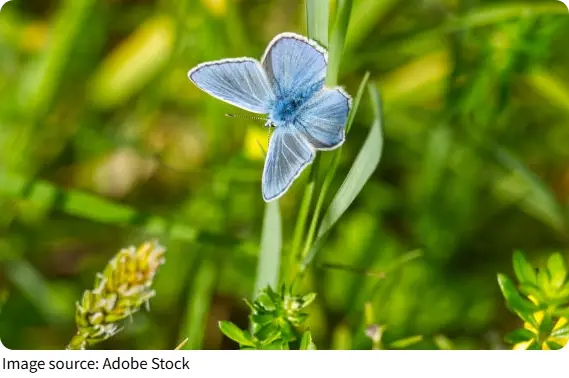
People naturally notice certain butterflies more quickly than others. Large wings, vivid colours, and distinctive patterns can make particular species stand out, while smaller butterflies with subtle brown markings may be easier to overlook. To understand how appearance affects public preferences, researchers conducted an international survey involving more than 21,000 people from over 100 countries.
Participants were shown photographs of European butterfly species and asked to rate their attractiveness on a scale from one to ten, based on their immediate impressions. The results revealed a clear preference for butterflies with larger wings, brighter colours, and more noticeable patterns. The yellow swallowtail, for example, received stronger appreciation than less colourful species such as the alpine grayling.
Why Attractive Species Receive More Research
Public interest can influence scientific priorities in ways that are not always obvious. Species that capture people's attention are more likely to become familiar subjects for educational projects, research activities, and conservation campaigns. The study found that the preference for visually attractive butterflies also appeared within scientific research. More attention was directed towards species considered beautiful, while less conspicuous varieties received fewer studies and comparatively limited conservation resources.
This creates an imbalance because scientific understanding is essential for protecting biodiversity. When researchers repeatedly focus on a relatively small group of popular species, other butterflies may receive less investigation, leaving important gaps in knowledge about their populations and environmental needs.
Smaller Butterflies Face Important Challenges
One particularly concerning finding involves the difference between public preferences and conservation assessments. National and European conservation lists use established measurement criteria to evaluate species at risk. Unlike public beauty ratings, these assessments do not show the same preference for visually impressive butterflies.
The research highlights that many smaller, brown, and less noticeable species face particularly serious threats associated with climate breakdown. This matters because appearance does not determine how vulnerable a butterfly is. A species with modest colouring may face significant environmental pressures even if it attracts little public attention.
Climate change can affect the natural conditions that different species depend on. Changes in temperature and environmental patterns can influence suitable habitats and the availability of resources needed throughout their life cycles. Without sufficient research and monitoring, identifying the needs of less familiar species becomes more difficult. Giving them greater scientific attention can help conservation specialists understand their circumstances and determine appropriate protective measures.
Every Butterfly Has a Role in Nature
Another important message from the research is that less colourful butterflies should not be considered less valuable. Their appearance has little connection to their ecological importance. Different butterfly species contribute to natural ecosystems in various ways. Their activities form part of wider relationships between plants, insects, and other living organisms.
For example, butterflies contribute to pollination as they visit flowers for nourishment. Their presence also forms part of the food relationships that help maintain ecological balance. Protecting biodiversity therefore requires looking beyond the species that attract the most attention. Smaller and less familiar butterflies deserve consideration because they contribute to the functioning of their surrounding environments.
Making Conservation More Inclusive
The researchers argue that conservation programmes should recognize the influence of beauty preferences when deciding how resources are distributed. One practical step is to give greater consideration to species that receive limited public and scientific attention. Conservation planning should use reliable assessments of environmental threats, population conditions, and ecological importance rather than relying on popularity.

Protecting biodiversity requires understanding the needs of different species, including those that rarely attract public interest. Nature's value extends far beyond what immediately catches the eye. Sometimes, the species that receive the least attention are the ones that need greater understanding and protection.