Zebra Stripes Explained

Chris Isidore
| 03-11-2026
 · Animal team
Have you ever wondered why zebras have such striking black-and-white stripes? These patterns are more than a memorable feature. They may help zebras deal with biting insects, recognize familiar individuals, and adapt to their surroundings.
Their skin also plays an important role in cooling and protection. By exploring these features, we can better understand how a zebra's appearance connects with its daily life on the grasslands.
Every Zebra Has a Unique Pattern
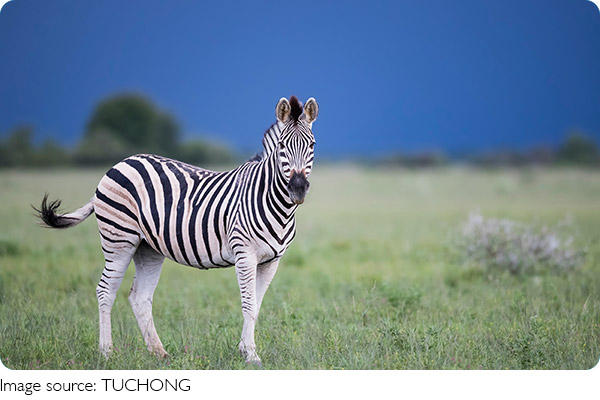
One fascinating feature of zebras is that each individual has its own arrangement of stripes. The width, shape, and direction of these markings vary, giving every zebra a distinctive appearance.
These differences may help zebras recognize familiar members of their group. Young zebras learn to identify their mothers, and visual features can provide useful clues when animals stay close together. Although zebras share the same general pattern of dark and light stripes, the details make each animal different.
We can think of these markings as natural identifying features. Their uniqueness has attracted interest from wildlife researchers who study how animals recognize one another and interact within groups.
How Zebras Manage Body Heat
Zebras live in environments where sunlight can be intense, and temperatures can rise considerably. Managing body heat is therefore important, especially during periods of activity.
Their skin contains numerous sweat glands. As sweat evaporates, it carries heat away from the body, helping zebras cool down. This process supports their ability to remain active in warm surroundings.
Scientists have also explored whether black-and-white stripes influence temperatures near the coat. Dark and light surfaces absorb and reflect sunlight differently, potentially creating small temperature differences that affect nearby air movement.
However, the exact contribution of stripes to temperature control remains uncertain. Sweating is a well-established cooling mechanism, while the thermal benefits of the striped pattern require further investigation. Understanding this distinction helps us separate confirmed functions from possible explanations.
A Possible Defense Against Biting Insects
One widely studied explanation for zebra stripes concerns biting flies. These insects can irritate animals, interrupt feeding, and potentially spread diseases. Reducing their contact can therefore be beneficial.
Research suggests that striped patterns can make landing more difficult for certain biting flies. As insects approach a surface, they use visual information to judge their movement and position. Alternating dark and light stripes may interfere with these visual cues.
This does not mean zebras are completely protected from insects. They can still experience bites, and the effects vary depending on the insect species and surrounding conditions. Nevertheless, evidence linking stripes with fewer successful fly landings makes this explanation especially interesting.
A pattern that looks simple to human eyes may affect a small flying insect quite differently. This reminds us that an animal's appearance can have practical effects that are not immediately obvious.
Why Stripes Matter in Groups
Zebras often travel and feed together. When several animals move through grassland, their contrasting patterns create a visually complex scene.
Some researchers have suggested that these patterns may make it harder for an observer to follow one individual among moving zebras. However, this possibility should not be treated as the only explanation for their markings.
Individual recognition is another potential benefit. Because stripe arrangements differ, zebras may use visual features to distinguish familiar companions. Young animals can learn their mothers' appearances, while group members may become familiar with one another over time.
The precise role of stripes in communication and recognition remains an area of study. Their importance may depend on the situation and the relationships between individual animals.
How Zebra Skin Provides Protection
Beneath the striped coat, zebra skin helps protect the body from everyday environmental contact. Moving through grasslands can bring animals into contact with grasses, branches, and other natural obstacles.
The skin also contains melanin, a natural pigment that absorbs ultraviolet radiation. This can help protect against some harmful effects of sunlight. Meanwhile, the hair covering influences how much sunlight reaches the skin.
The skin, coat, and sweat glands serve different purposes. Together, they support physical protection and temperature management, helping zebras cope with their surroundings.

Zebra stripes are more than a distinctive visual feature. Research suggests that they may reduce successful landings by certain biting flies, while their individual patterns may help zebras recognize familiar companions. Their skin and sweat glands also contribute to protection and cooling.
Not every proposed explanation has the same level of scientific support, and researchers continue to investigate how these features work together. By looking beyond their striking appearance, we can appreciate how closely an animal's physical characteristics are connected to its environment and daily needs. The next time we see a zebra, its black-and-white coat may inspire us to look more closely at the science behind nature's patterns.