Dogs Saving Wildlife!
Finnegan Flynn
| 29-10-2026
 · Animal team
Roads make travel faster and connect communities, but they can also create serious challenges for wildlife living nearby. In areas where animals regularly cross busy highways, researchers need reliable ways to understand which species are present, where they move, and how the surrounding landscape affects their journeys.
One unexpected research tool is a specially trained dog that can locate animal droppings, allowing scientists to gather valuable information without having to see or capture the animals themselves.

Why Researchers Follow Wildlife Traces
Wild animals are often difficult to observe directly. Some are active at night, while others avoid people or travel through thick vegetation. Traditional monitoring methods, such as cameras and direct observation, can provide useful information, but they do not always reveal which animals have passed through a particular location.
Animal droppings offer another source of evidence. They can contain DNA and other biological clues that help researchers identify species and learn more about their movements. Depending on the sample and the testing method, scientists may also be able to investigate diet, population relationships, and other aspects of wildlife biology.
Collecting these samples across a large area, however, can take considerable time. Researchers must search carefully while avoiding damage to the surrounding environment. This is where trained detection dogs can make a difference.
How Detection Dogs Assist Scientists
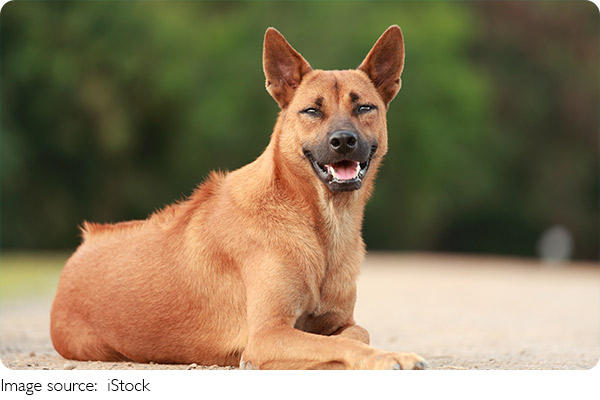
Dogs have an exceptional sense of smell and can be trained to recognize specific scents. In conservation research, some learn to locate droppings from particular wildlife species, even when the samples are difficult for people to notice.
Their handlers teach them to search systematically and indicate when they detect a target scent. Researchers can then examine the sample and decide whether it is suitable for analysis. The dog does not need to identify the species itself; laboratory testing can provide that confirmation when necessary.
This approach can help teams cover more ground than they might manage through a visual search alone. It may also reduce the need to disturb habitats or approach animals directly. The work requires careful training and consistent handling.
A Highway That Divides Habitats
The research is taking place near State Route 62 in California's Mojave Desert, close to Joshua Tree National Park. The road connects communities and popular destinations, but it also separates natural areas used by wildlife. Researchers are particularly concerned about how this barrier affects mountain lions and other species that need room to move across large territories.
When a highway divides a habitat, animals may struggle to reach other members of their species. Over time, groups that remain separated may have fewer opportunities to reproduce with unrelated individuals, reducing genetic diversity.
How DNA Samples Can Measure Progress
The dogs' work is part of a broader effort to understand whether the proposed crossings will deliver lasting benefits. Researchers plan to collect and analyze wildlife droppings before construction and repeat the surveys after the crossings become available.
The location of each sample can help scientists map where different species travel. DNA analysis can also help identify individual animals and reveal relationships among them. By comparing results over time, researchers hope to determine whether wildlife is moving between previously separated areas.
This is an important distinction. A crossing may appear successful because animals use it, but that does not automatically show whether it improves movement across the wider landscape. Long-term monitoring can help researchers assess whether the structures support healthier, better-connected populations.
A review of more than 300 studies on wildlife connections, cited in reporting on the project, found that only a small proportion had adequately assessed whether crossings significantly affected animal movement. The research near State Route 62 aims to address this information gap.
Building Better Routes for Wildlife
Wildlife crossings work best when their placement reflects the needs and habits of the species they are intended to help. Information about animal movements can guide researchers toward locations where a crossing is most likely to be useful. The surrounding landscape matters, too. Some species may readily use an open bridge, while others avoid enclosed passages.
The larger goal is to create safer connections between habitats and evaluate whether those connections make a lasting difference. Careful monitoring will help turn wildlife crossings from promising structures into projects supported by measurable evidence. In this effort, a small sample found by a trained dog could provide an important clue to helping wildlife move more freely through its natural surroundings.