Lions Nocturnal Hunt

Leila
| 29-10-2026
 · Animal team
When daylight fades across the African grasslands, lions rely on a different set of abilities. Their sensitive eyes, powerful bodies, and quiet movements help them approach potential prey in dim conditions.
Darkness creates challenges for many animals, but lions have natural adaptations that support nighttime activity. By exploring their vision, movement, and hunting strategies, we can better understand how these big cats survive in the wild.
Eyes Adapted to Dim Light
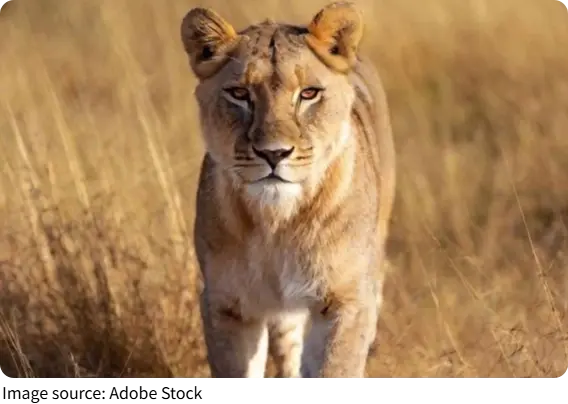
One of the most useful features of a lion is its ability to see in low light. Lions have eyes adapted to nighttime activity, allowing them to detect movement when their surroundings become difficult to see. Their vision is especially helpful around sunset and before sunrise, when many grassland animals are active.
A reflective layer behind the retina helps lions make better use of available light. It reflects light through the eye's light-sensitive cells, giving them another opportunity to detect it. This feature also explains why a lion's eyes may appear to shine when illuminated in darkness.
However, lions cannot see perfectly without light. Their vision works alongside hearing and smell, helping them gather information about nearby animals and changes in their surroundings.
Quiet Steps Through Grass
Spotting potential prey is only the beginning. Lions must also approach without attracting attention. Tall grass, scattered bushes, and uneven ground can provide useful cover, allowing them to move closer while remaining difficult to notice.
Their padded paws help reduce the sound of their footsteps. Lions can lower their bodies as they move, using vegetation to conceal their approach. Rather than immediately chasing an animal across open ground, they often benefit from getting as close as possible first.
Wind direction can influence their movements, too. If their scent travels toward another animal, that animal may detect their presence before the lion gets close enough. Careful positioning and awareness of the landscape therefore play important roles in hunting.
Patience Before Speed
Lions are powerful runners, but they do not depend on speed alone. Long chases consume energy, and many potential prey animals can run quickly enough to escape. Lions often rely on short bursts of speed after moving into a favorable position.
Their muscular legs support rapid acceleration, while strong forelimbs help them maintain control during close contact. Their retractable claws provide additional grip when needed.
Timing matters just as much. A lion may pause, watch an animal's movements, and wait for a suitable opportunity. Darkness and vegetation can make an approach easier, but success is never guaranteed. If the distance remains too great or the prey becomes alert, the lion may abandon the attempt rather than waste energy on an unlikely chase.
Hunting Together
Lions are social big cats that often live in groups called prides. This social structure can influence how they search for food and approach potential prey.
When several lions hunt together, their positions and movements may complement one another. Some may approach from one direction while others remain nearby, potentially limiting the escape routes available to their target. However, hunting strategies vary with circumstances, and not every hunt involves the entire pride.
Group members must also respond to one another's movements. A poorly timed approach can alert nearby animals, while a well-positioned lion may benefit from another member's actions. These interactions show that successful hunting involves more than physical strength. Awareness, experience, and quick responses are important as well.
Saving Energy After Dark
Hunting requires considerable effort, so lions must balance activity with rest. They spend many hours resting and conserving energy for times when movement and food searching become necessary. Cooler nighttime temperatures may also make activity more comfortable than during the hottest hours.
Food supplies energy and moisture. Lions obtain water from the animals they eat, although their need for drinking water depends on temperature, diet, and the availability of water sources.
Their routines also change with local conditions. Moonlight, vegetation, weather, and prey movements can influence when and where lions become active. Not every pride follows the same schedule, and nighttime hunting does not guarantee a successful meal.
Final Thoughts
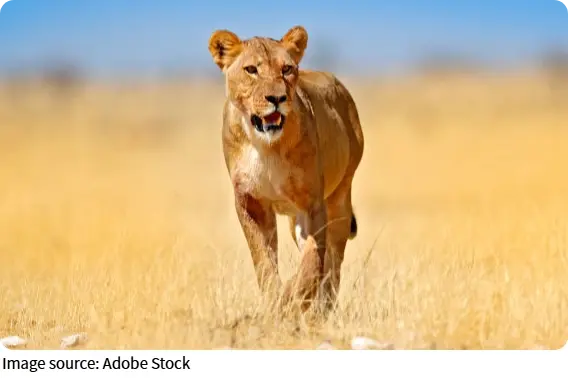
The nighttime hunting abilities of lions reveal how several natural adaptations work together. Sensitive vision helps them detect movement, quiet steps support a careful approach, and powerful muscles allow rapid action when an opportunity appears. Social behavior may provide additional advantages, while patience and energy conservation help them manage life on the grasslands.
When we think about lions after dark, it is easy to focus only on their strength and speed. Yet their survival also depends on observation, timing, and the ability to respond to changing conditions. These qualities show how an animal's success depends on the interplay between its natural abilities and its environment.