Black Rhino Facts

Arjun Mehta
| 29-10-2026
 · Animal team
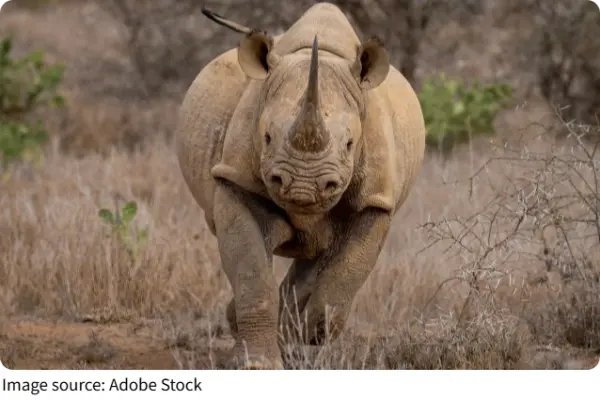
The black rhino is one of Africa’s most distinctive large mammals. Its sturdy body, hooked upper lip, and prominent horns make it easy to recognize.
However, its most interesting qualities go beyond its appearance. From its sensitive sense of smell to its unusual feeding habits, the black rhino has many features that help it live in its natural environment.

A Strong and Distinctive Body
The black rhino has a large body, sturdy legs, and thick skin. Despite its heavy appearance, it can turn quickly and move through dense bushes. Its body is well suited to navigating areas filled with shrubs and small trees.
One of its most recognizable features is its hooked upper lip. This pointed lip helps the rhino grasp leaves, shoots, and small branches. Unlike animals that mainly eat grass, black rhinos prefer to feed on tree leaves and shrubs.
Most black rhinos have two horns on their noses. The front horn is generally longer than the second, although their shapes and sizes vary. These horns consist mainly of keratin, a protein also found in human hair and fingernails.
A Powerful Sense of Smell
The black rhino has a highly developed sense of smell, which helps it understand its surroundings. Its eyesight is relatively poor, making it difficult to clearly identify distant objects. However, its sensitive nose can detect scents left by other rhinos and help it notice changes nearby.
Hearing also contributes to its awareness. Unfamiliar sounds or movement in nearby vegetation may attract its attention. Because the animal cannot always clearly identify distant objects, unexpected approaches can make it nervous or defensive.
This explains why observing a black rhino requires caution. Keeping a safe distance allows the animal to move naturally without feeling disturbed.
A Diet Based on Leaves
Black rhinos are browsers, meaning they mainly eat leaves, twigs, shoots, and other parts of trees and shrubs. They may also consume shrubs and fallen fruit when available. Their hooked lips help them select vegetation and pull leaves from branches.
These feeding habits influence the landscapes where they live. As rhinos browse different plants, they contribute to changes in local vegetation. Their diet also varies according to the plants available in their surroundings.
Black rhinos often feed during cooler periods, particularly in the early morning and late afternoon. During hotter hours, they may rest beneath trees or other shaded areas. They also need access to water and regularly visit water sources when conditions permit.
Mud Baths for Cooling
One familiar black rhino behavior is rolling in mud. Although their skin is thick, these animals still need protection from heat and irritating insects. A coating of mud can help reduce insect discomfort and shield parts of the skin from direct sunlight.
Mud baths also help regulate body temperature. After the mud dries, it may remove loose dirt as it falls away. Resting in shade and visiting water provide additional ways to cope with warm conditions.
These habits show that even a powerful animal must carefully manage its daily energy and comfort.
A Mostly Solitary Lifestyle
Black rhinos usually spend much of their time alone rather than living in large herds. Individual home ranges may overlap, so they sometimes meet near water sources or feeding areas.
Scent marking helps them communicate. They use dung and other natural scents to leave signals indicating their presence. These signs can help other rhinos recognize that another individual has recently passed through an area.
Encounters can be peaceful, but some rhinos may show irritation when another approaches. Snorting and stamping the ground can signal discomfort or an attempt to make the other animal move away.
Unexpected Speed
Despite its considerable weight, the black rhino can run quickly over short distances. Its muscular legs enable sudden bursts of speed, and its ability to turn rapidly helps it navigate uneven ground and thick vegetation.
The animal does not move at this pace all day. It generally spends much of its time feeding, resting, and walking. However, it may react quickly when startled or threatened, which is another reason people should never approach it closely.
The black rhino is remarkable for its hooked lip, sensitive nose, powerful body, and surprising speed. Its feeding habits, mud baths, and solitary lifestyle reveal how well its behavior suits its environment. By understanding these features, we can appreciate more than its impressive appearance and recognize the importance of protecting the natural habitats on which these unique mammals depend.