Springbok Natural Strength

Malcolm
| 29-10-2026
 · Animal team
Springboks are fascinating antelopes found in southern Africa. With slender bodies, curved horns, and powerful legs, they combine an elegant appearance with impressive athletic abilities.
Their name reflects their talent for jumping, and watching one leap across an open plain reveals how well their bodies are suited to movement. Beyond these remarkable jumps, springboks have developed useful ways to cope with heat and limited water, allowing them to thrive in dry landscapes.

A Distinctive Appearance
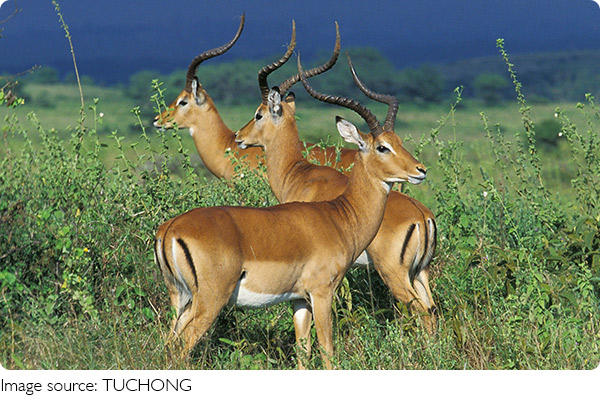
A springbok has a compact body, long legs, and a coat combining brown, white, and lighter shades along its sides and underside. This natural color pattern helps it blend into the grasslands and open plains where it lives.
Both male and female springboks have horns, although males generally have larger and thicker ones. The horns curve backward and upward, creating a distinctive shape. Their relatively light bodies and strong legs provide the power needed for quick acceleration and impressive leaps.
Another recognizable feature is the white patch near the tail, normally covered by a fold of skin. When a springbok raises this fold, the white hair becomes visible, creating a striking detail against its brown coat.
The Art of Leaping
Springboks are famous for a behavior called pronking. During this display, an animal springs into the air with its legs held relatively stiffly and its back sometimes arched. It may repeat the movement several times, creating a series of high, bouncing leaps.
These jumps can reach around two to three meters under suitable conditions. The animal rises, returns to the ground, and springs upward again with remarkable energy.
Pronking may occur when springboks feel excited, alert, or disturbed. It can also appear during social interactions. Their strong hind legs and lightweight bodies help make these movements possible, demonstrating how physical abilities support natural behavior.
Speed Across Open Ground
Springboks are also fast runners. Their long legs and athletic bodies allow them to accelerate quickly and travel across open terrain with impressive agility. They can change direction rapidly, making their movements difficult to predict.
This ability is useful in southern Africa, where open ground stretches across large areas. Quick movement helps springboks travel between feeding locations and respond to potential threats.
Running and jumping complement each other. Speed allows them to cover distance, while sudden directional changes and energetic leaps add flexibility to their movements.
Living With Limited Water
Some springboks inhabit dry environments, including areas around the Kalahari Desert. Water can be scarce in these landscapes, and daytime temperatures may become high. Their survival depends partly on finding suitable food and adjusting their daily activities.
Springboks eat grasses, leaves, and young plant shoots. Their diet changes with the season and the available vegetation. Fresh plants can provide both nutrients and moisture, helping them meet some of their water needs.
However, springboks do not necessarily live without drinking water throughout their lives. Their requirements depend on temperature, food moisture, and environmental conditions.
They can also reduce heat exposure by remaining active during cooler periods, such as early morning and late afternoon. This behavior helps them make better use of available resources.
Social Life and Daily Habits
Springboks often gather in groups, although group size varies with food availability, season, and local conditions. Group living can help individuals remain alert to changes in their surroundings. When one animal notices something unusual, others may also become attentive.
Their daily routines depend on weather and vegetation. They move between feeding areas, rest when conditions become uncomfortable, and adjust their activities as the landscape changes. During dry periods, finding plants with sufficient moisture becomes especially important.
These habits work alongside their physical abilities to support survival. Their success does not depend on a single remarkable feature, but on several adaptations working together.
Springboks combine graceful movement with practical survival skills. Their high leaps, quick running, distinctive horns, and ability to obtain moisture from plants make them memorable residents of southern Africa.
By understanding their movements, feeding habits, and responses to heat, we can appreciate more than their attractive appearance. Springboks demonstrate how animals adapt to demanding environments through a combination of physical strength, flexible behavior, and efficient use of natural resources.
How the Springbok Survives the Kalahari Desert
Video by Weary Panda