Owl Night Secrets

Eleanor
| 28-10-2026
 · Animal team
Dear Lykkers, have you ever heard an owl calling after sunset and wondered why it becomes active while many other birds are resting? Owls have special features that help them see in dim light, locate hidden prey, and move quietly through the night.
Their habits are closely connected to their senses, food sources, and safety. Let’s discover why many owls prefer nighttime activity and how these remarkable birds survive in the dark.
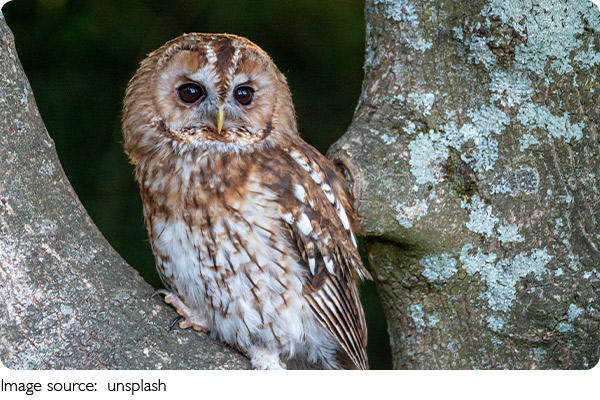
Eyes Adapted to Darkness
Owls have large, forward-facing eyes that collect plenty of light. Their retinas contain many rod cells, which are especially sensitive to dim conditions. This helps them notice shapes and movement when the surroundings are too dark for many other animals to see clearly.
Unlike human eyes, an owl’s eyes cannot turn freely from side to side. Instead, it moves its head to examine different areas. Its flexible neck allows a turn of about 270 degrees, helping the bird look around without moving its entire body. This ability is useful when watching a field, checking nearby branches, or following movement on the ground.
Sensitive Hearing Finds Prey
Vision is only one part of an owl’s hunting ability. Many species have excellent hearing, with ear openings positioned at different heights on the head. This arrangement helps them compare the timing and strength of sounds reaching each ear, making it easier to identify where a sound comes from.
The rounded feathers around an owl’s face help guide sound toward its ears. A mouse moving through dry grass may create only a faint rustle, yet an owl can use that small sound to locate its target. This skill becomes especially useful when plants hide an animal from view. By combining hearing with vision, the bird can search for food with impressive accuracy.
Food Is Available at Night
Many owls hunt after sunset because their preferred prey is active during those hours. Depending on the species, their meals may include mice, other small mammals, insects, and small birds. Some of these animals search for seeds or food scraps at night, using darkness to reduce their chances of being noticed.
For example, a mouse may travel through grass or along the edge of a field while looking for food. An owl hunting nearby has a good chance of spotting or hearing it. Different species choose different prey according to their size and habitat, so their diets can vary from one region to another.
Following prey's activity patterns helps owls use their energy wisely. Rather than searching everywhere, they often focus on places where small animals regularly feed or move.
Quiet Flight Gives Them an Advantage
An owl’s wings have special feather structures that reduce the sound of flight. Soft feather edges and broad wings allow many species to move through the air quietly. As a result, prey may have little warning when the bird approaches.
Once an owl detects a possible meal, it may glide closer while adjusting its direction. When the distance is short enough, it can swoop down and use its strong feet and sharp claws to catch the animal. Patience also matters. An owl may sit on a branch for several minutes, listening carefully before deciding where to fly next.
Fewer Daytime Competitors
Many birds of prey, including hawks and falcons, are most active during daylight. They rely on strong vision to search for food, while many owls use their senses more effectively in low light. Hunting after sunset can therefore reduce competition for certain food sources.
The local environment also affects an owl’s choices. Foxes and other hunters may search for similar prey, so an owl benefits from selecting suitable hunting areas and times. Competition varies by habitat, and some animals remain active throughout the night.
Resting Safely During Daylight
Many owls have brown, gray, or mottled feathers that blend with tree bark and surrounding leaves. This natural coloring helps them remain difficult to notice while resting among branches.
During the day, some species remain still in sheltered places, reducing their visibility to nearby animals. However, not every owl follows the same schedule. Some hunt in daylight, while others become active around sunrise or sunset. Their routines depend on species, location, and available food.
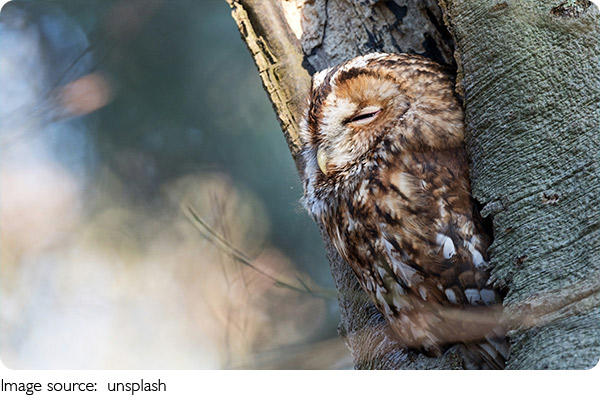
An owl’s nighttime lifestyle combines special eyesight, sensitive hearing, quiet flight, and clever timing. These features help it locate prey, compete for food, and find safe places to rest.