Same Car, Lower Fuel Bill

Lucas Schneider
| 27-10-2026
 · Automobile team
Two people drive the same model, same engine, same commute, and one of them fills up a full day later every single week.
The car isn't doing anything different. The driver is. How you accelerate, brake, cruise and idle explains most of that gap, and none of these habits needs new parts or special skills to change.
The right foot decides most of it
Fuel economy is mostly a story about how hard you ask the engine to work. A gasoline engine is at its most efficient around mid load, not at full throttle and not at idle. That's why a driver who rolls onto the throttle over three or four seconds burns noticeably less than one who stomps on it at every light.
Fuel economy guidance from the US Department of Energy and the EPA puts numbers on it: aggressive driving with heavy acceleration and hard braking can lower gas mileage by roughly 15 to 30 percent at highway speeds and 10 to 40 percent in stop-and-go traffic. That spread is bigger than the gap between many car models.
Anticipation beats reaction
Watch a low-consumption driver in traffic and you'll notice they brake less. That's not because they drive slowly, but because they read the road further ahead. They lift off the gas when the light two blocks up turns red instead of staying on it and braking at the last second.
Every time you brake, you turn speed you already paid for in fuel into heat. Leaving a longer gap to the car ahead makes this easier, because it gives you time to ease off instead of braking. On a typical commute, coasting to a stop instead of braking hard adds up to real savings over a month.
Speed costs more than you think
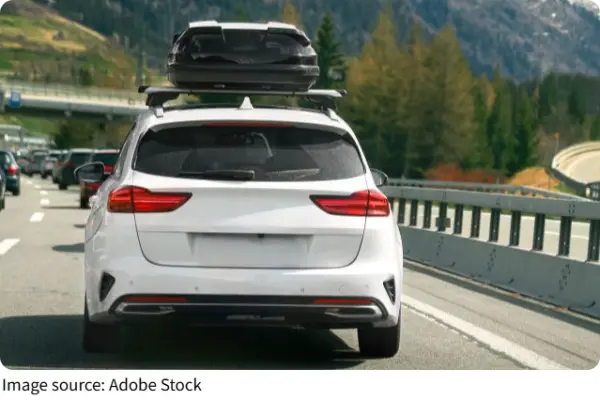
Aerodynamic drag rises with the square of speed, so the difference between 65 mph and 75 mph is bigger than it feels. Most cars hit their sweet spot somewhere between 50 and 60 mph, and above that, each extra 5 mph costs more fuel than the previous 5. Roof boxes and open windows at highway speed add drag too.
The same government guidance notes that gas mileage usually drops rapidly above 50 mph and compares each 5 mph over that to paying an extra $0.30 per gallon. On a long highway run, dropping from 75 to 65 can add several miles per gallon. It also adds a few minutes, so the trade is yours to make.
Idling is pure waste
Idling gets you zero miles per gallon. Depending on engine size and air conditioner use, it can burn a quarter to a half gallon of fuel per hour. A modern engine doesn't need minutes to warm up in mild weather; 30 seconds is plenty, and gentle driving warms it faster than standing still.
Sitting in a drive-through line for ten minutes with the engine running burns fuel you'll never see again. Many newer cars shut the engine off automatically at stops for exactly this reason. If yours does, don't fight it.
Small habits, steady returns
Check your tire pressure once a month. Under-inflated tires raise rolling resistance, and the DOE estimates proper inflation can improve fuel economy by up to 3 percent. Clear the trunk of heavy items you don't need, since an extra 100 pounds can cut mileage by about 1 percent.
Use cruise control on flat highway stretches so your speed stays steady. Combine errands into one trip so the engine stays warm between stops. None of these are dramatic on their own, but stacked with smoother driving, they explain much of the gap between two drivers of the same car.
The next time you fill up, look at the number and ask what your right foot did last week. Start with one habit, anticipating stops instead of braking late, and track miles and gallons over the next few tanks with the trip computer or a simple note on your phone, so the change is easy to see.