Snow Leopard Tail

Naveen Kumar
| 26-10-2026
 · Animal team
Have you ever wondered how a snow leopard moves across steep mountain cliffs with such control? Its spotted coat may catch our eyes first, but its long, thick tail is just as remarkable.
This unusual feature helps the animal balance during jumps and stay warm on freezing nights. Let's discover how one part of its body supports life in the high mountains.
A Remarkably Long Tail
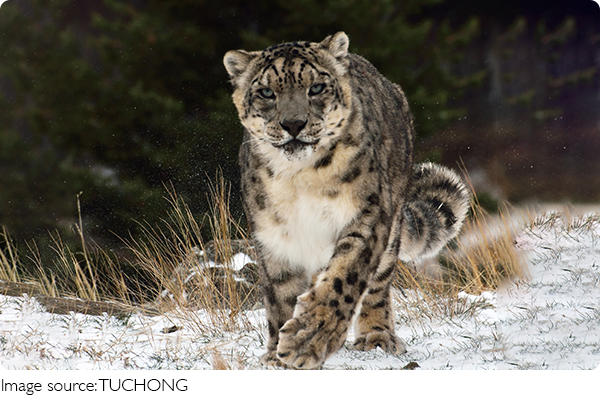
The snow leopard lives in the high mountain regions of Central Asia. Its body measures around 110 to 130 centimeters long, while its tail can reach approximately 80 to 90 centimeters. Almost as long as its body, this thick, furry tail serves several important purposes.
Rather than simply trailing behind, it acts as an extension of the animal's body. It helps control movement, provides extra warmth during rest, and may serve as a visual signal during interactions with other snow leopards. These features are especially useful in rocky landscapes where every step requires care.
Balancing on Rocky Slopes
Imagine crossing a narrow mountain ledge with loose stones underfoot. Now imagine leaping between rocky platforms while chasing prey. For a snow leopard, moving across such challenging ground is part of daily life.
Its strong legs provide the power for jumping, while its long tail helps control body movement. When the cat turns sharply or lands after a leap, shifting its tail can help adjust its balance. This support is valuable when it moves along narrow ledges or changes direction quickly.
The tail works together with flexible joints, strong muscles, and broad paws. Each feature helps the animal travel across steep slopes. Its movements may look effortless, but they depend on careful coordination between different parts of the body.
A Natural Cover in Freezing Weather
The tail has another important role when temperatures fall below freezing. Snow leopards live in mountain environments where cold winds and heavy snowfall can make nighttime conditions difficult. Even with their thick coats, they need ways to reduce heat loss while resting.
When settling down, a snow leopard may curl up, wrapping its furry tail around its body. It may also tuck its nose and mouth into the thick fur for extra protection. This position helps shield sensitive areas from cold air.
The dense fur creates an insulating layer that helps retain body heat. Although the tail cannot prevent all heat loss, it provides useful coverage without requiring a separate shelter. A feature that supports movement during the day can therefore offer comfort and protection at night.
How Other Features Help
A snow leopard's survival does not depend on its tail alone. Its broad paws help distribute its weight across snowy ground, while powerful hind legs support long jumps. A thick coat provides insulation, and sharp senses help it locate prey and notice changes around it.
These features work together in a landscape that often rises between 2,000 and 5,000 meters above sea level. Thin air, steep slopes, and limited food supplies make daily life demanding. Efficient movement and heat conservation help the animal use its energy wisely.
The tail is a good example of how one body part can serve different needs. It supports balance during active movement and helps conserve warmth during quiet periods.
Protecting Its Mountain Home
Snow leopards face growing challenges as mountain environments change. Rising temperatures can affect snow cover, water sources, and plants that support wild prey. When prey moves to different areas, these cats may also need to travel farther to find food.
Protecting them means preserving suitable habitats, maintaining connections between mountain areas, and supporting healthy wild prey populations. Learning more about their behavior can help conservation teams develop better ways to protect these remarkable animals.
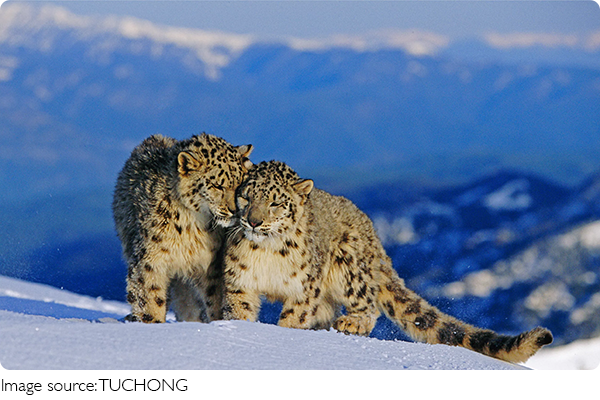
The snow leopard's tail is much more than a striking feature. It helps the animal balance on rocky slopes, control its movements during jumps, and conserve warmth on cold nights. Its design shows how closely wildlife adapts to its surroundings.