Walrus Whisker Wonders

Bianca
| 26-10-2026
 · Animal team
Have you ever wondered how a walrus finds food beneath cloudy water? Dear Lykkers, imagine exploring the cold Arctic seabed where sunlight is limited, and small creatures hide beneath the sand.
How would we find food without seeing it clearly? Walruses have a remarkable answer: their sensitive whiskers. These pale hairs help them explore their surroundings, locate meals, and gather information about the underwater world.
What Makes Walrus Whiskers Special?
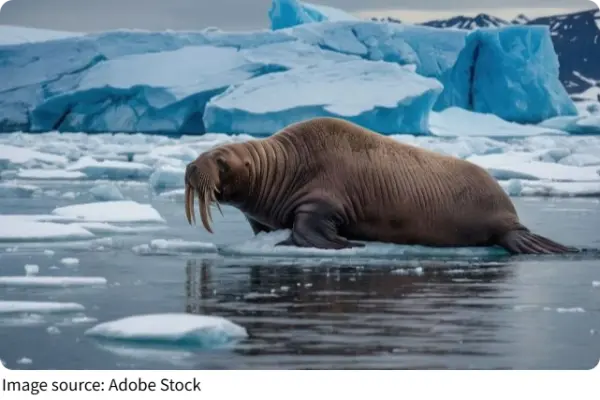
Walruses have hundreds of whiskers arranged around their broad muzzles. Each grows from a follicle filled with nerves and blood vessels, making it sensitive to physical contact and tiny movements.
Unlike ordinary hairs, these whiskers work as sensory tools. When a walrus moves along the seabed, they brush against sand, stones, and shells. Their sensitive roots help the animal recognize details about nearby objects.
We can think of them as a natural touch system. Although walruses also use their eyes and other senses, their whiskers are especially helpful when the water is cloudy or light is limited.
Finding Food Beneath the Sand
Walruses mainly eat clams and other shellfish, along with worms and small animals living on or beneath the seabed. Many of these creatures remain hidden beneath the sand or within narrow spaces between stones.
To find them, a walrus sweeps its muzzle across the bottom. Its whiskers touch the surface and detect small details that might otherwise go unnoticed. Once it finds a promising spot, it investigates more closely before using its mouth to obtain the meal.
This approach helps walruses search more efficiently. In the cold Arctic, finding enough food is essential, so reducing unnecessary movement can save valuable energy.
Exploring the Underwater World
Whiskers also help walruses understand their immediate surroundings. The seabed may contain uneven ground, rocks, and shells that are difficult to see in cloudy water.
By touching these surfaces, a walrus gathers information about their shapes and positions. This ability is useful when it moves close to the bottom while searching for food.
Water movement can provide additional information. Small forces from moving water may affect the whiskers, allowing the animal to detect nearby changes. These hairs do not replace sight or hearing, but they work alongside other senses to support movement and feeding.
For us, this is a fascinating example of how touch can reveal details that our eyes might miss.
Do Whiskers Help Walruses Communicate?
Walruses often gather in groups on beaches and ice. They interact through sounds, body movements, and physical contact. Their whiskers may contribute to close-range exploration when they approach other animals or touch nearby surfaces.
However, we should not assume that every whisker movement expresses a particular emotion. Their best-established role is sensory, especially when locating food. Scientists have not confirmed that whisker movements form a detailed communication system.
Inspiring New Technology
Walrus whiskers have inspired researchers studying underwater sensors. Engineers investigate how flexible structures can detect contact and changes in moving water, even when visibility is poor.
A sensor inspired by whiskers could help an underwater robot notice nearby objects or measure water movement. Such equipment may support seabed research and environmental monitoring.
The idea is simple: a useful sensor does not always need a camera. Sometimes, a flexible structure that responds to touch can provide valuable information. Studying walruses may help scientists develop practical tools for exploring underwater environments.
Why Walrus Protection Matters
Walruses depend on healthy Arctic habitats and suitable feeding grounds. They use sea ice and coastal resting areas at different times in their lives. Changes in sea ice, ocean conditions, and human activity can affect their access to food and resting places.
As Arctic conditions change, protecting important habitats and monitoring walrus populations become increasingly valuable. Learning about their sensory abilities also helps us understand how closely their survival depends on their surroundings.
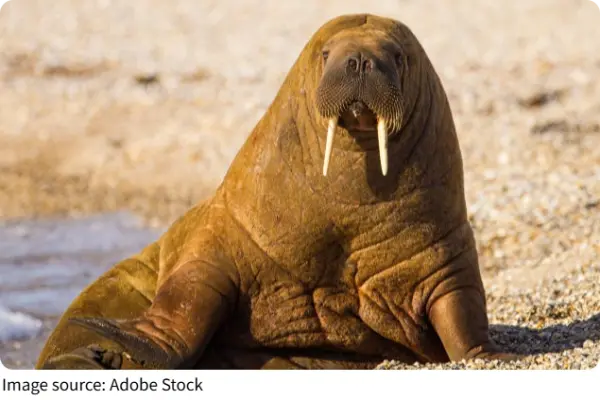
Walrus whiskers are much more than a distinctive feature. They help these marine mammals find hidden shellfish, explore the seabed, and gather information when visibility is limited. Their sensitive design also offers useful ideas for underwater technology.