Flycatchers Air Masters

Arvind Singh
| 26-10-2026
 · Animal team
A small bird rests quietly on a branch, watching the air around it. Suddenly, it darts forward, catches a passing insect, and returns to its perch. This quick movement is one of the most fascinating behaviors of flycatchers.
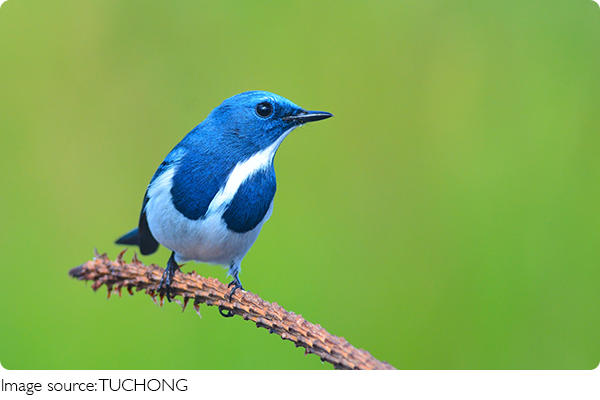
Found across many parts of the world, flycatchers come in a remarkable variety of colors, sizes, and shapes. Some have modest brown feathers that blend into the trees, while others display brilliant colors or long, flowing tails. Their appearance and hunting skills make them rewarding birds to observe.
What Makes a Bird a Flycatcher?
Flycatchers are insect-eating birds known for their ability to capture prey, often while flying. However, the name does not refer to one single family of birds.
Old World flycatchers belong mainly to the family Muscicapidae, while New World tyrant flycatchers belong to Tyrannidae. Birds such as paradise flycatchers belong to another family, Monarchidae.
Although these groups have different evolutionary histories, many have developed similar feeding behaviors. They often watch for insects from a perch before making a quick flight to capture them.
Flycatchers vary considerably in appearance. Some are small and inconspicuous, while others have colorful plumage, distinctive crests, or unusually long tail feathers.
Beautiful Colors and Distinctive Features
One of the most interesting things about flycatchers is their diversity. Some species have gray, brown, or olive feathers that provide camouflage among branches and leaves.
Others display striking colors. The Vermilion Flycatcher, found in the Americas, is known for the brilliant red plumage of grown males. The Black-naped Monarch, found in parts of Asia, has attractive blue plumage and a contrasting dark marking near the back of its head.
Paradise flycatchers are especially recognizable for their elegant appearance. In several species, grown males develop elongated central tail feathers that trail behind them during flight.
These long feathers are not a feature of all flycatchers, and males and females may look quite different. Observing body shape, plumage, behavior, and habitat together is often more useful for identification than relying on color alone.
How Flycatchers Catch Their Food
Many flycatchers use a hunting technique called sallying. They wait on a branch or another lookout point, watch for moving prey, and then make a rapid flight to capture an insect.
After catching their prey, they may return to the same perch or move to another nearby location. This behavior makes some species relatively easy to observe with binoculars.
Flycatchers eat a variety of insects, including flies, moths, beetles, and other small invertebrates. The exact diet depends on the species, habitat, and availability of prey.
Not every flycatcher hunts exclusively in midair. Some collect insects from leaves, branches, or the ground, while certain species also consume fruit.
Their feeding activities make flycatchers part of the natural food web and help influence insect populations in the habitats where they live.
Where Flycatchers Live
Flycatchers occupy many different environments, from tropical rainforests and wooded wetlands to open grasslands, scrublands, and gardens.
Some species prefer dense vegetation, where they move through shaded branches in search of insects. Others favor open areas with scattered trees or exposed perches that provide a clear view of flying prey.
Their geographical distribution also varies. Tyrant flycatchers are especially diverse in the Americas, while Old World flycatchers occur across Europe, Africa, and Asia, with some species extending into other regions.
Many flycatchers migrate seasonally, traveling between breeding and nonbreeding areas as food availability and weather conditions change. Others remain in suitable habitats throughout the year.
Protecting a variety of natural environments helps support these birds, particularly species that depend on specific forests, wetlands, or migratory stopover sites.
Nesting and Raising Their Young
Flycatchers use different nesting strategies depending on the species. Some build small cup-shaped nests in trees or shrubs, while others nest in cavities, sheltered ledges, or other protected locations.
Nest materials may include grasses, plant fibers, moss, and other natural substances. Parents generally select sites that offer suitable shelter and access to food.
During the breeding season, adults invest considerable energy in feeding their young. Insects are an important food source for many flycatcher chicks because they provide nutrients needed for growth.
The details of courtship, incubation, and parental care differ among species. In some, both parents contribute substantially to raising the young, while in others their roles are less evenly shared.
Watching flycatchers during breeding season can reveal interesting behavior, but observers should avoid approaching nests closely or disturbing adults feeding their chicks.
How to Observe Flycatchers in the Wild
Flycatchers can be rewarding birds for beginners because many species have recognizable hunting movements. Look for birds resting on exposed branches, fences, or other perches before darting after insects.
Woodland edges, parks, gardens, and areas near water can be useful places to search, depending on which species occur locally.
Binoculars allow you to examine plumage and behavior without approaching too closely. Listening to calls and songs can also help, particularly when birds are difficult to distinguish by appearance.
Pay attention to how a bird moves. Repeated short flights from a perch, quick turns in pursuit of insects, and characteristic tail movements may provide valuable identification clues.
For a better birdwatching experience, remain quiet, avoid disturbing nests, and give birds enough space to continue their normal activities.
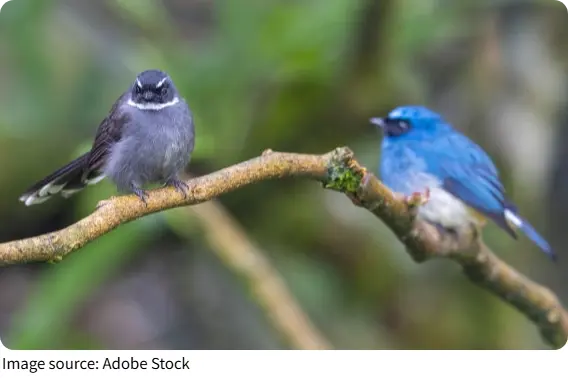
Flycatchers are a diverse group of birds united by some remarkable insect-hunting abilities. From the vivid colors of the Vermilion Flycatcher to the flowing tails of paradise flycatchers, they demonstrate how different birds have adapted to life in forests, grasslands, and gardens. Their quick movements, varied appearances, and fascinating nesting behaviors make them rewarding subjects for nature lovers. By observing them patiently and respecting their habitats, we can discover just how much activity and beauty can be found among the branches around us.