Supercars Chase Less Weight

Ravish Kumar
| 26-10-2026
 · Automobile team
A supercar brochure almost always leads with power, usually a huge horsepower figure printed near the top of the page.
Ask the engineers who build these cars, though, and many will say the harder problem is weight. Adding power is fairly straightforward. Removing kilograms without weakening the car is where most of the real work goes.
Here is why mass matters so much, where supercar makers find their savings, and what those savings cost the owner.
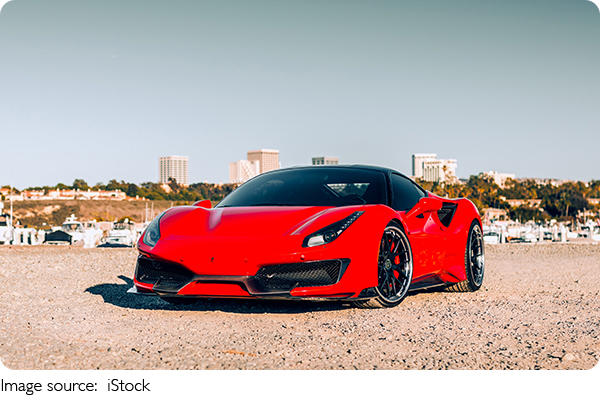
Power costs less than lightness
Adding horsepower is the easy path. Fit a bigger turbo, raise the boost, and the number climbs. Weight does not move that way. Every kilogram removed has to be replaced with something that still passes crash tests, holds up on a track, and feels solid on a rough road.
The McLaren F1 from the 1990s is the classic example. It weighed around 1,140 kilograms and hit over 240 mph with a naturally aspirated V12 making about 618 horsepower. A heavier car would have needed far more power to reach the same speed.
Less mass helps everywhere at once
Weight affects every part of how a car behaves, not just acceleration. Brakes have less momentum to fight, so the car stops shorter. Tires keep more grip because there is less load pushing them sideways through a corner. Steering reacts faster because the front end has less inertia to overcome.
The early Lotus Elise is a clear case. It weighed under 900 kilograms and could out-corner cars with twice its power on a tight circuit, largely because there was so little mass to manage.
Where the weight actually comes from
On a typical car, steel makes up most of the body and chassis. Supercars swap much of it for aluminum and carbon fiber. The Ferrari 488 is built around an aluminum structure, while the McLaren 720S uses a carbon fiber tub, the MonoCage II, which is 18 kilograms lighter than the one it replaced.
McLaren also cut 16 kilograms from the 720S suspension compared with the previous version. Engines get lighter too, with aluminum blocks and titanium connecting rods. Even the seats, wheels, and exhaust get rebuilt in lighter materials. A titanium exhaust on a Porsche 911 GT3 saves real kilograms over a steel one.
Lighter versions of the same car
Makers often sell a stripped-down edition of an existing model for buyers who want the sharpest response. McLaren's 765LT, a track-focused version of the 720S, is 80 kilograms lighter than the car it is based on, at 1,339 kilograms in its lightest configuration. The 750S that later replaced the 720S is about 30 kilograms lighter again.
Features push the numbers the other way. The 720S Spider weighs 45 kilograms more than the longer model because of its retractable hardtop system, even though the roof itself is a single piece of carbon fiber. A folding roof needs its own mechanism, and that mechanism adds mass.
The trade-offs you cannot ignore
Light materials cost more, sometimes a lot more. Carbon fiber parts are slow to make and expensive to repair. There is also a comfort cost. Less sound insulation means more road noise inside, and thinner glass and fewer luxury features make the cabin feel more basic.
That is a deliberate choice. Buyers of a track-focused model like the Porsche 911 GT3 RS accept a firmer, louder ride because the payoff is a car that changes direction quicker than almost anything else on the road.

You probably do not own a supercar, but the same logic applies to any car you drive. That is why automakers keep pushing lighter platforms across their whole range, not just the flagship models.
The next time you read a spec sheet, look past the horsepower figure and find the curb weight. That number often tells you more about how the car will actually feel than the power rating does.