Elegant Egret Life

Elena Rossi
| 12-10-2026
 · Animal team
Lykkers, have you ever watched a white egret standing beside a lake, its bright feathers shining in the sunlight as it waits for its next meal? This elegant bird may appear calm, but its daily life is full of skill, patience, and clever movements.
From its snowy plumage to its precise hunting techniques, every feature helps it adapt to wetland life. Let’s explore how egrets use their feathers, find food, and raise their young, and discover why protecting their natural habitats matters.
White Feathers With a Purpose
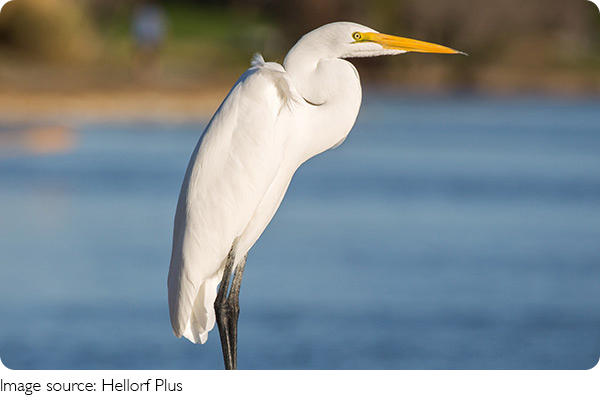
One of the first things we notice about an egret is its beautiful white plumage. In bright sunlight, the feathers may appear almost silver, creating a striking contrast with green reeds and dark water. Their smooth appearance gives the bird a graceful outline as it walks along a riverbank or takes flight across a lake.
These feathers serve practical purposes, too. Like the plumage of other birds, they help trap air close to the body, providing insulation in changing temperatures. Egrets also spend time arranging and cleaning their feathers with their bills. This grooming helps remove dirt and keeps their plumage in good condition for daily movement and flight.
Feathers and Courtship Displays
During the breeding season, some egret species develop delicate breeding plumes that extend from their backs, chests, or heads. These special feathers can become especially noticeable when the birds perform courtship displays.
An egret may raise its plumes, stretch its neck, or change its posture to attract a potential mate. These movements turn an ordinary moment beside the water into a fascinating natural display. The feathers are not simply decorations; they can play a role in reproduction.
Many egrets build nests in colonies, sometimes sharing suitable trees with other waterbirds. Depending on the species, both parents may help build the nest, incubate eggs, and care for their young.
A Bill Designed for Hunting
Although their white feathers attract our attention, egrets also have physical features suited to catching prey. Their long necks and pointed bills help them capture small fish, shrimp, aquatic insects, and other small animals.
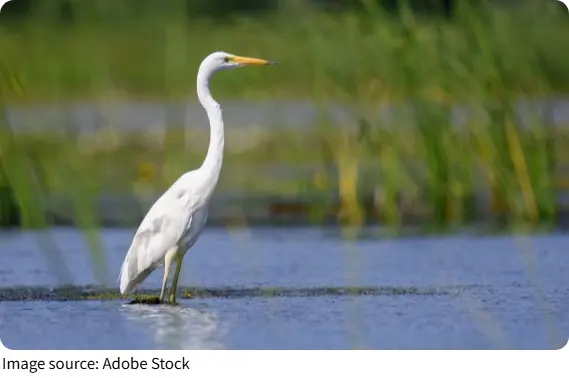
An egret often hunts in shallow water, where it can watch for movement beneath the surface. It may stand still for several moments or take slow steps through the water. Once prey comes within reach, the bird quickly extends its neck and snaps its bill forward.
Successful hunting depends on timing and precision. Sudden movements may frighten small fish away, so patience can be useful. Some egrets also stir the water with their feet, encouraging hidden animals to move and making them easier to spot. Their methods vary according to the species and the conditions around them.
Daily Feeding Habits
Egrets may search for food in the early morning or late afternoon, although their schedules depend on local conditions and food availability. Changes in water levels, weather, and the movement of aquatic animals can influence where and when they hunt.
Wetlands provide many useful feeding areas, including marshes, riverbanks, shallow lakes, and coastal flats. An egret may move between different locations throughout the day as it searches for suitable prey.
After catching a small fish, the bird usually adjusts it with its bill before swallowing it, often positioning the fish headfirst. Unlike humans, egrets do not chew their meals in the usual way. They generally swallow small prey whole, using coordinated movements of the bill and neck to guide the food down.
Protecting Their Natural Homes
Egrets depend on healthy wetlands for food, shelter, and nesting places. Clean water supports aquatic life, while suitable trees and vegetation provide places to rest and raise young. Wetland loss, pollution, and excessive disturbance can reduce the resources these birds need.
We can help by keeping rubbish away from rivers and lakes, respecting wildlife viewing distances, and staying away from nesting sites. When photographing egrets, quietly observing from a suitable distance allows us to appreciate their behavior without disrupting their routines.
Learning about local birds and supporting wetland conservation are other practical ways to care for these habitats. Even a short visit to a nearby nature reserve can show us how birds, plants, and aquatic animals depend on one another.
Final Thoughts
Egrets combine bright white feathers, graceful movements, and impressive hunting skills. Their plumage helps protect their bodies, their pointed bills capture prey, and their careful feeding habits support daily survival. Healthy wetlands allow these elegant birds to continue finding food and raising their young.
Lykkers, the next time we see an egret beside a lake, let’s pause and observe its behavior. Does it wait patiently for a fish, or does it move slowly through the water? Share your observations and join us in appreciating the small details that make wildlife so fascinating.
A Day in the Wetlands with a Great White Egret
Video by My Birding Year