Snow Driving Basics
Liam Reilly
| 10-10-2026
 · Automobile team
Snow can turn an ordinary drive into a much more demanding task. Roads may become slippery, visibility can drop, and the distance needed to stop can increase.
For drivers, the safest approach is to prepare before leaving, slow down on the road, and avoid sudden movements. A few simple habits can make winter driving more controlled and predictable.
Check Your Car Before Leaving
A little preparation can prevent many problems once you are on a snowy road. Start by checking the tires and making sure they are properly inflated. Look at the tread as well, because worn tires have less ability to grip a slippery surface.
In areas that regularly receive snow and ice, suitable winter tires can provide better traction. The braking system and lights should also be working properly. Check the headlights, low beams, and other exterior lights before setting off. Good lighting helps you see the road and makes your vehicle easier for others to notice.
Do not forget to clear snow and ice from the windshield, side windows, mirrors, and other areas that affect your view. A small patch left on a mirror or window can become a serious visibility problem once you are moving.
Choose Your Route Carefully
When snow is expected, think about the route before starting the engine. Main roads are often a better choice because they may be cleared and treated more frequently than smaller roads. If possible, avoid steep hills, sharp turns, and areas known for icy surfaces.
Give yourself extra travel time. Rushing creates pressure to drive faster or make sudden decisions, which is exactly what you want to avoid on a slippery road.
Slow Down and Stay Smooth
Once you begin driving, smooth control matters more than speed. Snow and ice reduce tire grip, so accelerate gently and avoid sudden braking or sharp steering.
Keep a much larger gap from the vehicle ahead than you normally would. A car needs more room to slow down when the road is slippery, and the driver in front may also lose control unexpectedly. Extra space gives you more time to react.
Try to keep your speed steady, especially when approaching turns. Reduce your speed before entering a corner rather than braking hard while turning. Smooth steering helps the tires maintain their grip.
Brake With Care
Braking on snow requires patience. If your vehicle has ABS, press the brake firmly when you need to stop and allow the system to regulate braking. Avoid repeatedly pumping the pedal unless your vehicle manufacturer specifically recommends that technique.
The most important habit is to avoid waiting until the last moment to brake. Look farther ahead and begin slowing earlier than you normally would. This reduces the need for sudden braking and gives the vehicle more time to come to a controlled stop.
Handle Hills With Extra Care
Hills can be particularly challenging when the road is covered with snow. Before going uphill, reduce your speed and choose an appropriate lower gear if your vehicle allows manual gear selection. Try to maintain a steady pace instead of stopping halfway up.
When going downhill, use a lower gear when appropriate to help control speed. Avoid shifting into neutral and allowing the vehicle to roll freely. Keep your movements gentle and leave plenty of space ahead.
What to Do During a Slide
Even careful drivers can encounter a slippery patch. If the vehicle begins to slide, the first step is to stay calm. Avoid sudden steering or harsh braking, as these actions can make the slide worse.
Keep your steering movements controlled and respond to the direction of the vehicle. Once the tires regain grip and the car becomes stable, continue slowly and reassess the road ahead.
If the vehicle becomes stuck in snow, avoid repeatedly pressing the accelerator hard. Gentle acceleration may help the tires find traction. If the car cannot move safely, stopping and arranging appropriate assistance is better than continuing to spin the tires.
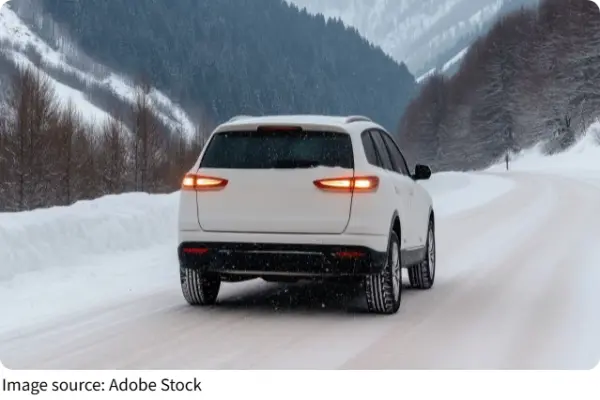
Snowy roads reward patience. Before leaving, check the tires, brakes, lights, windows, and mirrors. While driving, reduce speed, increase following distance, and make every steering, braking, and acceleration movement as smooth as possible.
Tips and tricks for winter driving
Video by CBC British Columbia