Why New Tires Slip

Matteo
| 10-10-2026
 · Automobile team
Have you ever replaced your car tires and noticed that the vehicle still slips on the road? New tires should help us maintain good grip, but several factors can affect their performance.
Tire quality, incorrect sizing, road conditions, and driving habits may all play a role. Instead of guessing what went wrong, we can check these factors one by one and learn how to improve our driving safety.
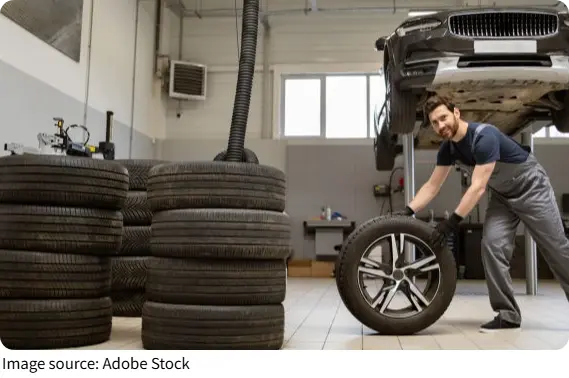
Check the Tire Quality
The quality and design of replacement tires can affect how well they grip the road. Different models use different rubber compounds and tread patterns, which influence their performance on dry and wet surfaces. If we choose tires that are unsuitable for our vehicle or local driving conditions, they may not provide the grip we expect.
New tires can also feel different from worn ones because their tread depth and surface characteristics have changed. However, noticeable slipping should not be dismissed as a normal adjustment.
We should check the product details, inspect the rubber for visible damage, and confirm that the tires come from a reliable supplier. If the vehicle loses grip during ordinary driving, arrange a professional inspection before continuing to use it regularly.
Confirm the Correct Size
Tire size matters because each vehicle is designed to work with specific dimensions and load ratings. Installing unsuitable tires can affect steering response, braking, and the contact between the rubber and the road.
For example, a tire that does not fit the approved wheel correctly may affect handling. A size that differs from the manufacturer's recommendations can also change the vehicle's behavior during turns and sudden stops.
We should check the tire information label or owner's manual before buying replacements. Besides the size, we need to confirm the load and speed ratings. If we are unsure whether the new set is suitable, a qualified technician can check the specifications and installation.
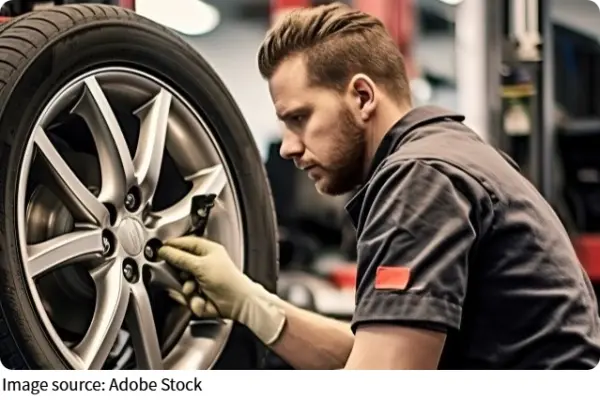
Pay Attention to Road Conditions
Sometimes, the tires are not the main problem. Rainwater, mud, loose gravel, and sand can all reduce the grip available between the tires and the road. Even well-designed tires cannot provide the same traction on every surface.
On wet roads, water may build up between the rubber and the pavement. If the tires cannot clear it effectively, the vehicle may lose contact with the road, a condition called hydroplaning. Steering and braking can then become less effective.
When driving in rain, we should reduce speed, leave more distance from the vehicle ahead, and avoid sharp turns. On loose or muddy surfaces, gentle acceleration and smooth steering can help us maintain control. Avoid driving through deep standing water whenever possible.
Use Smooth Driving Movements
Our driving habits can also contribute to slipping. Pressing the accelerator too quickly may cause the drive wheels to spin, especially on wet roads. Braking sharply or turning suddenly can also reduce stability.
We can lower these risks by accelerating gradually and slowing down early when approaching traffic lights or bends. Before entering a corner, reduce speed while the vehicle is traveling straight whenever possible. This gives the tires a better chance to maintain grip during the turn.
If the car starts sliding, avoid sudden braking or sharp steering movements. Ease off the accelerator and make controlled adjustments. The appropriate response depends on which wheels are losing grip, so we should understand the vehicle's stability-control features and follow the instructions in the owner's manual.
Check Tire Pressure and Installation
Incorrect tire pressure may affect handling and braking. Tires that are underinflated or overinflated may not maintain their intended shape and contact with the road.
We should check the pressure when the tires are cold and follow the figures recommended by the vehicle manufacturer. The maximum pressure printed on the tire is not necessarily the correct everyday setting.
Installation also deserves attention. Directional tires need to face the correct way, while some models have designated inside and outside surfaces. A mechanic can check these details, along with wheel alignment, balancing, and suspension components, if slipping continues.
Lykkers, new tires do not guarantee perfect grip in every situation. Quality, size, pressure, installation, road conditions, and driving habits all influence how our cars respond. By checking these factors and driving smoothly, we can identify potential problems and make better decisions on the road.
If your vehicle repeatedly slips on ordinary paved roads, pulls to one side, or vibrates unusually, arrange a professional inspection. When the car feels difficult to control, stop somewhere safe and seek assistance rather than continuing the journey.