A Bear's Powerful Snout

Isla
| 09-10-2026
 · Animal team
A bear moving through a forest may appear to be relying mainly on sight and hearing, but another sense is doing an enormous amount of work.
A bear's nose, also called a snout, can detect scents over impressive distances, helping the animal understand what is happening around it even when something cannot be seen.
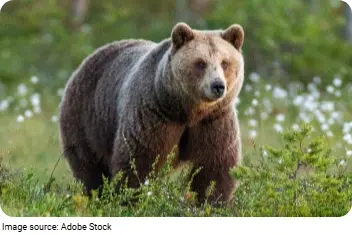
A Sense Far Beyond Our Own
Humans have a relatively limited sense of smell compared with bears. Even animals known for strong scent detection, such as tracking dogs, do not match the extraordinary ability of bears described by wildlife researchers and conservation organizations. Some estimates suggest that a bear's sense of smell may be thousands of times more sensitive than a person's.
Exact comparisons can vary because scent detection depends on the species, environment, and method used to measure it. Still, there is little doubt that smell is one of the bear's most powerful senses.
What Makes Their Snouts So Effective?
The secret begins with the bear's nasal structure. Bears have complex nasal passages containing substantial amounts of tissue devoted to detecting scent molecules. As air moves through these passages, it comes into contact with areas containing scent receptors.
The brain also plays an important part. Information collected by the snout must be processed and interpreted, and bears have a highly developed olfactory system dedicated to processing it. This allows them to recognize and respond to a wide range of smells in their environment.
Finding Food Without Seeing It
One of the most useful applications of this ability is locating food. Bears have varied diets that can include fruits, nuts, vegetation, insects, and other natural food sources. Strong scent detection can help them identify promising food areas even when the source is hidden by vegetation or located some distance away.
This can be particularly valuable when food is scattered across a large landscape. Instead of searching every location equally, a bear can follow useful scent clues and investigate areas that appear more promising. Their powerful snouts can also help them recognize seasonal changes in food availability. As different plants produce fruit or other natural resources become available, scent can provide information that supports the bear's search.
Smell Helps Bears Read Their Surroundings
A bear's snout does more than locate food. Scent can provide information about other animals and changes in the surrounding environment. Bears may detect other creatures without seeing them directly. This ability can help bears decide where to move and which areas to investigate. Smell is therefore an important part of their awareness, working alongside vision and hearing.
Environmental conditions can influence how scents travel. Wind, humidity, and temperature can all affect the movement and concentration of scent molecules. A bear's ability to interpret these changing scent signals makes its sense of smell even more useful in varied conditions.
Smell Through the Seasons
A bear's reliance on scent can change as its surroundings change. During periods when food is abundant, smell can help locate different resources across a broad area. At other times of the year, the ability to detect food efficiently becomes especially valuable.
Bears that spend part of the year in dens also experience major changes in their daily activity. Even while resting for extended periods, their strong sense of smell remains useful for detecting changes in the environment near their shelter.
Why This Ability Matters
Understanding a bear's sense of smell also helps people appreciate why responsible behavior is important in bear habitats. Because these animals can detect scents associated with food from considerable distances, careless storage of food or waste can attract their attention.
Keeping food and scented items properly secured and maintaining a respectful distance from bears can help reduce unnecessary encounters. Protecting natural habitats is equally important because bears depend on healthy environments containing the resources they need.
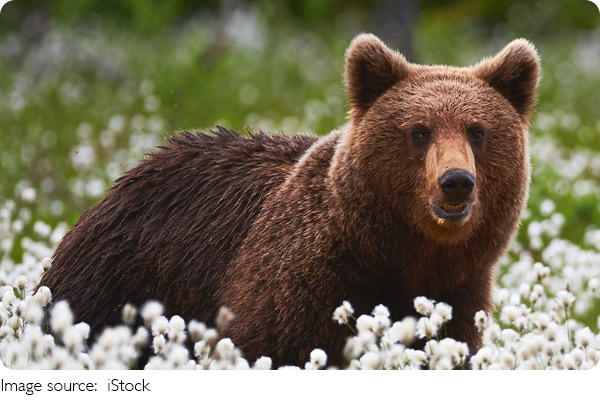
A bear's extraordinary sense of smell is much more than an interesting biological feature. Their powerful snouts offer an impressive reminder of how differently animals can experience the same natural environment.