Why Are Bluebirds Blue

Sofia Alvarez
| 19-10-2026
 · Animal team
Bluebirds are easy to recognize by their striking blue feathers, which stand out against green trees and open landscapes. Their color may seem straightforward, but the science behind it is surprisingly interesting.
Unlike many brightly colored objects in nature, a bluebird’s appearance is not primarily created by blue pigment. Instead, the structure of its feathers interacts with light in a special way, producing the blue shades visible to the human eye.
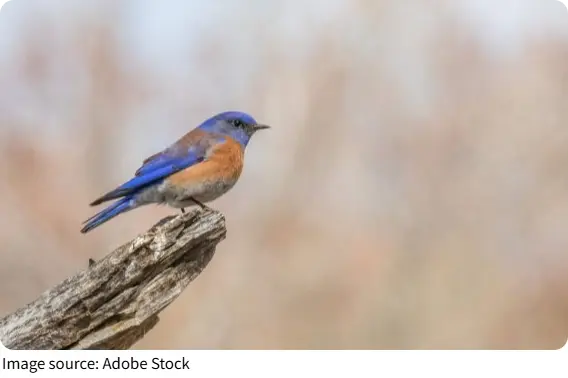
Blue Feathers Work Differently
Many colors in the natural world come from pigments, which are substances that absorb certain wavelengths of light and reflect others. Melanin, for example, contributes to dark brown and black shades in feathers, while other pigments produce colors such as yellow and red.
Blue coloration often follows a different process. In bluebirds, microscopic structures within the feathers influence how incoming light behaves. These structures scatter light in ways that make blue wavelengths especially noticeable. This phenomenon is known as structural coloration. Rather than relying mainly on a blue pigment, the feather’s physical arrangement helps create the color that people see.
How Light Creates the Blue Effect
Sunlight contains a range of visible wavelengths, each associated with a different color. When light reaches a bluebird’s feathers, some wavelengths interact with the feather’s internal structure differently from others. The microscopic arrangement scatters certain wavelengths more effectively, making blue light more prominent in the reflected light. This is not the same as a painted blue surface, where pigment is mainly responsible for the color.
The exact appearance depends on the feather’s structure and the angle of illumination. As the bird changes position, the way light reaches and leaves its feathers may change as well. Consequently, the blue can look more intense in one setting and softer in another. Structural coloration occurs in other parts of nature, too. Some butterflies and other animals display vivid colors because of the way light interacts with microscopic surfaces rather than because of pigments alone.
Why Lighting Changes a Bluebird’s Appearance
A bluebird may look especially brilliant in bright daylight, while its feathers can appear duller in shade. This difference does not necessarily mean the bird’s feathers have changed. Instead, the amount and direction of available light affect how the color is perceived.
Against a dark background, blue feathers may appear particularly vivid because they contrast with the surroundings. Under cloudy skies or in deep shade, less light reaches the feathers, making their color seem less noticeable. Viewing angle can also influence the effect. A bird turning its head or shifting its wings changes the relationship between its feathers, the light source, and the observer. Small movements may therefore produce visible differences in brightness.
The Role of Other Feather Colors
Bluebirds are not blue from head to tail. Depending on the species, plumage can include blue, white, gray, reddish-brown, and other shades. These differences result from a combination of feather structure, pigments, and the arrangement of feathers across the body.
Melanin is important because it contributes to dark coloration and can influence how structural blue appears. In many blue feathers, melanin beneath the light-scattering structures absorbs stray light, helping the blue coloration appear more distinct. This combination shows that bird coloration is not always produced by a single mechanism. Different materials and microscopic features can work together to create the final appearance.
Why Color Matters in Nature
Feather color can play a role in communication and interactions between birds. Visual signals may help individuals recognize members of their own species or assess potential mates. However, the importance of coloration varies across species, behaviors, and environmental conditions.
Color also affects how a bird appears within its habitat. Blue feathers may stand out against certain backgrounds while blending more easily into others, depending on lighting and surroundings. It is important not to assume that every color has one simple purpose. A bird’s appearance develops through several biological processes, and its role in everyday life can involve multiple factors.
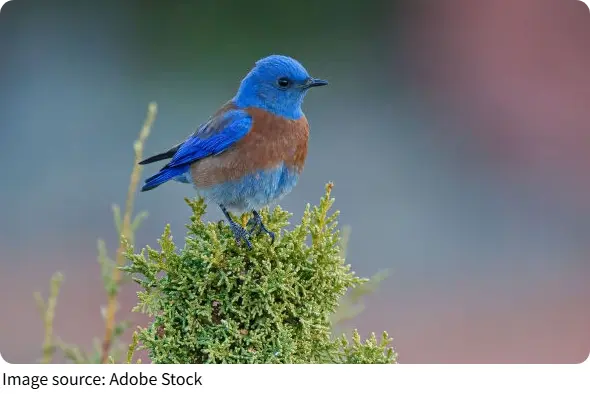
The blue feathers of bluebirds demonstrate how nature can produce vivid colors through microscopic structures. Instead of depending mainly on blue pigment, these feathers scatter light in ways that make blue wavelengths especially visible. The next time a bluebird appears in a garden or tree, its brilliant plumage offers a small reminder that some of nature’s most familiar colors have fascinating scientific explanations.