A Fox’s Powerful Nose

Liam Reilly
| 13-10-2026
 · Animal team
Foxes are known for their sharp hearing, quick movements, and ability to adapt to different environments. Yet one of their most useful natural abilities is often less noticeable: their remarkable sense of smell.
From detecting food hidden beneath leaves to recognizing familiar scent marks, these animals rely on odors to gather information about the world around them.
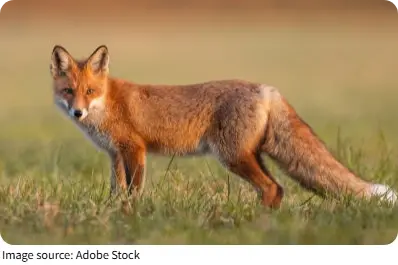
How a Fox’s Sense of Smell Works
A fox’s nose does much more than identify pleasant or unpleasant odors. Like other mammals, it has specialized sensory cells that respond to airborne chemicals. When odor molecules enter the nasal passages, these cells send signals to the brain, where the information is processed and interpreted.
This ability allows a fox to distinguish between different scents in its surroundings. The smell of a potential food source, the presence of another animal, or an unfamiliar odor may each provide useful information.
A fox does not experience its environment through smell alone. Vision, hearing, and touch also contribute to its awareness. However, scent offers information that may be difficult to obtain through sight or sound, especially when something is concealed by vegetation or darkness.
Finding Food Through Scent
Locating food can be challenging when the ground is covered with plants, fallen leaves, or snow. A fox can use its sense of smell to investigate promising areas and identify possible food sources that are not immediately visible.
Its diet varies according to habitat, season, and availability. Small mammals, insects, birds, fruit, and other naturally available foods can all form part of its diet. Odor can help a fox decide where to investigate, although smell alone does not guarantee that food will be found.
Once a potential target has been detected, the fox may combine scent with sound and movement to determine its next action. This coordination between different senses is especially valuable when searching for small animals concealed in grass or beneath loose ground cover.
Smell is therefore one part of a larger hunting strategy. Experience, environmental conditions, and the behavior of potential prey also influence whether a search succeeds.
Reading Messages Left by Other Foxes
Scent also plays an important role in communication among foxes. These animals use scent markings to leave chemical signals in their surroundings. Depending on the circumstances, scent may also contribute to social recognition and the way foxes respond to their surroundings.
For a solitary animal that often travels across a broad area, these chemical signals offer a useful way to exchange information without meeting another fox directly. Smell allows information to remain in the environment after the animal that left the mark has moved away.
Why Weather and Habitat Matter
A fox’s ability to detect odors depends partly on the environment. Wind can carry scent molecules over a distance, while rain may alter or wash away some scent traces. Temperature, humidity, vegetation, and the nature of the surface can also affect how odors travel and persist.
Dense plants may hide a potential food source from view, making scent particularly useful during a search. At the same time, a strong mixture of environmental odors can make it more difficult to distinguish one source from another. Seasonal changes also influence what a fox encounters. During different times of the year, food availability, vegetation, and the movement of other animals may change the range of scents present in its habitat.
Smell Works Together With Other Senses
Although its nose is highly useful, a fox is not guided by scent alone. Its large, mobile ears help detect faint sounds, while its eyes assist with movement and navigation. These senses work together to create a more complete picture of its surroundings.
For example, an odor may suggest that something interesting is nearby, but a sound could reveal movement in the grass. Visual information may then help the fox determine the source's location. This flexibility is important because different situations require different kinds of information.

A fox’s sense of smell is far more than a simple way to detect food. Its sensitive nose is an important part of the natural toolkit that allows this adaptable animal to explore its surroundings and meet everyday challenges.