Snow Leopard Tail Power

Arvind Singh
| 09-10-2026
 · Animal team
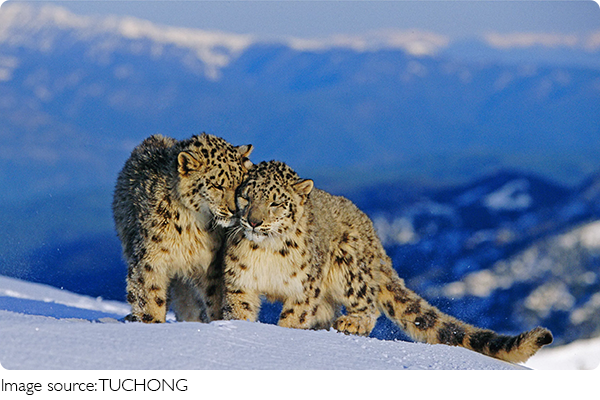
A snow leopard can move across steep slopes, rocky ledges, and uneven mountain surfaces with remarkable control. Its large paws and powerful legs certainly help, but another feature is just as important: its long, thick tail.
Far from being merely a striking part of its appearance, the tail serves as a flexible balancing aid as the animal climbs, turns, jumps, and moves across difficult ground. Its design also provides useful protection against the cold.
A Tail Designed for the Mountains
Snow leopards live in rugged high-altitude environments where the ground can be steep, rocky, and covered with snow. Moving through such terrain requires excellent coordination because a small shift in body position can affect stability.
The snow leopard's tail is particularly well suited to this challenge. It is long, heavily furred, and muscular, giving the animal a substantial structure that it can move according to its body position. The tail can extend outward, swing from one side to another, or remain behind the body as the animal travels.
Keeping the Body Stable
Balance depends on keeping the body's weight properly positioned. When a snow leopard walks along a slope, its body may naturally lean or shift as each paw finds secure ground. The tail can move in response, helping counter these changes.
A useful comparison is a person extending their arms while walking along a narrow surface. The arms provide additional control when the body begins to tilt. The snow leopard achieves a similar effect with its tail. Its length and weight allow relatively small tail movements to influence body position.
Control During Climbing
Climbing requires more than strong limbs. Every movement changes the animal's center of balance, particularly when it reaches upward or places a paw on a higher surface. The tail can shift as the snow leopard climbs, helping maintain stability while the body changes position. When the animal turns around a rocky section or adjusts its direction, the tail can also move in coordination with the rest of the body.
A Useful Aid During Jumps
The tail becomes particularly useful when a snow leopard leaves the ground. During a jump, the animal has less opportunity to correct its position using its paws, so controlling body orientation becomes important. As the snow leopard moves through the air, its tail can change position and help influence balance and rotation. This can help the animal align its body for landing.
The tail does not provide the main force behind a jump. The powerful hind limbs perform that job. Instead, the tail acts as a control surface, helping the animal manage its position after takeoff and before reaching the ground.
Helping With Sharp Turns
Mountain travel often involves sudden changes in direction. A snow leopard may need to turn while climbing, moving across rocks, or adjusting its route. The tail can swing as the body changes direction, helping maintain stability during the maneuver. Its flexibility is important because the animal can reposition it quickly instead of keeping it fixed in one position.
This ability to make continuous adjustments contributes to the snow leopard's reputation as an agile mountain animal. The tail works alongside the rest of the body rather than serving as a separate tool.
More Than a Balance Aid
The snow leopard's tail has another important function in its cold environment. Its dense fur provides insulation, and the animal can wrap the tail around parts of its body while resting. Covering the face and other exposed areas can help reduce heat loss in cold conditions.
This makes the tail a particularly useful adaptation because the same structure supports movement and provides warmth. Its thick covering is therefore valuable even when the snow leopard is standing still. The tail's size and flexibility reflect the demands of the environment in which this animal lives. It needs to move effectively across challenging terrain while also coping with low temperatures.
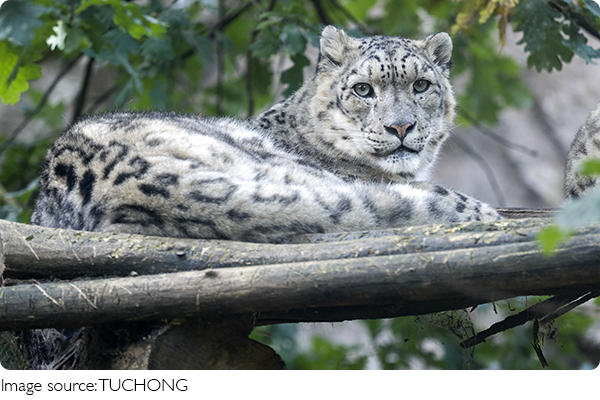
The snow leopard's tail is an excellent example of how a single body feature can serve multiple purposes. Rather than simply following the body's movements, the tail actively contributes to coordinated movement. In the steep and uneven landscapes of the high mountains, that extra control can make a significant difference.