Why Constellations Vanish

Tessa
| 29-09-2026
 · Travel team
Welcome to today's article. You look up in January and Orion is right there, easy to find.
Come back to the same spot in July and it's gone. The stars didn't go anywhere. You did.
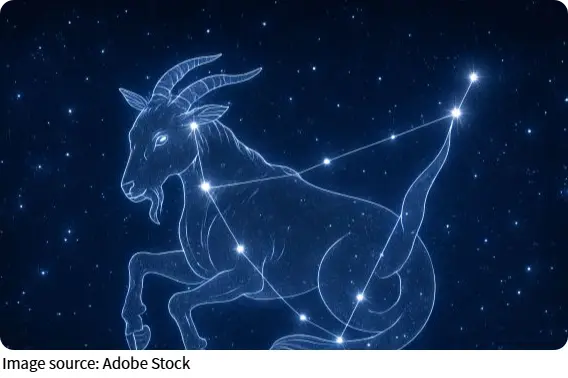
Earth's orbit changes your view
As Earth travels around the Sun over 365 days, the night side faces a different direction in space each month. In January, midnight points toward Orion. By July, midnight points toward Sagittarius instead. The stars stay put; your viewing angle shifts. Astronomers call the band of sky the Sun appears to cross the ecliptic, and the constellations along it are the zodiac ones. That's why Taurus, Leo, and Scorpius each get their season in the dark.
The Sun blocks half the sky
Here's the part people miss. At any given moment, the Sun sits in front of roughly half the celestial sphere, and you can't see stars through daylight. A constellation is "out" at night only when the Sun is on the opposite side of the sky from it. Orion is a winter evening star because the Sun sits near Sagittarius then. Six months later the roles swap. Nothing is hidden permanently, just temporarily out of view.

Why Orion feels like winter
Orion dominates northern winter skies for a simple reason: it's bright and it rises early. By late December it's already climbing in the east after sunset, and it stays up most of the night. The three stars of Orion's Belt, Alnitak, Alnilam, and Mintaka, are close to the celestial equator, so the constellation is visible from almost everywhere on Earth. Summer nights push Orion into the daytime sky, which is why you won't catch it in July no matter how late you stay up.
Circumpolar stars never leave
Not every constellation plays this game. Stars close to the celestial poles circle the pole without ever dipping below the horizon. From most of the United States, the Big Dipper and Cassiopeia stay visible year-round. The closer you get to the equator, the fewer circumpolar stars you keep. Stand at the North Pole and the entire northern sky is circumpolar; stand at the equator and nothing is.
How to catch a seasonal star
If you want to see a specific constellation, timing matters more than location. Scorpius, with its bright red star Antares, peaks on summer evenings in the Northern Hemisphere. Pegasus and Andromeda take over autumn. Taurus and Orion own winter. Spring belongs to Leo and Virgo. A free planetarium app like Stellarium will tell you exactly when your target rises, and the best window is usually a couple of hours after sunset when it's highest.
The zodiac runs on a schedule
The twelve zodiac constellations sit along the ecliptic, so each one is opposite the Sun at a predictable point in the year. When the Sun is in Cancer in late June and July, Sagittarius is up all night. When the Sun is in Sagittarius in December, Orion and Gemini take the stage. This is also why astrological signs and visible constellations don't line up the way people expect. The sky you see at night is always the one the Sun isn't standing in.
Next time you step outside and notice a familiar pattern has slipped away, remember it's not lost. It's just waiting for Earth to carry you back around. Go find your favorite one this season while it's still up.