Sunrise at Stellisee

Owen Murphy
| 09-10-2026
 · Travel team
Stellisee is one of the most recognizable alpine lakes in Switzerland, but its appeal goes far beyond a famous reflection. Sitting at about 2,537 metres above sea level above Zermatt, the lake combines open mountain scenery with one of the clearest views of the 4,478-metre Matterhorn.
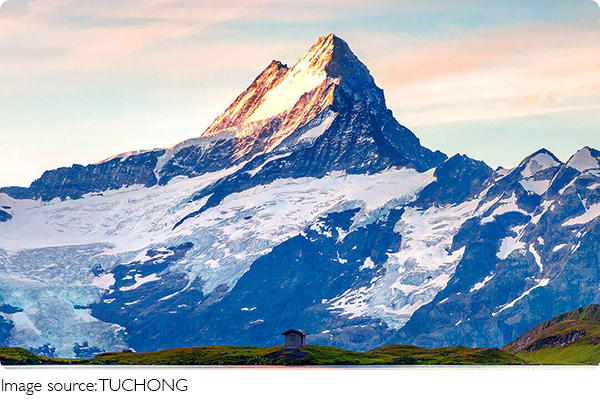
Under calm conditions, the mountain appears almost perfectly mirrored on the water, especially during the first light of day when the summit glows pink before the surrounding landscape brightens. A two-night stay in Zermatt gives you enough flexibility to experience this moment without turning the trip into a race against the clock.
Reach the Lake Before Sunrise
The famous reflection is never guaranteed. Wind, cloud and timing all influence the view, making preparation more important than photography equipment.
Plan the first morning carefully
Begin by taking the Sunnegga funicular from Zermatt, then continue by gondola to Blauherd. From Blauherd, Stellisee is approximately a 20-minute walk on a clearly marked mountain path suitable for most visitors during the snow-free season.
Leave enough time to reach the lakeshore at least 30 minutes before sunrise. The mountain often catches the first sunlight while the valley remains in shadow, creating the soft pink and golden colors that make this viewpoint so distinctive.
Instead of stopping at the first viewing point, walk around the shoreline. Even small changes in position alter the relationship between the Matterhorn, the lake and the surrounding rocks. Spending 45 to 60 minutes here usually produces a far richer experience than arriving, taking one photograph and leaving immediately.
Mountain mornings can be surprisingly cold, even in midsummer. Wear layered clothing, carry gloves if you are visiting early or late in the hiking season, and pack around 1 litre of water for the morning outing.
Turn the sunrise into a full hiking day
Once the reflection begins to fade, continue exploring instead of returning directly to Zermatt.
The Five Lakes Walk starts near Blauherd and links Stellisee, Grindjisee, Grünsee, Moosjisee and Leisee across roughly 9.8 km. Most hikers complete the route in about three to four hours, depending on breaks and photography.
Each lake has its own character. Stellisee is famous for reflections, Grindjisee sits among larch trees, while Leisee offers a gentler finish close to Sunnegga. Together they provide a much broader impression of the landscape than visiting only one viewpoint.
Carry at least 1.5 litres of water and snacks or a packed lunch. While mountain restaurants are available elsewhere in the area, stopping wherever the scenery is most appealing makes the walk far more enjoyable.
If afternoon clouds begin covering the Matterhorn, continue the hike anyway. The lakes, forests and surrounding peaks remain rewarding even when the summit disappears temporarily.
Stay Long Enough to Slow Down
Many visitors arrive in Zermatt on a day trip, photograph the Matterhorn once and leave. Staying two nights creates opportunities that are impossible to fit into a single hurried visit.
Choose accommodation near the lifts
Hotels within walking distance of the Zermatt railway station or the Sunnegga funicular make early departures much easier.
Mid-range hotels commonly range between CHF 220 and CHF 350 per night for a double room, while higher-end alpine hotels can cost considerably more depending on the season.
For two travelers sharing accommodation, CHF 500–750 per person provides a practical budget for two nights, mountain transport, meals and everyday expenses, excluding travel to Zermatt.
Private cars are not permitted inside the village. Visitors normally park in Täsch and continue the final section by shuttle train, leaving the village itself quiet and easy to explore on foot.
After returning from the mountains, spend the evening walking through central Zermatt instead of immediately resting. Traditional wooden buildings, cafés and mountain views create a completely different atmosphere from the high alpine trails.
Save one final viewpoint
Dedicate your second day to Gornergrat rather than trying to combine it with the sunrise excursion.
The Gornergrat Railway climbs to 3,089 metres in about 35 minutes, opening views across glaciers and numerous peaks exceeding 4,000 metres. From here, the Matterhorn appears dramatically different from the elegant reflection seen at Stellisee. Instead of standing alone, it becomes part of an immense alpine panorama.
Allow around two hours at the summit for short walks and changing viewpoints before returning to Zermatt.
The contrast between the two experiences is what makes the trip memorable. Stellisee highlights stillness and symmetry at sunrise, while Gornergrat reveals the scale of the surrounding Pennine Alps.
Zermatt rewards travelers who give the mountain time to change. Watch the first sunlight turn the Matterhorn pink above the calm waters of Stellisee, spend the day walking through alpine lakes and meadows, then return the following day for a wider perspective high above the glaciers. Rather than chasing a single famous photograph, you experience how the mountain transforms with light, elevation and distance throughout an entire stay.