Bryce Canyon's Hoodoo Trails

Hana
| 09-10-2026
 · Travel team
Bryce Canyon National Park in southern Utah is famous for the Bryce Amphitheater, a vast natural bowl filled with thousands of orange, pink and cream-colored hoodoos rising from the canyon floor.
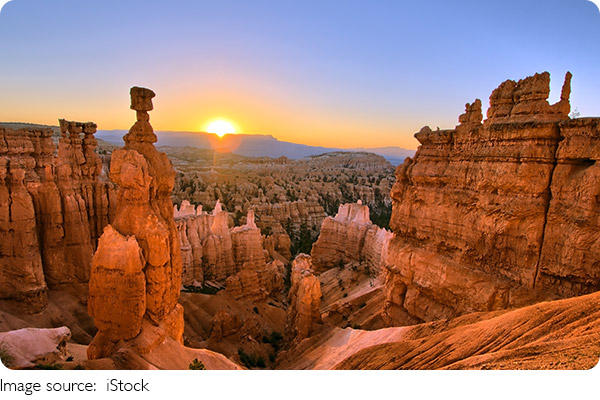
While the overlooks provide spectacular panoramas like the one shown here, the most memorable experience comes from walking among these towering rock formations rather than simply viewing them from above. Spending two nights near the park gives you enough time to enjoy sunrise, complete one classic trail and explore the amphitheater at a relaxed pace instead of rushing between viewpoints.
Go Below the Rim
Most first-time visitors spend most of their time driving to overlooks. Walking into the amphitheater completely changes your perspective and reveals the remarkable scale of the hoodoos.
Start with the Navajo Loop
Sunrise Point and Sunset Point are the ideal starting locations for exploring Bryce Amphitheater.
The Navajo Loop Trail covers approximately 2.2 km with about 160 metres of elevation change, and most visitors complete it in 1.5 to 2 hours. The route descends among narrow rock passages before climbing back to the rim, offering constantly changing views of the hoodoos.
If you have more time and moderate hiking experience, combine the Navajo Loop with the Queen's Garden Trail. The full circuit measures about 4.6 km and usually takes 2.5 to 3 hours, making it one of the park's best introductions.
Start before 09:00 whenever possible. Morning temperatures are cooler, parking is easier, and sunlight creates stronger contrast across the colorful rock formations.
Carry at least 1.5 litres of water per person. Although the trails are not especially long, the climb back to the rim feels much steeper than the descent.
Spend time at the overlooks
After returning to the rim, continue to several viewpoints instead of leaving immediately.
Bryce Point offers one of the broadest views across the amphitheater, while Inspiration Point reveals multiple layers of hoodoos stretching toward the distant plateau.
Rather than stopping for only a few minutes at each overlook, spend 20–30 minutes watching how light changes across the cliffs. The colors become noticeably warmer during the final hours before sunset, revealing subtle differences between orange sandstone, pale limestone and darker rock layers.
Short walks between viewpoints also provide opportunities to appreciate the landscape without committing to another major hike.
Slow Down and Stay Longer
Bryce Canyon is relatively compact, making it an ideal destination for a slower itinerary rather than a packed sightseeing schedule.
Stay near the park entrance
Accommodation in Bryce Canyon City provides the quickest access to the main viewpoints and trailheads.
Comfortable hotels generally range between US$180 and US$320 per night for a double room, depending on the season and booking date.
For two travelers sharing accommodation, US$400–650 per person is a practical budget for a two-night stay, including lodging, park entry, meals and local transportation, excluding flights.
If you are visiting several parks in southern Utah, avoid treating Bryce Canyon as only a short stop between destinations. One full day inside the park offers a much richer experience than arriving for only an afternoon.
Experience sunrise and sunset
Bryce Canyon is one of the few national parks where both sunrise and sunset dramatically transform the scenery.
Sunrise Point lives up to its name as the first light reaches the upper hoodoos, gradually illuminating the amphitheater from east to west.
Return to Bryce Point or Inspiration Point during the evening. The lower sun produces deeper shadows that emphasize the intricate shapes of the rock formations far more effectively than midday light.
Spring through autumn generally offers the most comfortable hiking conditions, while winter creates a completely different landscape as snow settles across the orange hoodoos. Each season provides a distinct photographic character.
Even at elevations exceeding 2,400 metres, strong sunshine is common. Wear sunscreen, sunglasses and layered clothing because temperatures can change noticeably between morning and afternoon.
Bryce Canyon rewards visitors who step beyond the overlooks. Walk beneath the hoodoos, pause at the rim as the light changes, and allow enough time to experience both sunrise and sunset across the amphitheater. The shifting colors, towering rock formations and surprisingly accessible trails combine to create one of the most distinctive landscapes in the American Southwest.