Jordan's Red Desert

Simone
| 10-10-2026
 · Travel team
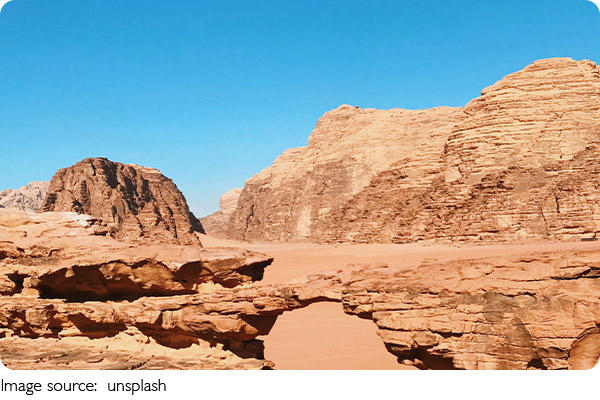
Southern Jordan is home to one of the Middle East's most distinctive desert landscapes, where broad sandstone valleys, isolated rock massifs and open plains stretch to the horizon. The towering formation rising from the desert floor, much like the one seen here, dominates the landscape and constantly changes colour as the sun moves across the sky.
Instead of rushing from one landmark to another, spend two or three days exploring this protected desert region to appreciate how geology, light and space define the experience.
Read the Desert Landscape
Many visitors focus on the enormous sandstone mountains, but understanding how the landscape formed makes every viewpoint more rewarding.
Explore the open valleys
Large areas of southern Jordan consist of broad desert basins separated by isolated sandstone and granite mountains. These formations rise abruptly because softer surrounding rock gradually eroded away while the harder rock resisted weathering over millions of years.
One of the best ways to experience this terrain is by joining a 4×4 desert excursion covering approximately 40–70 km. Most half-day tours last 4–5 hours, while full-day routes extend to 7–8 hours, allowing enough time to visit natural rock bridges, narrow canyons and wide desert plains.
The landscape changes surprisingly often during the journey. Fine orange sand gives way to gravel plains, while massive rock walls suddenly appear from otherwise open terrain. Looking across the valley instead of focusing only on individual rock formations helps reveal the enormous scale of the desert.
Carry at least 3 litres of water per person, sunglasses, sunscreen and a wide-brimmed hat. Shade is limited throughout most of the day, and dry air can increase dehydration without obvious warning signs.
Notice the colours throughout the day
The desert rarely looks the same for more than a few hours.
Soon after sunrise, the sandstone often appears pale gold. Around midday, stronger sunlight emphasizes the lighter bands within the cliffs. As afternoon progresses, iron-rich minerals in the rock reflect warmer shades of orange and deep red, creating the rich colours for which this region is well known.
Because the landscape is open, even small changes in sunlight dramatically affect photography. Standing at the same viewpoint in both morning and late afternoon often produces images that appear to have been taken in different locations.
Desert winds also reshape the surface over time. Fine sand collects around shrubs and rocky outcrops, gradually forming low dunes and rippled patterns that continue to evolve throughout the year.
Travel Comfortably in the Desert
A successful visit depends more on preparation and timing than on covering long distances.
Plan around temperature
Walking is most comfortable during the first two to three hours after sunrise and again during the late afternoon.
Even relatively short walks of 3–6 km across open desert require more energy than similar distances on paved paths because soft sand increases effort with every step.
Wear lightweight long sleeves rather than relying only on short-sleeved clothing. They reduce direct sun exposure while helping protect against windblown sand.
Sturdy walking shoes are usually a better choice than sandals. Although the terrain often appears smooth from a distance, scattered rocks and uneven ground become more noticeable during longer walks.
If joining a guided vehicle tour, ask how much walking is included. Some itineraries involve only brief stops, while others incorporate longer hikes through canyons and across sandstone shelves.
Stay near the protected desert area
Desert camps and nearby visitor accommodations provide convenient access for both sunrise and sunset excursions.
Comfortable accommodation generally ranges from JOD 60–120 per night for a double room, while many packages include breakfast and dinner.
For two travelers sharing accommodation, JOD 220–420 per person is a practical budget for a three-day visit, covering accommodation, local transportation, guided desert excursions and everyday meals, excluding travel to Jordan.
Spring and autumn generally provide the most comfortable daytime temperatures for outdoor exploration, while clear winter days often offer exceptional visibility across the desert. Summer remains suitable for early morning and evening activities, provided visitors avoid the hottest hours around midday.
This desert is defined less by individual landmarks than by its immense sense of space. Slow down, travel across the open valleys, observe how the sandstone changes colour with the sun and spend time simply looking across the horizon. The landscape reveals its character gradually, rewarding those who take the time to experience it beyond a single viewpoint.