Valley of Fire Guide

Amina Hassan
| 21-09-2026
 · Travel team
In the United States, roughly an hour northeast of Las Vegas, Valley of Fire State Park feels like another world.
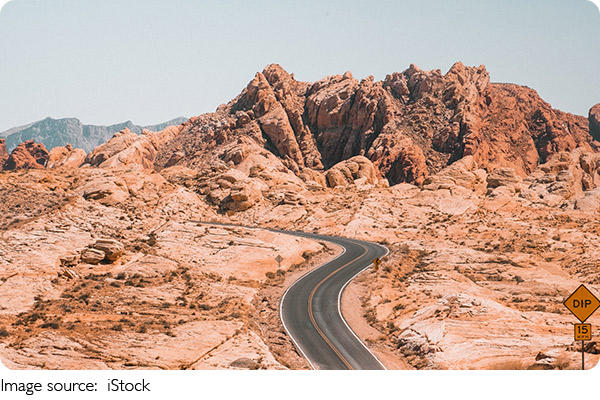
Covering more than 40,000 acres, the park is defined by sweeping formations of red, orange, pink, and cream sandstone across the Mojave Desert.
With scenic roads, distinctive hiking routes, ancient petroglyphs, and striking viewpoints, it offers an easy way to experience one of Nevada’s most memorable desert landscapes.
Valley of Fire State Park
Fire Wave
The Fire Wave is one of the park’s signature sights. Curved bands of red, pink, and pale sandstone create a natural wave-like pattern across the terrain.
The Fire Wave/Seven Wonders Loop covers about 1.8 miles (2.9 kilometers) and passes several distinctive geological formations. The colorful rock patterns make the route particularly appealing for photography.
Seasonal trail restrictions may apply during the hottest months, so check current conditions before visiting.
White Domes
The White Domes Loop covers approximately 1.1 miles (1.8 kilometers) through pale sandstone formations, colorful cliffs, sandy terrain, and a narrow canyon.
The changing landscape gives this short hike a strong sense of variety, making it a good choice for visitors who want to explore on foot without committing to a long route.
Elephant Rock
Near the east entrance, Elephant Rock is a naturally sculpted sandstone formation with a distinctive elephant-like shape.
The surrounding loop is about 1.2 miles (1.9 kilometers), while the formation itself can be reached with a much shorter walk. Its convenient location makes it an easy stop during a scenic drive.
Ancient Petroglyphs
At Atlatl Rock, visitors can see ancient petroglyphs carved into sandstone by Indigenous people.
A staircase leads to the rock panel, allowing visitors to view the carvings without a lengthy hike. The site adds an important cultural and historical element to a day focused on the park’s natural landscape.

Scenic Drives and Activities
A scenic drive is one of the best ways to connect Valley of Fire’s major attractions. Roads lead to formations, viewpoints, trailheads, picnic areas, and visitor facilities.
Popular activities include:
- Scenic driving
- Hiking
- Landscape photography
- Petroglyph viewing
- Rock formation sightseeing
- Picnicking
- Camping
- Visiting the Visitor Center
The Visitor Center offers information about the park’s geology, natural environment, and history.
Entry and Camping
Current day-use admission is $15 per vehicle for non-Nevada vehicles and $10 per vehicle for Nevada vehicles.
Camping costs $25 per vehicle per night for non-Nevada vehicles and $20 for Nevada vehicles, with an additional $10 for sites with utility hookups.
The park operates year-round, although individual trails may have seasonal access restrictions.
How to Get There
Driving is the most convenient way to reach Valley of Fire from Las Vegas.
The journey generally takes around one hour, depending on your starting point and road conditions. Travelers typically take Interstate 15 before continuing toward the park.
A car also makes it easier to combine several trailheads and viewpoints in one visit. Download an offline map before leaving Las Vegas, as mobile connectivity can vary in some areas.
Accommodation
Camping inside the park provides the closest stay to the surrounding landscape. Valley of Fire has two campgrounds with a combined 72 units.
For hotel accommodation, Overton and the surrounding Moapa Valley area offer nearby options. Room prices can commonly range from around $80–$150 per night, depending on availability and season.
Local Food
Picnic areas make it convenient to bring food into the park for a full day of exploration.
A simple food plan may cost approximately:
- Breakfast: $8–$15
- Picnic lunch: $10–$18
- Dinner nearby: $15–$25
- Water and non-alcoholic drinks: $2–$6
Bring enough food and water for your planned activities, particularly if you intend to hike several trails.
Planning Tips
Start early for cooler temperatures and softer morning light. Comfortable walking shoes, sun protection, water, and an offline map are useful for a day in the park.
Allow around two to three hours for the main viewpoints and scenic areas. To combine several trails, Atlatl Rock, and photography stops, plan for approximately four to five hours.
Check current trail access, weather conditions, entrance fees, and park information before departure.
A Striking Nevada Escape
Valley of Fire State Park brings together dramatic sandstone formations, memorable hiking routes, ancient petroglyphs, and scenic desert roads within easy reach of Las Vegas.
Its combination of accessible attractions and spectacular geology makes it an excellent destination for a half-day or full-day escape into Nevada’s desert landscape.