Crocodiles Adapt To The Wild

Adrian
| 20-09-2026
 · Animal team
Saltwater crocodiles are famous for their ability to return to familiar territory, sometimes travelling long distances after being moved. But a new study from Bangladesh has revealed that animals raised in captivity may behave very differently.
Researchers found that mature captive-raised crocodiles released into the Sundarbans settled into the wild rather than attempting to return to the breeding centres where they had lived for years.
The findings, published in Wildlife Research, could help conservationists develop more effective ways to restore depleted crocodile populations.
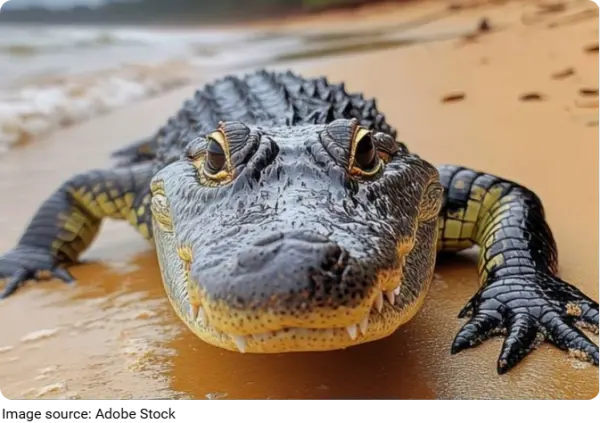
Crocodiles Usually Have A Strong Homing Instinct
Homing behaviour is common across the animal kingdom, helping animals return to nests, feeding grounds or familiar territories. Crocodilians are particularly impressive navigators and have often been recorded returning towards the places where they were originally captured.
Ru Somaweera, a behavioural ecologist and Adjunct Associate Professor at Murdoch University, explained that this strong homing ability can create major problems for relocation programs. He noted that while wild crocodiles often try to return to their original territories, scientists have known much less about how animals raised in captivity behave after release.
To investigate, researchers focused on saltwater crocodiles in Bangladesh’s Sundarbans mangrove forest.
A Population Struggling To Recover
Saltwater crocodiles in Bangladesh were heavily reduced by commercial hunting before legal protection was introduced in 1973. Despite those protections, the population has shown little measurable recovery.
Most of the country’s remaining known animals live in the Sundarbans, where a recent survey estimated that only about 140 mature crocodiles remain.
Traditional reintroduction programs have often relied on hatchlings. However, young crocodiles experience very low survival rates and need many years before reaching reproductive maturity.
Somaweera explained that releasing older captive-raised animals could provide an alternative, but only if those crocodiles were able to adjust to unfamiliar habitats rather than attempting to return to captivity.
Five Crocodiles Were Tracked
Researchers fitted five mature saltwater crocodiles with satellite tracking devices and monitored their movements for several months.
The group included three females that had spent between eight and 22 years in captivity, one wild crocodile released at the same location where it was captured and another wild animal moved approximately 132km from its original territory.
The contrast between the animals was striking.
None of the three captive-raised females showed signs of trying to return to their breeding facility. Instead, they established relatively small home ranges and moved in patterns similar to the local wild crocodile.
Somaweera said this behaviour suggested that the captive-raised animals were able to adapt to their new environment surprisingly well.
A Wild Crocodile Tried To Head Home
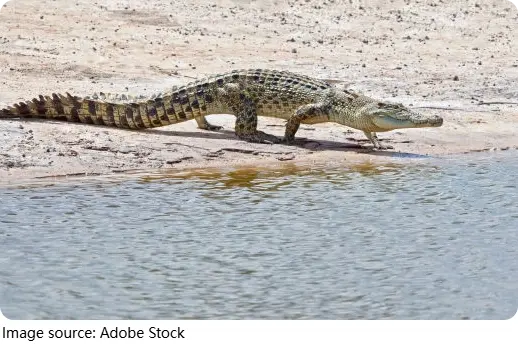
The translocated wild crocodile, named Jongra, behaved very differently. Although Jongra did not reach his original capture site during the study period, his movements were consistently directed towards it. He travelled much farther each day than the other crocodiles and covered a significantly larger area.
On some days, Jongra moved more than 30km, a pattern researchers considered typical of strong homing behaviour.
A New Option For Conservation
The findings suggest that releasing subadult or adults captive-raised crocodiles may be a useful tool for strengthening wild populations.
Researchers stressed that relocation of wild crocodiles still requires careful planning because their instinct to return home may remain powerful even after long-distance transport.
The study does not prove that all captive-raised crocodiles will adapt successfully, particularly because only five animals were tracked. However, the results provide encouraging evidence that mature captive animals may have greater conservation value than previously assumed.
For regions where crocodile numbers remain dangerously low, releasing larger animals that are already closer to breeding age could offer a more practical alternative to relying entirely on vulnerable hatchlings.