Make Your Trieste Trip Count

Elise
| 18-09-2026
 · Travel team
Trieste is a great city for travelers who enjoy mixing waterfront views, architecture, museums, and relaxed walks in one trip.
Readers can spend a morning exploring the elegant city center, an afternoon at a seaside castle, and another part of the day walking along the coast.
The city is also compact enough to explore on foot while having a useful public transport network for attractions farther from the center.
Start at Piazza Unità d'Italia
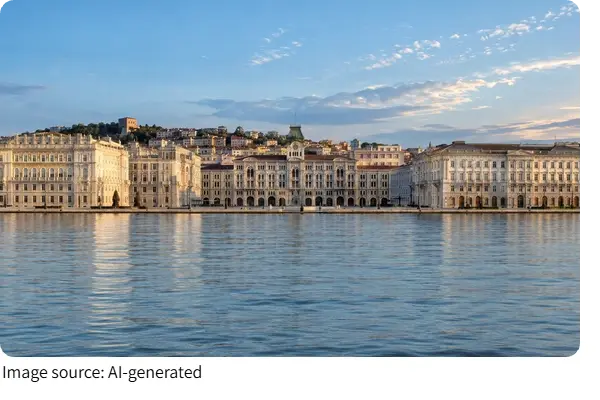
Begin in Piazza Unità d'Italia, the large waterfront square that opens directly toward the Gulf of Trieste. Its broad layout and surrounding historic buildings make it a natural starting point for exploring the city.
From here, walk toward Molo Audace for an easy seaside stroll. The pier extends into the water and provides a different perspective of the city skyline. This area is free to visit, so it works well for travelers looking for something enjoyable without adding another attraction fee to the budget.
Continue toward the Canal Grande, a picturesque waterway in the center of Trieste. The surrounding streets are convenient for combining sightseeing with a meal or a coffee break.
For travelers arriving by public transport, Trieste's urban bus network is useful for reaching neighborhoods outside the central walking area. A standard 60-minute ticket costs about US$1.75, while a full-network daily ticket costs approximately US$3.90.
Trieste
Visit Miramare Castle and Park
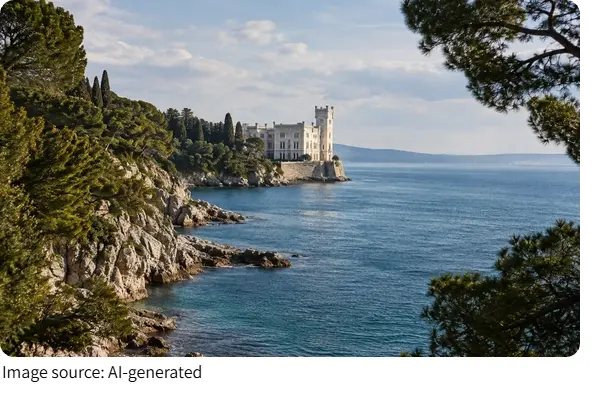
One of the best additions to a Trieste itinerary is Miramare Castle, located beside the Gulf outside the city center. The property combines a historic castle with a large seaside park, making it worthwhile even for visitors who do not want to spend the entire day inside a museum.
The castle is open daily from 9 a.m. to 7 p.m., with the ticket office closing at 6:30 p.m. General admission is about US$20. The surrounding park is free and has seasonal opening hours, remaining open later during the warmer part of the year.
Explore San Giusto Hill and Roman Remains
Head uphill toward San Giusto to see another side of Trieste. The area provides elevated views across the city and includes San Giusto Castle, where visitors can explore the historic complex and enjoy the surrounding scenery. The nearby archaeological area is especially interesting for travelers curious about ancient Trieste.
The Roman Theatre sits within the modern city center and remains visible along Via del Teatro Romano. The site can be viewed from outside at any time, while interior access requires arrangements with the relevant heritage authority. Admission to the archaeological area is free.
Walk Along Barcola
When the weather is pleasant, make time for Barcola, Trieste's coastal area. It offers a change of pace from the historic center, with a long waterfront setting that is popular for walking and enjoying views across the Gulf.
Barcola is particularly suitable for travelers who want an outdoor activity without committing to a demanding hike. The area can be reached using city buses, including services operating toward Barcola.
Food, Stay, and Planning Tips
Trieste has accommodation ranging from simple guesthouses to upscale hotels. Prices change considerably according to location and availability, so comparing current rates before booking is important. Staying near the central square, Canal Grande, or railway station can be convenient because many sights are walkable and public transport connections are nearby.
For meals, the city has plenty of cafés and restaurants in the central area. A simple meal can be less expensive than dining at a higher-end restaurant, while waterfront locations may carry higher prices. Checking the menu before ordering is a straightforward way to keep spending within the planned budget.
Trieste is easy to enjoy when the itinerary leaves enough room for both sightseeing and slow walks. Start with the waterfront center, add the Roman Theatre and San Giusto area for history, then make time for Miramare and Barcola to experience the city's coastal side. Public transport keeps the farther attractions accessible without making every journey dependent on a car.