Tiny Creatures, Big Talents

Adrian
| 04-09-2026
 · Animal team
Animals with backbones tend to receive most of the attention. Pandas become conservation icons, whales inspire documentaries and big cats dominate wildlife photography. Meanwhile, more than 1.3 million known species of invertebrates are doing much of the less glamorous work that keeps ecosystems functioning.
They pollinate plants, recycle dead material, support food webs and occupy almost every habitat imaginable. Some also possess abilities that sound closer to science fiction than natural history.
The 2026 Invertebrate of the Year shortlist is a reminder that some of the planet’s strangest animals may be hiding under a stone, floating offshore or crawling through the garden.

The Jellyfish That Starts Again
The immortal jellyfish has perhaps the shortlist’s most enviable trick. Under certain conditions, it can revert from its mature form to an earlier juvenile stage and begin developing again.
They can still be eaten, become sick or die from environmental pressures. What makes the species extraordinary is its ability to reverse part of its life cycle rather than simply continuing along the usual path from youth to maturity.
For researchers interested in ageing and cellular regeneration, that alone makes it one of the most fascinating candidates.
A Sea Slug Powered by Sunlight
The leaf sheep may be even stranger.
This tiny marine slug looks almost decorative, with a green body and structures resembling miniature leaves. Its unusual appearance is connected with an equally unusual survival strategy: it can retain chloroplasts obtained from the algae it eats and benefit from the energy they produce.
That ability has earned it the description of a “solar-powered” sea slug. Few animals blur the visual boundary between plant and creature quite as convincingly.
The Loudest Member of the Group
Subtlety is not one of the greengrocer cicada’s talents. Its call can exceed 120 decibels, placing the sound close to levels capable of causing physical discomfort to human ears.
Cicadas produce their calls to communicate and attract mates, but the sheer volume achieved by this Australian species makes it an unusually dramatic example of how insects use sound.
Then there is the wandering glider, a dragonfly famous for almost the opposite reason: movement. It undertakes extraordinarily long migrations and is considered the most far-ranging migratory insect.
A Comeback That Looked Impossible
The Lord Howe Island stick insect offers one of the shortlist’s strongest conservation stories. The giant insect was once believed to have disappeared after invasive rats reached its island habitat. A tiny surviving population was later found on Ball’s Pyramid, a steep volcanic formation rising from the sea.
Its rediscovery became an example of how a species considered effectively lost can sometimes survive in an unexpected refuge.
Its place on the shortlist is less about a spectacular physical ability and more about resilience.
Blue Blood and Toxic Slime
The horseshoe crab has survived in recognisable form for roughly 445 million years. Despite its name, it is more closely related to spiders and scorpions than true crab, and its unusual blue blood has played an important role in medical safety testing.
The bootlace worm takes a less elegant approach to survival. It produces toxic mucus capable of affecting other animals, and researchers have investigated whether compounds within that mucus might eventually inspire new insect-control methods.
Also competing were the rare moscardón bumblebee, the familiar common woodlouse and one of the most theatrical entries of all: the neon flying squid.
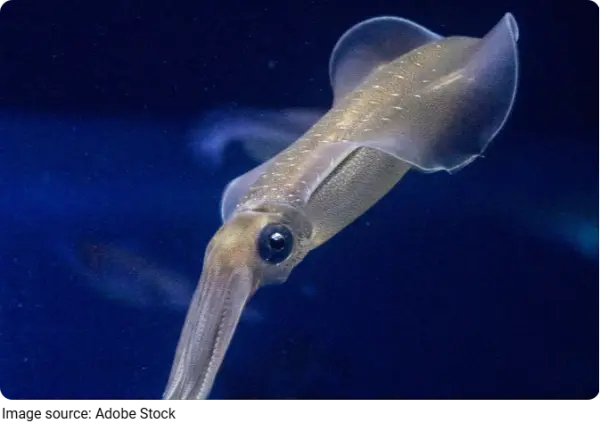
Yes, the Squid Really Flies
Neon flying squid can propel themselves out of the ocean using powerful jets of water and travel through the air, sometimes moving in groups above the surface. It is a fitting final example because the entire shortlist challenges the idea that animals without backbones are somehow simple.
From regeneration and extreme migration to chemical defences and aerial squid formations, invertebrates have evolved solutions that would look outrageous if humans had invented them for a science-fiction story.
The real value of celebrating them is not deciding which creature is the strangest. It is noticing how much extraordinary life usually goes unnoticed simply because it is small.