Make Better Pour-Over Coffee

Julian
| 03-09-2026
 · Cate team
Hand-drip coffee gives you direct control over the pace, temperature, and amount of water in every cup. This five-minute pour-over recipe uses a medium grind, a short bloom, and a slow circular pour to produce one generous serving with a clean, balanced character. Once the basic rhythm feels familiar, small adjustments become easy to make.
Why This Method Works
Pour-over brewing is simple, but the details matter. Water moves through freshly ground coffee in a filter, carrying flavor into the carafe or mug below. Pouring slowly and evenly helps keep the grounds saturated instead of allowing water to rush through one narrow channel.
The first pour is the bloom. It wets the grounds and gives them time to release trapped gas before the main extraction begins. After that pause, a controlled spiral keeps the bed level and encourages steady contact between water and coffee. A digital scale is useful because it makes the process repeatable, but careful measuring can still work if a scale is not available.
Ingredients and Timing
17 fluid ounces filtered water
1/4 cup plus 1 tablespoon medium-ground coffee
Estimated preparation and brewing time: 5 minutes.
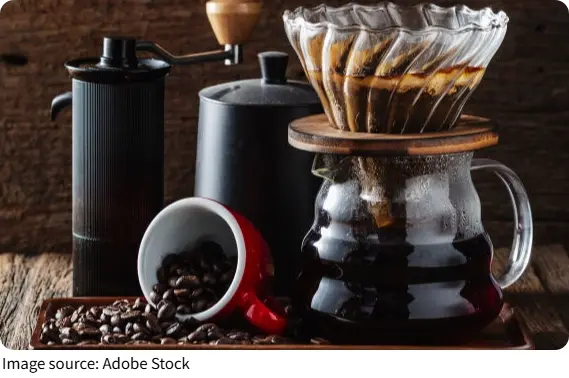
This recipe makes one generous serving. Use a medium grind produced by a burr grinder when possible. You will also need a dripper and carafe or mug, a filter, a kettle, and a digital scale if you have one. A gooseneck kettle makes the circular pour easier to control, though a traditional kettle can also be used.
Instructions
1. Heat the filtered water to 207°F. With a traditional kettle, bring the water to a boil, then let it stand off the heat for about 30 seconds.
2. Pour a little of the hot water into the carafe and serving mug to warm them. After a few moments, empty the carafe, but leave the water in the mug until you are ready to serve.
3. Set the dripper and carafe on a digital scale, add the paper or metal filter, and place the coffee in the filter. Tare the scale so the reading returns to zero.
4. Slowly pour 60 grams of hot water over the grounds, distributing it evenly. Let the coffee bloom for 45 seconds. During this pause, return the kettle to its base or another heat source so the water stays hot.
5. Continue pouring in a slow circular motion. Pause when needed to prevent the filter from overflowing, then add water until the scale reaches 420 grams, including the bloom water. The full pour should take about 3 to 3 1/2 minutes.
6. Empty the warming water from the mug, then pour in the finished coffee and serve immediately.
Adjusting the Grind
The grind is the most useful place to begin if the flavor is not right. Coffee that tastes sour or seems thin may need a slightly finer grind, which slows the water and allows more flavor to develop. If the cup tastes bitter, try going slightly coarser so the water passes through the grounds more freely.
Change only one detail at a time. If you alter the grind, water temperature, and pouring speed together, it becomes difficult to tell which adjustment made the difference. Keep the dose and water amount steady while you learn how your coffee responds.
Small Details That Matter
Pour from the center outward and back again rather than flooding one side of the filter. A steady stream is easier to manage than a heavy rush, and pausing briefly is better than letting the water spill over the top. The target is an even, calm flow—not speed as an end in itself.
A paper filter gives the brew a clean finish, while a metal filter is another supported option when you prefer a different texture. Whichever filter you choose, keep the coffee bed level before the first pour. A gentle shake of the dripper can help settle the grounds without compacting them.
Serving the Cup
Give the finished coffee a moment to settle, then pour it into the warmed mug. If you brewed directly into the mug, stir gently before drinking so the first and last portions taste more even. The coffee is designed to be enjoyed on its own, allowing the aroma and flavor of the grounds to remain clear.
The method is also easy to scale in spirit, but the timing and water flow may change with a larger batch. For the most consistent results, master this single-serving version first and record the grind setting, water temperature, and total brew time that produced your favorite cup.
Final Thoughts
A dependable pour-over comes from a few repeatable habits: heat the water carefully, allow the grounds to bloom, and pour in controlled circles until the measured water is used. Start with the recipe as written, then make small grind adjustments based on taste to build a cup that suits you.