Performance Truck Guide

Zoe
| 25-10-2026
 · Automobile team
Factory-built performance pickups occupy a distinctive place in the automotive market.
They combine the utility of a full-size truck with powerful engines, specialized suspension systems, larger tires, and reinforced hardware designed for demanding driving.
Their capabilities, however, cannot be judged by horsepower alone; acceleration, chassis control, traction, towing capacity, payload, and operating costs all contribute to the overall package.
Power and Powertrain Engineering
Modern performance pickups use different powertrain strategies to achieve strong performance.
One high-output configuration is equipped with a 6.2-liter supercharged V8 producing 702 horsepower and 650 pound-feet of torque. With a curb weight of approximately 6,443 pounds, it can reach 60 mph in about 4.5 seconds under specified testing conditions. This combination gives the truck exceptional acceleration despite its substantial size and weight.
Another performance-oriented pickup uses a 5.2-liter supercharged V8 generating 720 horsepower and 640 pound-feet of torque. Independent testing has recorded a 0–60 mph time of approximately 3.6 seconds, illustrating the acceleration possible from a full-size pickup engineered for high performance.
A naturally aspirated 6.2-liter V8 takes a different approach, producing 420 horsepower without forced induction. Its character emphasizes straightforward power delivery and broad usability rather than maximum engine output.
A hybrid configuration combines a twin-turbocharged 3.4-liter V6 with an electric motor to produce 437 horsepower and 583 pound-feet of torque. Electric assistance contributes immediate torque, while the combustion engine supplies sustained power, creating a strong combination of performance and utility.
Fuel requirements vary between powertrains. Drivers should use the fuel grade specified in the owner's manual and follow the recommended operating requirements for the particular vehicle.
Suspension and Chassis Control
Power is only useful when the chassis can control it effectively. Performance pickups therefore receive suspension systems developed to manage substantial weight while maintaining wheel control over uneven surfaces.
Adaptive dampers are used on some high-output configurations to vary damping characteristics according to driving conditions. This allows the suspension to respond differently during highway travel, acceleration, cornering, and off-road driving.
Some performance pickups combine electronically controlled dampers with 37-inch all-terrain tires. The larger tires increase ground clearance and provide additional traction on loose terrain, while adaptive damping helps maintain control as the surface changes.
Other off-road-focused configurations use Multimatic DSSV dampers engineered for precise wheel control. Together with increased ground clearance and specialized off-road hardware, the system helps maintain predictable suspension behavior over rough surfaces.
The hybrid-powered configuration uses FOX internal-bypass shocks tuned for off-road operation. This type of damper is designed to provide controlled suspension movement across varying terrain and during extended trail driving.
The result is a suspension package designed not merely for comfort, but for maintaining traction and vehicle control when the terrain becomes challenging.
Tires and Off-Road Capability
Tires have a direct influence on how a performance pickup behaves away from paved roads.
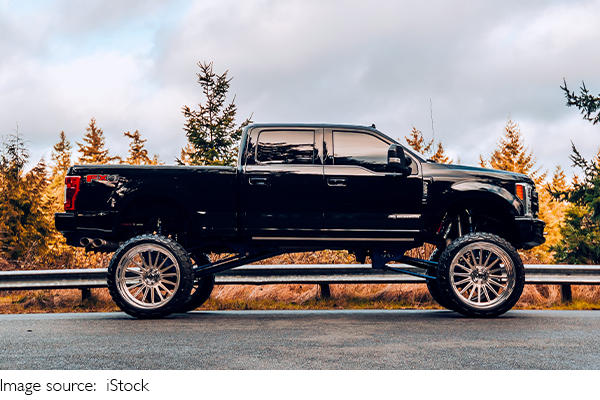
Large all-terrain tires can improve ground clearance and traction on loose surfaces while helping the vehicle absorb irregular terrain. Their size and construction can also influence steering response, braking characteristics, road noise, and fuel consumption.
This creates an important balance for owners. Tires optimized for demanding terrain may provide greater off-road capability but can deliver a different driving experience on paved roads. Their replacement cost should also be included when evaluating long-term ownership.
Ground clearance, suspension design, tire construction, traction systems, and vehicle geometry work together. No single component determines off-road performance.
Towing and Payload
Performance does not eliminate the practical responsibilities of a pickup.
The 702-horsepower configuration has a maximum towing capacity of 8,100 pounds and a payload capacity of approximately 1,310 pounds. The 720-horsepower configuration is rated to tow up to 8,700 pounds and carry up to 1,400 pounds of payload.
The naturally aspirated V8 configuration offers a maximum towing capacity of approximately 8,900 pounds, depending on equipment and configuration. The hybrid-powered pickup reaches a maximum towing capacity of 11,175 pounds, with payload capacity reaching approximately 1,600 pounds in the specified configuration.
These maximum figures apply only to particular configurations. Cab style, drivetrain, equipment, vehicle weight, axle ratio, and other factors can alter the certified rating.
Drivers should therefore verify the exact towing and payload specifications for their vehicle. Hitch equipment, trailer brakes, tongue weight, and other towing components should also be selected according to the vehicle and trailer requirements.
Everyday Ownership
A performance pickup must still function as a practical vehicle.
Its larger tires, specialized suspension, powerful engine, and additional hardware can provide significant advantages, but these features may also affect ownership costs. Fuel consumption can be higher than that of less powerful configurations, while specialized tires and suspension components may cost more to replace.
Size is another consideration. Full-size performance pickups can be tall and wide, which may require greater care in parking structures, narrow roads, and confined spaces.
Buyers should therefore consider more than purchase price and performance figures. Fuel requirements, tire replacement, servicing, towing needs, vehicle dimensions, and typical driving conditions all contribute to the ownership experience.
Comparing Performance Pickups
Performance pickups follow different engineering philosophies. Some prioritize extreme engine output and rapid acceleration, while others focus on balanced power delivery, suspension control, hybrid torque assistance, or towing capability.
This variety makes horsepower an incomplete measure of overall performance. A truck with greater engine output may not be the most suitable choice for frequent towing, while a vehicle with a higher towing rating may not provide the desired characteristics for demanding off-road driving.
A meaningful comparison should include the complete specification, including powertrain, torque, suspension equipment, tire size, ground clearance, towing capacity, payload rating, and standard features.
Choosing the Right Performance Pickup
The ideal performance pickup depends on how it will be used.
Acceleration-focused drivers may place greater importance on engine output, torque, and launch performance. Those who frequently travel across challenging terrain may value suspension travel, damping control, tire size, ground clearance, and traction technology.
For regular towing, certified towing and payload ratings should take priority over headline horsepower. For daily driving, vehicle dimensions, fuel consumption, ride quality, tire costs, and maneuverability may have greater practical importance.
The strongest buying decision comes from matching the vehicle's engineering to its intended role rather than selecting the model with the largest performance numbers.
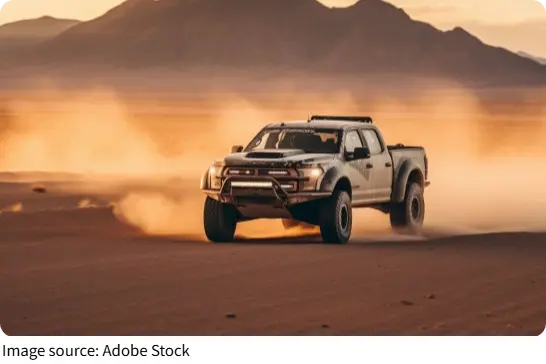
Factory-built performance pickups combine the fundamental usefulness of a full-size truck with engineering developed for high-output driving and demanding terrain. Their appeal comes from the complete package: powertrain performance, suspension control, tire capability, towing strength, and everyday versatility.
Before purchasing, compare the exact model year and configuration, verify certified towing and payload ratings, review fuel requirements, and account for ongoing maintenance and operating costs. The strongest choice is not simply the pickup with the biggest numbers, but the one whose capabilities align most closely with the way it will be used.