Truck Fuel Saving Tips

Bianca
| 26-10-2026
 · Automobile team
Fuel is one of the largest operating expenses for many truck drivers, making efficient vehicle operation an important part of every journey.
Consumption depends on factors such as speed, load, terrain, traffic, vehicle condition, and driving technique.
Although these factors cannot always be controlled, driving habits can. Smooth inputs, appropriate gear selection, careful speed management, and sensible vehicle operation can help reduce unnecessary fuel consumption while preserving safe and predictable handling.
Warm Up Efficiently
Extended idling before departure can waste fuel when it is not required by the vehicle or operating conditions. After following the manufacturer's starting procedure, gentle driving allows the engine and drivetrain to reach normal operating conditions while the journey begins.
Avoiding unnecessary stationary idling is a simple way to limit fuel use before the truck is underway.
Choose the Right Gear on Hills
Inclines demand more power, particularly when the truck is carrying a heavy load. Selecting a gear suited to the gradient, speed, and load helps the engine deliver the required power efficiently.
A gradual incline may allow the use of a higher gear, while a steeper section may require a lower one. Smooth accelerator input helps maintain consistent engine operation throughout the climb.
Control Speed on Descents
Keeping the transmission engaged during a downhill section allows the driver to use engine braking and maintain better control.
Selecting an appropriate gear before the descent can help manage speed and reduce unnecessary braking. The correct approach depends on the gradient, load, weather, traffic, and vehicle configuration.
Maintain a Steady Speed
Frequent changes in speed can increase fuel consumption. Cruise control can help maintain a consistent pace on open roads when traffic, terrain, and weather conditions are suitable.
It should not replace driver judgment. Manual control is preferable whenever conditions require frequent speed adjustments or greater vehicle input.

Shift Within the Recommended Range
Efficient shifting depends on the engine, transmission, load, and operating conditions. Progressive gear changes within the manufacturer's recommended range help prevent unnecessarily high engine speeds.
There is no single ideal RPM for every truck. The vehicle's operating guidance should take priority, with gear changes adjusted to suit the road and load.
Match the Gear to the Situation
The selected gear should correspond with vehicle speed, terrain, load, and required power. A gear that is too high may leave the engine struggling under heavy demand, while a gear that is too low can keep engine speed unnecessarily high.
Choosing an appropriate gear promotes smooth power delivery and efficient operation.
Use Driving Modes Wisely
Some trucks provide economy, standard, or other powertrain settings that alter how the vehicle responds to different conditions. An efficiency-focused mode may be useful when the operating situation allows it.
The appropriate setting varies by vehicle and application. Drivers should follow the manufacturer's guidance and select the mode that suits the current load and road conditions.
Limit Unnecessary Weight
Extra weight increases the energy required to move a vehicle, especially during acceleration and uphill driving. Removing equipment or materials that are not needed for a particular journey can therefore support better efficiency.
Essential supplies and equipment should remain onboard whenever they are required for safe and reliable operation.
Manage Cabin Climate
Heating and cooling systems consume energy, so using them unnecessarily can increase overall fuel demand. Reasonable temperature settings and sensible system use can help manage this additional load.
At higher speeds, open windows can also increase aerodynamic drag. Keeping the cab properly closed when appropriate can help maintain airflow efficiency.
Anticipate Traffic
Looking ahead gives drivers more time to respond to changes in traffic. Maintaining a safe following distance can reduce abrupt acceleration and braking while helping preserve momentum.
Smooth speed adjustments are generally more efficient than repeatedly building and losing speed.
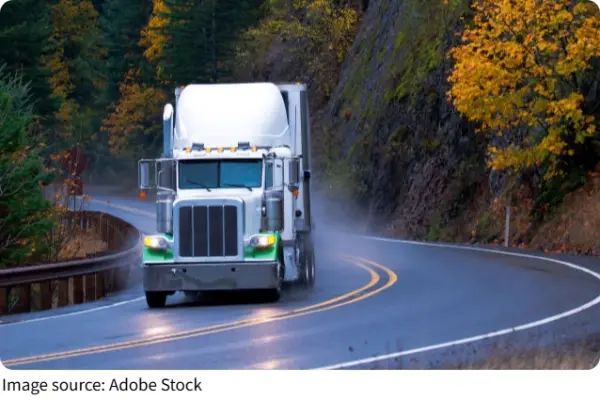
Efficient truck operation comes from consistent decisions throughout the journey. Appropriate gear selection, controlled acceleration, steady speed, reduced idling, sensible climate-control use, and careful load management can all contribute to lower unnecessary fuel consumption.
The best results come from adapting these practices to the truck, load, terrain, traffic, and weather. Fuel efficiency is not about driving more slowly at all times or using one special technique; it is about operating the vehicle smoothly, appropriately, and consistently.