Fallow Deer Magic

Liam Reilly
| 19-08-2026
 · Animal team
Have you ever seen a deer and wondered what makes one species different from another?
Today, we are taking a closer look at the fallow deer, a graceful species that originated in parts of the Mediterranean region of Europe and has also been introduced to other areas as an ornamental animal.
Although it may be less familiar than some other deer, its changing coat, unusual antlers, and special markings make it fascinating to observe.

A Deer With Many Colors
One of the first things we notice is the wide range of coat colors. Individuals within the same group may show different shades because of natural genetic variation. Some have dark coats, while others appear lighter, and brown forms can also be seen.
This variety gives us a chance to see how appearance can differ within one species. Under daylight, the warm brown and golden shades can look especially attractive. When several individuals stand together, the differences between their coats become even easier to notice.
Summer Shows White Spots
Summer gives us the clearest view of the animal's famous markings. White spots appear across the coat, creating a pattern that looks bright against green grass and woodland plants. As the weather warms, the thicker seasonal coat becomes lighter, making both the base color and spots easier to see.
These markings can cause some confusion because they resemble those of the sika deer. When we observe from a distance, the two can look surprisingly similar. Instead of focusing on one feature, we can examine the whole body to make a more reliable identification.
Winter Brings a New Look
As temperatures fall, the coat becomes thicker and denser. The white markings then appear less noticeable, giving the animal a deeper and more even appearance. This seasonal change can make the same individual look quite different from its summer appearance.
We can also examine the antlers of a male. The upper section has broad, palm-like areas, with sections that look more like a flat structure than simple branches. The sika deer, in contrast, has antlers with a more clearly branched form. This is one of the easiest details for us to check when comparing the two.
The Tail Tells a Story
The tail provides another useful clue. The fallow deer has a fairly long tail, while the markings around the rear form a distinctive dark pattern that is often compared with a heart shape. It is a small detail, but it can help us recognize the animal when the coat looks different in winter.
By checking the coat, tail, markings, body shape, and antlers together, we can build a much clearer picture. Careful observation turns an ordinary wildlife visit into a small nature lesson.
Where They Find Food
We can find fallow deer in woodland, grassland, and areas filled with shrubs. Their flexible diet includes grasses, young shoots, leaves, and acorns. Different food sources become useful at different times of the year, allowing them to adjust as plants change with the seasons.
When fresh vegetation is plentiful, they can spend time feeding on grass and tender leaves. Later, fallen leaves, young branches, and acorns can provide additional choices. Their feeding habits show how closely wildlife depends on the plants around it.
Quiet and Alert Nature
When we watch a group of fallow deer, we may notice how calm and graceful the animals appear. They usually respond to danger by moving away quickly. One individual may become alert first, raising its head or changing direction, and others may soon follow.
For us as visitors, quiet observation is the best way to enjoy these moments. If we stand patiently and avoid sudden movements, we have more opportunities to notice small behaviors, from feeding and walking to the way the group reacts to its surroundings.
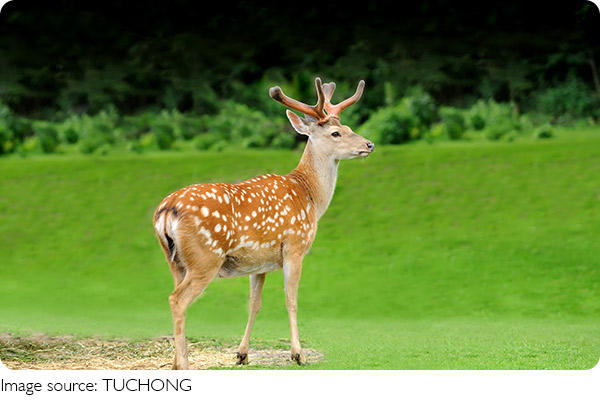
A Seasonal Forest Beauty
As we look closer, we can see that the fallow deer is more than a pretty animal. Its appearance changes with the seasons, its diet follows the available plants, and its physical features give us useful clues for identification.
So, Lykkers, the next time we see a fallow deer, let's pause for a moment and observe the details. Would you notice the summer spots first, the winter coat, or the broad antlers? Nature often becomes more interesting when we take a little extra time to look.