Dogs Find Hidden Wildlife

Mukesh Kumar
| 14-08-2026
 · Animal team
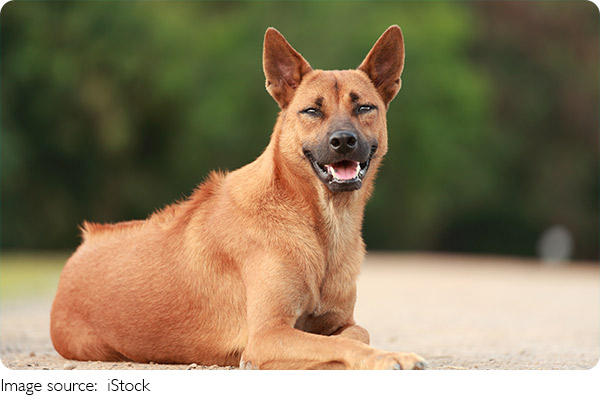
In the dry grasslands and shrublands of South Africa’s Karoo, researchers are using specially trained dogs to track some of the region’s most elusive wildlife. Many of these species are difficult to study because they hide underground, move mainly at night or blend almost perfectly into the landscape.
Instead of searching directly for the animals, detection dogs follow the scents they leave behind. Scat, feeding sites and other biological traces can provide valuable information without requiring wildlife to be captured or disturbed.
Tracking a Secretive Cat
The black-footed cat is one species benefiting from this approach. These small wild cats spend much of the day hidden in burrows and usually emerge after dark, making direct observation especially difficult.
Camera traps can help, but they do not always provide enough information. Detection dogs offer another option by locating black-footed cat scat through scent.
The improvement in efficiency can be remarkable. A researcher working alone may find only a few samples over many months, while a trained dog can locate hundreds in a much shorter period.
When a dog finds a sample, it signals its handler without touching or damaging it. Researchers can then collect the material for laboratory analysis.
This is particularly useful because black-footed cat scat can be difficult for people to distinguish from that of other small carnivores.
What Scat Can Reveal
A tiny scat sample can contain a surprising amount of biological information.
Genetic testing may reveal an animal’s sercrets and, in some cases, identify a specific individual. With enough samples, scientists can estimate population size, study relationships between animals and understand how different groups are connected.
Scat can also provide clues about diet, parasites and population health.
Analysis of samples from sites in Namibia and South Africa, roughly 700 kilometres apart, has shown relatively little genetic differentiation between the black-footed cat populations studied there. This suggests that some animals are still moving across the semi-arid landscape and reproducing with individuals from other populations.
Such gene flow is important because isolated populations can gradually lose genetic diversity.
However, these findings cover only part of the Karoo. Researchers still need to determine whether the same pattern exists in areas where development and human activity create greater barriers.
Why Dogs Have an Advantage
Black-footed cats are especially difficult to track because they do not always leave scat in predictable locations.
Some carnivores deposit droppings along trails or on elevated points to mark territory. Black-footed cats may leave theirs inside burrows, beneath shrubs or in other hidden places.
For a human researcher, finding such material can depend heavily on luck.
Dogs do not need to see the evidence — they only need to smell it.
That makes them particularly valuable for monitoring small, nocturnal and secretive species.
Following Pangolin Signs
Detection dogs have also been trained to search for signs of Temminck’s pangolins.
Pangolins present a different challenge. Their droppings consist largely of termites, other biological material and sand, so they deteriorate quickly. In dry conditions, useful traces may disappear within one or two days.
They also defecate relatively infrequently, leaving researchers with fewer samples.
To overcome this, dogs can be trained to locate feeding sites instead. Pangolins leave distinctive scent traces when digging for ants and termites, allowing researchers to search these areas for fresh biological material suitable for DNA analysis.
One goal is to build a geographically referenced genetic database. Such information could eventually help investigators estimate where confiscated pangolins or trafficked scales originated.
Turning Scent Into Protection
A pangolin’s main defence mechanism can also make it vulnerable.
When threatened, it curls into a tight ball and relies on its hard scales for protection. This can work against natural predators, but once humans locate the animal, its defensive posture can make capture easier.
Dogs may therefore be used for opposite purposes. Hunters can exploit their sense of smell, while conservation teams can use the same ability to help protect threatened wildlife.
Funding remains one of the biggest challenges. Some pangolin projects have been paused even after dogs had already been trained because financial support was unavailable.
Helping Rare Rabbits
Detection dogs are also being used to search for the critically endangered riverine rabbit in South Africa.
During these surveys, dogs can work alongside camera traps and other monitoring methods. Combining different techniques provides stronger evidence of where animals occur and which habitats they depend on.
This information can directly influence conservation decisions.
For example, confirming that riverine rabbits use land proposed for wind-energy development can help identify sensitive habitat before construction causes permanent changes.
Reliable evidence of an endangered species can turn an invisible conservation concern into something decision-makers can act on.
Dogs may also reveal animals in unexpected locations. Human surveys often begin with assumptions about where a species should occur, while dogs simply follow scent.
A Wider Conservation Role
The potential applications go far beyond cats, pangolins and rabbits.
Detection dogs can help locate endangered wildlife, identify invasive species, find rare plants and detect biological traces that people would otherwise overlook.
They are not a replacement for every other conservation method. Their greatest value often comes when their work is combined with genetics, camera traps, habitat surveys and traditional field observations.
Maintaining an effective dog team also requires experienced handlers, veterinary care, suitable animals and reliable long-term funding.

The Right Dog for the Job
Not every dog is suited to conservation work.
Trainers often look for animals with a powerful desire to play, especially with a ball or favourite toy. That enthusiasm becomes the reward that keeps them focused during long searches.
At the same time, a successful detection dog needs to relax once the work is finished and live comfortably around people and other animals.
For scientists studying wildlife that is almost invisible to human observers, a dog’s nose can open an entirely new source of information.
A scent beneath a shrub, a feeding site in dry soil or a tiny scat sample can reveal where a rare animal has travelled, what it eats and how its population is connected.
Sometimes, protecting wildlife begins with noticing the traces humans would never find on their own.