Servals Have Giant Ears!

Caleb Ryan
| 13-08-2026
 · Animal team
Welcome, Lykkers! At first glance, a serval might look like a cat that has been given an unusually large pair of ears. Those oversized ears are not just an adorable feature, though. They are one of the most important tools this African wild cat has for finding prey, surviving in grasslands, and navigating a world where even the faintest sound can reveal what is hiding nearby.
Native to much of sub-Saharan Africa, servals are medium-sized wild cats with long legs, slender bodies, spotted coats, and remarkably large ears. Their unusual proportions make them one of the most recognizable cats in the wild. But the real story behind those ears is even more fascinating.
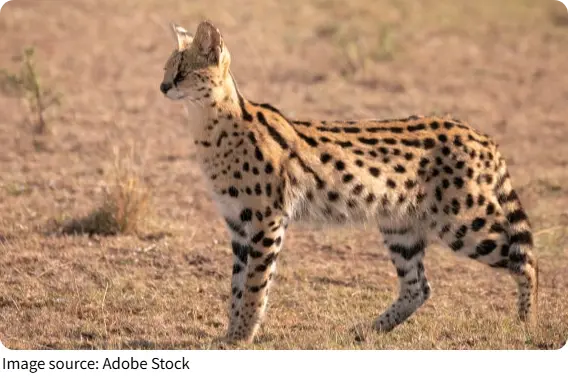
Why Are a Serval’s Ears So Large?
Servals have the largest ears relative to their body size among cats. Their ears are tall, rounded, and highly mobile, allowing the animals to detect sounds with impressive precision. The ears can move independently, helping a serval work out where a sound is coming from. Instead of relying entirely on sight, the cat can pause, rotate its ears, and listen carefully for movement in the vegetation.
That ability is especially useful in the environments where servals live. Tall grasses can hide small animals from view, making it difficult to spot prey even when it is only a short distance away. Sound gives the serval another way to locate what its eyes cannot see.
Built for Listening Through Tall Grass
Servals are particularly associated with wetlands, grasslands, and areas with dense vegetation. Their hunting style fits these habitats perfectly. A serval may stand almost motionless while listening for the rustle of grass or the tiny movements of a rodent beneath the vegetation. Once it identifies a possible target, the cat can suddenly spring into action.
This is where those enormous ears become more than an unusual physical trait. They help transform the serval into an incredibly sensitive listener. Small mammals often make subtle sounds as they move through grass. To a human standing nearby, those noises might blend into the background. For a serval, they can provide valuable information about where potential prey is hiding.
Those Ears Work Together With Long Legs
The serval's body is almost as interesting as its ears. It has exceptionally long legs compared with many other cats of similar size. Those long legs give the serval an advantage in tall vegetation because they allow it to see above grasses more easily. They also help the cat move quickly and leap over obstacles. When hunting, a serval can combine several impressive abilities: sensitive hearing to locate prey, sharp vision to track movement, and powerful legs to make a rapid jump.
Servals Can Make Remarkable Leaps
One of the most dramatic things about servals is how high they can jump. Once a serval pinpoints the location of prey, it can launch itself upward with remarkable speed. This technique is particularly useful when hunting animals hidden in vegetation. A sudden vertical leap can allow the serval to catch prey that might otherwise escape through the grass. Their jumping ability also demonstrates why their body shape matters. The long legs provide leverage, while their lightweight build allows them to move quickly and change direction.
The Ears Are Not Their Only Special Feature
Although the ears receive most of the attention, servals have several other adaptations that make them successful predators. Their coat is covered with dark spots and markings that help break up their outline among grasses and vegetation. Their slender body makes them agile, while their relatively small head and long neck contribute to their distinctive appearance. Their large ears also have markings on the backs that may help with visual communication.
A Specialist of the Grasslands
Servals are not simply miniature versions of larger African cats. They have developed their own niche. Rather than depending on raw strength, they rely heavily on hearing, agility, patience, and precise movement. Their diet can include rodents, birds, frogs, reptiles, and other small animals, with prey availability varying according to habitat and season. Large ears, long legs, strong hind limbs, and excellent reflexes all contribute to a hunting style based on detecting and catching smaller prey.
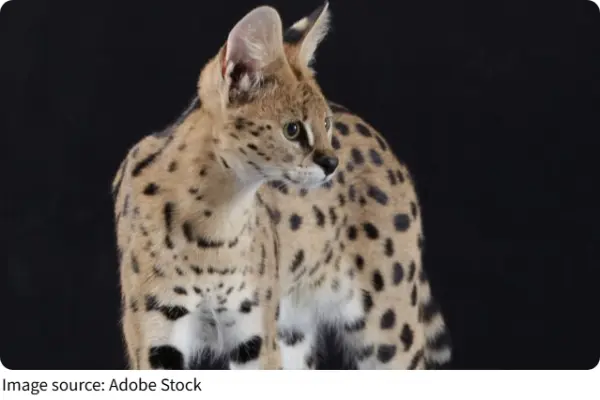
Servals show how extraordinary wild cats can become when their bodies are shaped by the demands of their environment. The next time a serval catches your attention because of its enormous ears, remember that those ears are doing much more than making it look distinctive. They are essential hunting equipment—and one of the clearest signs that this remarkable cat is perfectly adapted to life among Africa's grasses.