Beyond the Dashboard

Ravish Kumar
| 19-08-2026
 · Automobile team
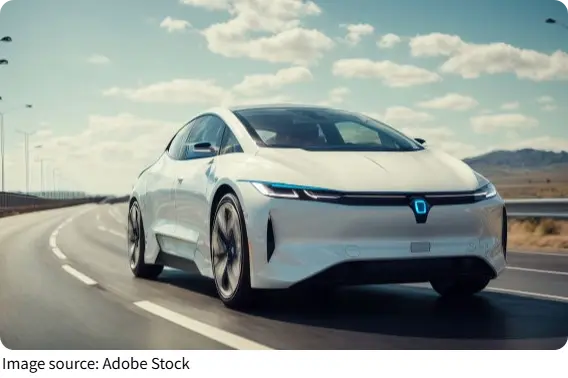
A futuristic car is no longer just a dramatic concept with glowing lights and strange doors. Many modern vehicles already include features that once sounded imaginary, from phone based keys and remote updates to regenerative braking and driver monitoring.
Lykkers, the interesting part is learning how these systems change everyday habits, because advanced technology is most useful when you understand what it is actually doing.
Learn the New Driving Language
Driving a technology packed car often feels familiar for the first few minutes, then little differences start appearing everywhere. Instead of simply pressing buttons and hoping for the best, you can learn a few behaviors that make the experience much smoother.
Practice one pedal driving somewhere quiet
Some electric vehicles let you slow dramatically simply by easing off the accelerator. The first attempt can feel strange because your right foot suddenly controls both acceleration and much of the deceleration.
Find a quiet road and practice approaching the same stopping point several times. Release the accelerator earlier on each attempt and notice how quickly the vehicle slows. Your goal is not to avoid the brake pedal completely. You are learning how regenerative braking responds so normal traffic becomes smoother and less jerky.
After a few drives, you may start predicting stops much earlier, which makes urban driving surprisingly relaxing.
Know what disappears during a screen failure
A giant central display looks wonderfully futuristic until it freezes. Before relying on it for everything, spend ten minutes learning which essential functions still have physical controls or steering wheel shortcuts.
Locate the hazard lights, windshield controls, gear selection, defogging function, and door release without searching through menus. If climate controls live mainly on the screen, learn whether voice commands or steering controls provide an alternative.
Try finding each function while parked rather than learning during an inconvenient moment.
Treat software updates like vehicle maintenance
A connected car may receive software updates that change menus, charging behavior, driver assistance settings, or interface layouts. That means the vehicle you park tonight may feel slightly different tomorrow.
Before installing a major update, check the release notes when available and avoid scheduling it immediately before an important journey. After installation, spend a few minutes parked and look through the settings that matter most to you.
Pay particular attention to driver assistance preferences because some systems may behave differently after software changes.
Keep a backup entry method
Phone keys are wonderfully convenient until your phone loses power, connectivity becomes unreliable, or an app refuses to cooperate.
If your vehicle provides a physical card, secondary key, wearable device, or another backup method, keep it somewhere accessible rather than buried inside luggage. Test that backup once before you genuinely need it.
The funny part of futuristic ownership is that an incredibly advanced vehicle can still leave you standing beside it because one tiny battery reached zero.
Test the Future Before Trusting It
Technology tends to look most convincing in advertisements, where roads are empty and every feature responds instantly. Real traffic is less cooperative. You will get more value from advanced systems when you deliberately learn their limits.
Create a driver assistance practice route
Choose a familiar twenty to thirty minute route containing clear lane markings, a few curves, moderate traffic, and several speed changes. Use this same route while learning adaptive cruise control or lane assistance.
Notice where the system reacts confidently and where you naturally want to intervene. Does it leave more following distance than you prefer? Does it recognize a vehicle entering your lane smoothly? Does lane assistance feel different on sharper curves?
Repeating one route makes comparisons easier because the road remains familiar while you study the technology.
Check cameras in difficult lighting
Modern cars may surround you with cameras, yet camera quality can change dramatically depending on conditions.
Try the parking system during bright daylight, after sunset, and on a wet day. Look for glare, distorted distance perception, dirty lenses, and areas where an object disappears between camera views.
Then walk around the parked vehicle and compare what your eyes see with what appears on screen. You may discover that a futuristic 360 degree view still has places where human judgment matters.
Measure your real charging routine
For an electric futuristic car, advertised driving range is less useful than understanding how the vehicle fits your actual week.
For seven days, record the battery percentage when you begin driving, the percentage when you return, and roughly how far you traveled. You will quickly discover your genuine daily energy pattern.
If you normally consume only 10 to 20 percent of the battery each day, you may not need to recharge constantly. If one weekly journey consumes much more, that trip deserves more planning than the ordinary commute.
Set a digital reset routine
Cars now remember seat positions, navigation history, paired phones, app accounts, payment information, and personal preferences. That makes privacy part of vehicle ownership.
Before lending, renting, selling, or returning a connected car, check the user profile menu. Remove unnecessary paired devices, sign out of personal accounts where appropriate, delete saved destinations, and understand how guest mode works.
It takes only a few minutes, yet it prevents your highly intelligent vehicle from remembering more about you than the next driver needs to know.
Futuristic cars are most enjoyable when the technology becomes understandable rather than mysterious. Lykkers, experiment with regenerative braking, learn your backup controls, test cameras honestly, study driver assistance on familiar roads, and understand your digital footprint.