Striped Forest Genius

Camille Dubois
| 13-08-2026
 · Animal team
Lykkers, have you ever watched a tiny chipmunk rush across the forest floor with its cheeks puffed up? At first, we may think it is simply hungry. In fact, those little cheeks are part of an amazing survival system.
With striped fur, strong digging skills, and clever food storage habits, chipmunks have developed a surprisingly smart way to live through every season.
Five Stripes
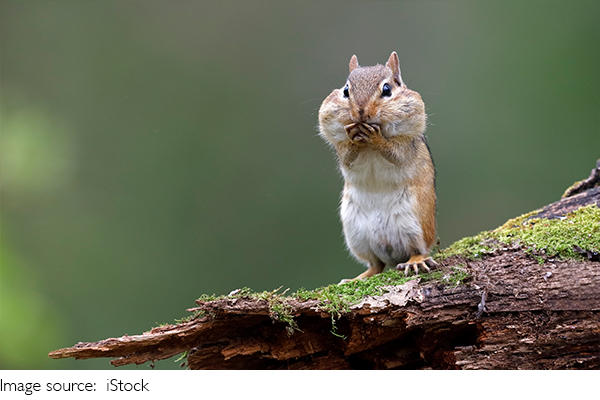
Chipmunks are small members of the squirrel family and are easy to recognize. Their bodies are usually compact, their tails are covered with soft fur, and several dark lines run along their backs. These stripes create the famous pattern that makes them look as if nature painted them by hand. The markings are not only attractive. They can also help break up the animal’s outline among leaves, branches, and patches of shade. When a chipmunk freezes for a moment, its striped coat can make it harder to notice.

Built-In Carrying Bags
The most impressive feature may be inside the mouth. Chipmunks have expandable cheek pouches that work like small carrying bags. During a food search, we may see one quickly collect several seeds or nuts before running away. Instead of carrying every piece separately, it can gather a useful amount in one trip. This saves time and energy, especially when the animal needs to prepare for colder months.
Busy Autumn Days
Autumn is an especially busy period. Chipmunks search under trees, among fallen leaves, and around shrubs for seeds, nuts, berries, and other foods. They then carry their finds back to underground storage areas.
Their tunnels can contain different sections for resting and keeping food. Entrances may be surrounded by natural material, making them less obvious. The stored supplies can become an important source of energy when outdoor food becomes harder to find. There is also an unexpected benefit. A chipmunk may forget where it placed some seeds. Those forgotten seeds can later grow into new plants, allowing this small animal to help spread vegetation without planning to do so.
Winter Energy Saver
Cold weather brings another clever change. Chipmunks can enter long periods of deep rest, during which their body temperature and heartbeat become much lower. This helps them reduce energy use when conditions outside are difficult. However, they do not simply sleep continuously throughout the cold season. They can wake from time to time, use some of their stored food, and then return to their resting state. Their underground shelter therefore works as both a safe home and a seasonal food center.
A Flexible Menu
Chipmunks are flexible eaters. Depending on the season, their food can include seeds, fruits, berries, young plant parts, and small insects. This variety helps them adjust when one source becomes less available. Their eating habits also show how closely wildlife responds to the changing environment. When spring brings fresh growth, their choices change. When autumn arrives, gathering and storage become more important.
A Mostly Independent Life
Chipmunks generally prefer living alone and can be quite protective of their own feeding areas. We may hear their sharp calls from trees or shrubs, especially when another animal comes too close.
Their small bodies are also surprisingly quick. If a nearby chipmunk enters the wrong area, a short chase can happen before one animal disappears into thick plants.
Family life is different. Young chipmunks depend on their mother for warmth, food, and care during their early development. As they grow, they gradually learn to search for food and move around independently.
A Small Forest Helper
Although chipmunks are tiny, their role in nature is meaningful. They provide food for larger wildlife and help move seeds around the forest. Their digging also changes small areas of soil, which can influence the forest floor.
When we watch one carrying food through the leaves, we are seeing more than an adorable animal. We are watching a small worker take part in the daily rhythm of the ecosystem.
Small Size, Big Skills
The chipmunk shows us that size does not determine importance. Its five stripes, expandable cheeks, underground storage spaces, and seasonal habits all help it handle life in the wild.
Lykkers, if we happen to spot one during a walk, let’s slow down and watch for a moment. Is it searching for food, carrying a full cheek pouch, or rushing back toward its shelter? Sometimes, the smallest creatures give us the most interesting lessons about nature.