Finding The Way Home

Camille Dubois
| 31-07-2026
 · Animal team
Hello, Lykkers! Driving across a country with no map, signal, or landmarks sounds like a recipe for getting lost—yet some travelers manage it every year without a wrong turn.
Migratory animals pull this off routinely, covering thousands of miles and arriving at astonishingly precise destinations using tools that have nothing to do with roads or signs at all.
The toolkit animals actually rely on
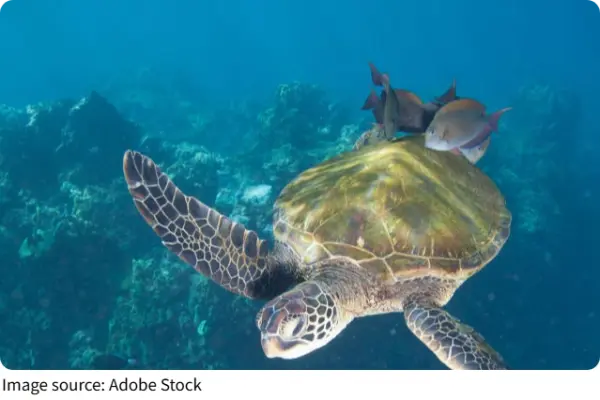
Many species combine several separate systems rather than depending on just one. A magnetic compass, tuned to Earth's own field, guides birds, salamanders, salmon, and hamsters alike, and loggerhead turtles can sense the direction and strength of that field within days of hatching, using it later to retrace a migratory route across an entire ocean.
Starlings rely instead on a Sun compass, which requires knowing the time of day well enough to compensate for the Sun's shifting position, while migratory songbirds use a star compass, tracking how points of light rotate around a fixed point in the night sky that corresponds to true north or south.
Some species lean on more grounded cues entirely, following mountain ranges, coastlines, or river systems, and dolphins have been shown to use the contours of the ocean floor itself as a kind of underwater terrain map.
How they know exactly where to stop
Path integration lets some species travel a winding, indirect outward journey and still find a direct route home afterward, effectively keeping a running internal tally of distance and direction traveled the entire way.
Young animals making their very first migration alone, without ever having been shown the route by an older, experienced individual, often rely on an innate program passed down genetically, arriving at a wintering ground they've never physically seen before with no guide at all.
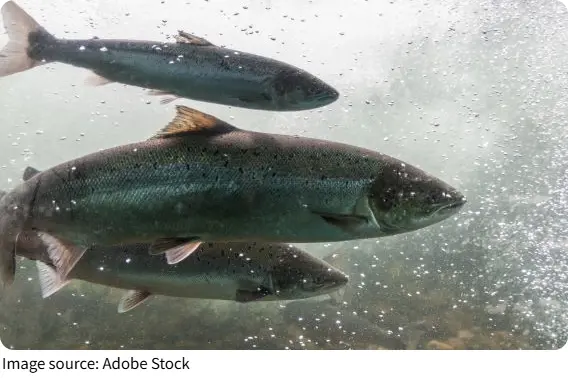
Homing pigeons demonstrate a more flexible version of this same ability, building detailed mental maps that let them find their way home even after being released somewhere completely unfamiliar and far from any route they've flown before. Scent plays a role for some species too; salmon famously imprint on the precise chemical signature of the stream where they hatched, using that memory years later to find their way back to that exact spot to spawn.
What happens when the navigation system gets confused
These finely tuned systems aren't foolproof, and modern conditions have started interfering with them in ways earlier generations of migrating animals never had to deal with.
Artificial light near coastlines and cities can throw off species relying on star compasses, drawing disoriented birds toward brightly lit buildings during nighttime migration and contributing to a meaningful share of collision deaths tracked in urban areas each year.
Magnetic interference from human infrastructure has been shown to confuse species that depend heavily on Earth's field for orientation, and even subtle disruptions can measurably delay a migration or push a route slightly off its usual path.
Climate shifts add another layer of difficulty, since some species rely on environmental cues—temperature, day length, food availability—to time their departure, and when those cues fall out of sync with conditions at the actual destination, animals can arrive too early or too late relative to food sources that used to line up reliably with their arrival.
So the next flock overhead heading south for the winter isn't just following vague instinct. Honestly, it's running a navigation system stitched together from several separate senses, any one of which would be impressive completely on its own.