Seahorse Baby Secret!

Kwame Johnson
| 23-07-2026
 · Animal team
Good Day, Readers! Imagine a father taking on one of the most unusual roles in nature—not guarding eggs or building a nest, but carrying hundreds of babies inside his own body.
In the underwater world, male seahorses become pregnant and give birth, a rare trait among fish.
This remarkable adaptation makes seahorses one of the most fascinating examples of parental care in the ocean. Their unique journey shows how creative and surprising nature can be.
While their tiny size and unusual appearance often make them look like creatures from a fantasy world, seahorses are real marine animals with extraordinary biology. Their unique pregnancy system, specialized body structure, and fragile survival challenges reveal a species perfectly adapted to life in coastal waters.
A Fish Unlike Any Other
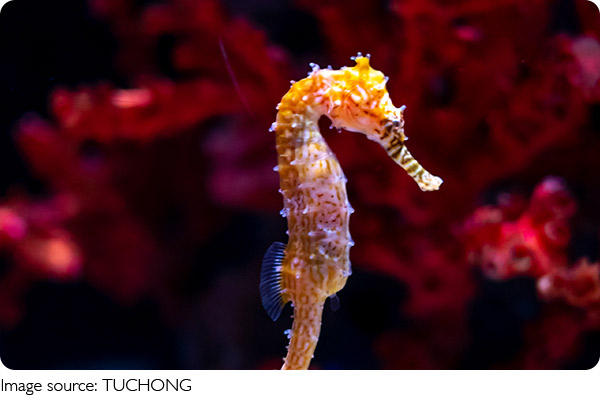
Seahorses belong to the genus Hippocampus, a group of fish found in tropical and temperate coastal regions around the world. Scientists have identified dozens of species, each with slightly different sizes, colors, and habitat preferences. Some are less than a few centimeters long, while larger species can reach around 30 centimeters.
Despite their horse-like heads and upright swimming posture, seahorses are true fish. They breathe through gills, live in marine environments, and have several features that help them survive underwater. Their bodies are covered with protective bony plates rather than traditional scales. These hardened structures provide extra protection and make them less appealing to many predators.
They also possess a curled, flexible tail that works like a natural anchor, allowing them to grip seagrass, coral branches, and other underwater plants while waiting for food or avoiding strong currents. Another unusual feature is their long, tube-shaped mouth.
Instead of biting or chewing, seahorses use this snout like a straw, creating suction to capture tiny prey such as small crustaceans and planktonic organisms. However, their most famous adaptation is not found on their head or tail—it is located on the male's body.
The Male Seahorse Pregnancy Mystery
In most animals, pregnancy is associated with females. Seahorses completely change that expectation. Male seahorses carry developing offspring inside a specialized pouch located on their abdomen. During reproduction, the female transfers her eggs into this pouch, where the male fertilizes them internally. The pouch then provides a protected environment where the embryos can develop safely.
Before this process happens, male and female seahorses perform an elaborate courtship routine. Their relationship often begins with repeated daily interactions, especially around sunrise. They may swim together, change colors, circle around each other, and wrap their tails together.
This dance is not simply a display of affection. Scientists believe it helps synchronize the reproductive timing of both animals. The female needs to be ready with mature eggs, while the male must prepare his pouch to receive them. Once the eggs enter the pouch, the male begins his pregnancy.
Inside the Seahorse Father’s Pouch
A male seahorse pregnancy can last from around 10 days to several weeks, depending on the species and environmental conditions. During this period, the pouch does far more than hold eggs. The male carefully controls conditions inside the pouch, including water movement and salt concentration. This adjustment helps the developing young gradually prepare for the outside ocean environment.
The pouch functions almost like a temporary nursery. It provides protection from predators, regulates the surroundings, and supports embryo development during a vulnerable stage. A single pregnancy can involve hundreds or even thousands of young. Some larger species may carry up to approximately 2,000 developing offspring at once.
When the babies, known as fry, are ready to enter the world, the father experiences muscular contractions that push the tiny seahorses out of the pouch. The birth process can take hours and requires significant energy from the male.
Why Do Seahorses Put Fathers in Charge?
Scientists believe male pregnancy may provide important evolutionary advantages. One major theory is that transferring pregnancy responsibilities to males allows both parents to prepare for the next reproductive cycle more efficiently. While the male carries the developing young, the female can produce another group of eggs. This division of reproductive effort may allow some species to reproduce more frequently.
In certain seahorse species, the female may begin preparing another batch of eggs while the male is still carrying the current group. After giving birth, the male can potentially receive another set of eggs soon afterward. This strategy increases reproductive efficiency, which is valuable in environments where survival is uncertain.
However, carrying babies comes with a major cost. The male invests significant energy into maintaining the pouch environment and supporting embryo development. Pregnancy is not a simple task—it requires careful physiological changes.
Life After Birth Is Extremely Challenging
Although seahorse fathers provide exceptional protection before birth, their parenting ends once the fry leave the pouch. The newborn seahorses enter a dangerous world filled with predators, ocean currents, and limited food sources. Unlike mammals, seahorses do not continue feeding or protecting their young after birth.
The survival rate is extremely low. Only a small percentage of newborn seahorses reach maturity, which explains why females produce large numbers of eggs during reproduction. Still, the father's pouch gives young seahorses an advantage compared with many other fish species. Many fish release eggs directly into the water, leaving embryos exposed immediately after fertilization. Seahorse offspring receive extra protection during their earliest and most vulnerable developmental stage.
Protecting a Fragile Ocean Treasure
Despite their fascinating biology, seahorses face growing threats. Habitat destruction, coastal development, pollution, and collection for traditional medicine and the aquarium trade have affected many populations. Because seahorses depend on specific environments such as seagrass beds, coral areas, and mangrove ecosystems, protecting these habitats is essential for their survival.
Breeding seahorses in captivity has also proven challenging. The main difficulty is not encouraging adults to reproduce, but keeping the tiny fry alive. Newly born seahorses require extremely small food sources and carefully controlled conditions during their first stages of life.
Research programs and conservation projects continue working to better understand these animals and improve protection methods. The male seahorse's journey into fatherhood is one of nature's most surprising stories.
From carefully timed courtship dances to carrying thousands of developing young, these tiny fish demonstrate a reproductive strategy unlike any other.