Bissau City & Islands

Mei
| 17-09-2026
 · Travel team
Bissau, the capital of Guinea-Bissau, offers a compact travel experience shaped by historic architecture, vibrant markets, cultural heritage, and the broad waters of the Geba River.
The city is easy to explore at a relaxed pace, while excursions beyond the capital open the door to the distinctive landscapes of the Bijagós Archipelago.
Bissau
Explore Fortaleza d'Amura
Fortaleza d'Amura is one of Bissau's notable historic landmarks. The fortified complex reflects the city's Portuguese-era architectural heritage and provides an interesting starting point for discovering Bissau's past.
- Entry: Check current local access arrangements before visiting.
Walk Through Bissau Velho
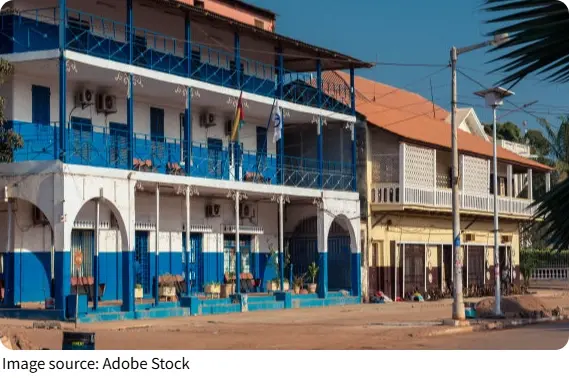
Bissau Velho forms the historic heart of the capital. Its older buildings, colorful façades, and distinctive streets make the neighborhood particularly suitable for walking and photography.
A leisurely stroll allows visitors to appreciate the area's architectural details without following a demanding sightseeing schedule.
- Walking: Free
- Local guide: Prices vary by duration and arrangement.
See Porto de Bissau
Porto de Bissau lies along the Geba River and provides a different perspective on the capital. The waterfront is a suitable place to observe boats, enjoy the open setting, and take a break between city attractions.
- Access: Free
- Local refreshments: Around $2–5
Browse Bandim Market
Bandim Market is a central shopping destination with stalls selling fresh produce, textiles, crafts, household goods, and other locally available products.
Visitors can browse at their own pace and find small souvenirs while experiencing one of the city's busiest commercial areas.
- Entry: Free
- Small purchases: Around $1–10
- Souvenirs and crafts: Around $5–30
Visit the National Ethnographic Museum
The National Ethnographic Museum offers an opportunity to learn about Guinea-Bissau's cultural heritage through traditional objects, crafts, textiles, and related materials.
Opening arrangements may change, so check local information before making it part of your itinerary.
- Admission: Check the current local fee.
Discover the Orango Islands
For travelers staying longer, the Orango Islands offer an opportunity to explore the natural side of Guinea-Bissau. Located within the Bijagós Archipelago, the islands feature beaches, mangrove environments, coastal scenery, and diverse wildlife.
Reaching Orango requires advance organization, particularly for boat transportation and guided excursions.
- Boat excursion: Prices vary according to route, group size, and arrangement.
- Guided activities: Prices vary by itinerary.
How to Get There
Bissau is served by the country's international airport. Travelers arriving by air can continue to the city by taxi or private transfer.
Within central Bissau, walking is practical for several major sights. Local transport is generally inexpensive, with typical journeys costing around $0.50–1, depending on the route and service.
For travel to the Bijagós Archipelago, arrange boat transportation ahead of time and confirm departure details locally.
Accommodation
Bissau has guesthouses and hotels covering several budgets.
- Guesthouse: Around $17–35 per night
- Mid-range hotel: Around $60–100 per night
- Higher-end hotel: $100+ per night
Rates can vary according to location, room category, availability, and booking conditions.
Local Food
Bissau's dining scene includes rice-based dishes, seafood, fresh produce, cassava, plantains, and vegetable-based meals. Casual eateries and markets can provide economical choices, while more established restaurants generally cost more.
- Simple local meal: Around $3–6
- Inexpensive restaurant meal: Around $5–8
- Mid-range meal for two: Around $25–30
- Fresh juice or soft drink: Around $1–3
Planning Your Visit
A city itinerary can connect Bissau Velho with Fortaleza d'Amura, Bandim Market, the National Ethnographic Museum, and Porto de Bissau. These stops cover the city's architectural, cultural, commercial, and riverside highlights.
If time allows, add an excursion to the Orango Islands for a change of scenery and a closer look at the region's coastal environment and wildlife.
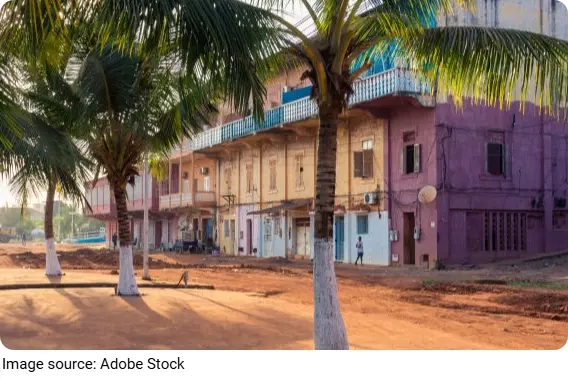
Bissau combines historic neighborhoods, cultural attractions, markets, and riverfront scenery within a relatively compact capital. Beyond the city, the Bijagós Archipelago adds beaches, mangroves, and wildlife to the experience.
With sensible planning and advance arrangements for island travel, Bissau provides a well-rounded introduction to the cultural and natural character of Guinea-Bissau.