Master Defensive Driving

Amina Hassan
| 10-07-2026
 · Automobile team
Have you ever wondered why experienced drivers can react so quickly to situations on the road? It often looks like they know what will happen before it actually happens.
The truth is that they are not guessing. They simply pay close attention to details and build good habits over time.
The good news is that these skills are not difficult to learn. By practicing four simple techniques, we can also improve our ability to predict danger and make every trip more comfortable and secure.
Pay Attention to Unusual Actions
Most road users follow a predictable pattern. Vehicles stay in their lanes, maintain a steady speed, and move according to traffic conditions. So when someone suddenly changes lanes for no clear reason, it deserves our attention.
Imagine that a vehicle in front of us suddenly moves to another lane, even though there is no intersection nearby and no slower vehicle ahead. This unusual action may be a clue that something is happening that we cannot see.
There might be debris on the road, a damaged section of pavement, or another obstacle hidden from our view. Instead of ignoring the situation, we should slow down slightly and observe carefully. If necessary, we can also move to another lane after checking that it is clear. A small moment of observation often gives us extra time to react and avoid unnecessary trouble.
Think About the Possible Result
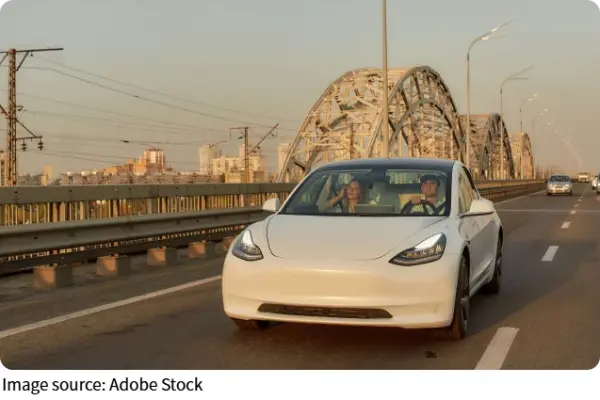
Every action on the road has a consequence. A good driver does not simply notice what is happening; they also think about what might happen next. For example, imagine a vehicle suddenly moves into another lane while another car is approaching from behind in that lane. Several things could happen. The approaching vehicle may slow down quickly or steer away to avoid a collision.
Either situation can create confusion for everyone nearby, including us. As soon as we notice this unusual movement, we should consider the possible outcomes and create more space around ourselves. We can reduce speed and let the situation develop ahead of us, or safely move away from the area if conditions allow. Creating distance is one of the simplest ways to reduce risk during unexpected situations.
Keep Watching the Whole Environment
Many people focus only on the vehicle directly in front of them. Experienced drivers do something different. They constantly pay attention to everything around them.
This means checking the distance from the vehicle behind, observing neighboring lanes, and looking farther down the road instead of staring only at the nearest car. Suppose traffic ahead begins slowing because of congestion. If we notice this early, we can gently reduce speed instead of braking sharply at the last moment. A smooth slowdown gives the driver behind us more time to react as well.
Another example is noticing a vehicle drifting toward the lane marking. Even before it changes lanes, we already know that it might move into our path. We can adjust our speed slightly and create more space. This habit of scanning the entire environment makes driving feel calmer because fewer situations catch us by surprise.
Focus on the Small Chance of Danger
Sometimes a situation appears safe, but there is still a small possibility of trouble. Imagine we want to pass two large trucks traveling closely together. Most of the time, everything will go smoothly. However, there is still a chance that the rear truck may decide to move out and pass the vehicle in front.
Instead of focusing only on the likely safe outcome, experienced drivers pay attention to the less likely possibility.
A better approach is to keep a safe distance and observe for a few moments. If the situation remains stable, we can signal our intention clearly and make sure the other drivers have enough time to notice us. Taking a few extra seconds to confirm the situation can greatly increase our confidence and make the maneuver much smoother.
Building Prediction Skills Takes Practice
Accurate prediction is not a special talent that only a few people possess. It comes from observation, patience, and the habit of thinking one step ahead.
When we notice unusual actions, think about possible results, watch the entire environment, and pay attention to small risks, our awareness gradually becomes stronger. The more we practice these habits, the easier it becomes to understand the flow of traffic and respond naturally to changing situations.
Final Thoughts for Lykkers
Driving is not only about controlling a vehicle. It is also about understanding what is happening around us and preparing for what may happen next. The drivers who seem calm and confident on the road usually have one thing in common: they are always observing and thinking ahead.
Lykkers, which of these four skills do you already use during your daily trips? Perhaps the next time you get behind the wheel, you can try practicing one of them and see how much more relaxed your journey feels. Safe travels, and enjoy every mile ahead!
5 Defensive Driving Strategies To Be A Safer, Smarter Driver
Video by Smart Drive Test