Snow Safe Skills

Mariana Silva
| 10-07-2026
 · Travel team
When we step onto a snowy slope, we all dream of smooth turns, fresh mountain air, and the exciting feeling of moving across the snow. However, for beginners, falling is also a natural part of learning.
Instead of feeling nervous about losing balance, we can learn how to handle a fall in a safer way. With the right skills, we can enjoy skiing with more confidence and turn small mistakes into valuable experience.
Understanding Why We Lose Balance While Skiing
Before we learn how to reduce the impact of a fall, we need to understand why falls happen. When we ski, our balance depends on speed, body position, snow conditions, and control of our equipment. If we move too quickly, our center of balance may shift and make it harder to guide the skis.
A sudden change in the slope, an unexpected turn, or an incorrect stopping movement can also affect our stability. For example, when we lean too far backward on a steep area, our skis may continue moving while our upper body struggles to follow. Learning these common situations helps us prepare better and improve our control before problems appear.
Skill One: Choosing a Controlled Fall
When we feel that balance is becoming difficult to maintain, trying too hard to stay upright can sometimes create a stronger impact. A controlled fall can be a smart choice because it allows us to decide how we move toward the snow.
When falling, we can try to land toward the side instead of falling straight forward or backward. The side area of the lower body can help create a softer landing. At the same time, we can keep our arms close to the chest instead of reaching out suddenly toward the ground. This helps reduce pressure on the hands and arms.
A controlled fall is not a sign of failure. It is a useful skiing skill that helps us stay calm, protect ourselves, and return to the slope more comfortably.
Skill Two: Lowering Our Center of Balance
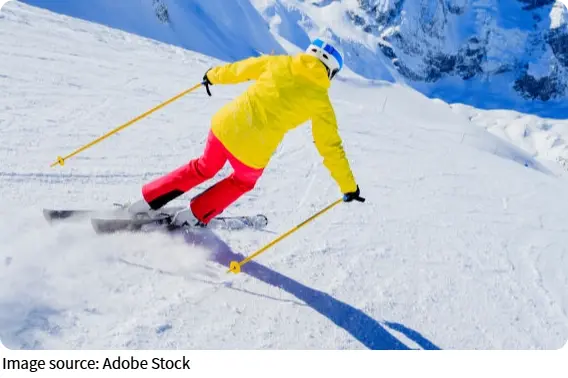
One of the easiest ways we can improve stability is by keeping a lower and more balanced position while skiing. A good skiing posture includes slightly bent knees, a relaxed upper body, and a gentle forward position.
When we lower our center of balance, our skis can stay closer to the snow surface, making turns smoother and movements easier to control. This position also gives us more time to react when the snow changes or when another skier appears nearby.
For beginners, this simple adjustment can create a big improvement. Instead of standing too straight, we can imagine that we are staying flexible and ready to move in different directions.
Skill Three: Using Ski Poles for Better Control
Ski poles are not only tools for pushing forward. They can also help us maintain balance and improve rhythm during skiing. When we hold the poles correctly, our arms should stay relaxed and naturally bent.
During a turn or a stopping movement, a gentle pole touch can help guide our timing and position. For example, before making a turn, using the pole as a small movement signal can help us organize our actions and keep our balance.
We should avoid depending completely on the poles for support. Instead, we can use them together with proper posture and leg control. When all movements work together, skiing becomes smoother and more enjoyable.
Skill Four: Rolling to Reduce Impact
Sometimes a fall happens quickly, especially when we are learning new movements. If the landing feels strong, rolling can help spread the impact instead of allowing one area to receive all the pressure.
When we begin to fall, we can try to relax the body, bring the chin slightly down, and move naturally with the direction of the fall. A gentle side roll can help the body adjust to the snow surface.
The key idea is to avoid becoming completely stiff. A relaxed movement allows the body to adapt better. With practice, we can become more comfortable handling unexpected moments on the slope.
Skill Five: Wearing Suitable Safety Equipment
Good equipment adds another layer of support during our skiing journey. A properly fitted helmet helps protect the head area, while wrist supports, elbow supports, and knee supports can provide extra protection for important joints.
When choosing safety equipment, we should focus on comfort, correct size, and good quality. Equipment that fits well allows us to move freely while providing support when needed.
Wearing protective gear does not replace learning proper skills, but it can give us more confidence as we practice. With the right preparation, we can focus more on enjoying the beauty of the snowy landscape.
Daily Practice Builds Stronger Skiing Ability
Improving skiing skills does not only happen on the mountain. Before the winter season begins, we can prepare through simple exercises that improve balance, strength, and flexibility.
Exercises that train the middle area of the body can help us control our position while moving. Balance practice can improve our ability to adjust quickly, and stretching routines can help our movements feel more natural.
Regular practice allows us to build better coordination over time. When we return to the slopes, we may feel more prepared because our body already understands how to react.
Enjoying Winter Adventures with More Confidence
Skiing is a sport filled with excitement, learning, and discovery. Falling can happen to beginners and experienced skiers alike, but knowing how to respond can make every experience better.
Lykkers, the next time we visit a snowy mountain, we can remember these five ideas: choose a controlled fall, keep a balanced posture, use ski poles wisely, learn safe rolling movements, and prepare with suitable equipment. Each small improvement brings us closer to smoother and more enjoyable skiing.
Have you ever experienced a memorable moment while learning a winter sport? Share your story with us and let’s continue exploring the joy of snow together.