How Supercars Perform

Darius
| 09-07-2026
 · Automobile team
Readers, have you ever wondered why a 700-horsepower supercar can effortlessly carve through corners while another powerful vehicle struggles to keep pace? The answer isn't simply a bigger engine.
Every modern supercar is the result of thousands of engineering decisions that carefully balance weight, aerodynamics, grip, chassis design, and power delivery.
True performance is created when all of these elements work together. Let's explore the science that allows today's fastest road cars to accelerate, brake, and corner with astonishing precision.
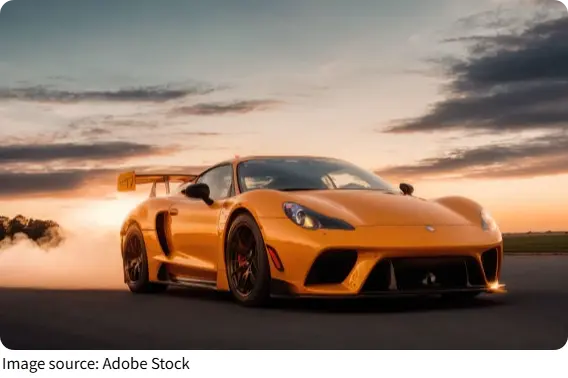
Speed is About More Than Horsepower
Horsepower has become the headline number for every performance car, but it does not determine speed on its own. If raw engine output were the only factor, massive cargo ships and heavy-duty trucks would rival exotic sports cars. Some marine diesel engines produce well over 100,000 horsepower, yet they move enormous vessels at relatively modest speeds because they must push millions of kilograms through water.
The same principle applies to land. Every kilogram added to a vehicle requires additional energy to accelerate, slow down, and change direction. A lighter car demands less effort from the engine, allowing it to reach higher speeds more quickly while also improving braking and cornering.
This explains why engineers often focus just as much on reducing mass as on increasing power. Rather than relying solely on larger engines, manufacturers carefully remove unnecessary weight wherever possible. Carbon-fiber body panels, aluminum suspension components, magnesium wheels, titanium exhaust systems, and lightweight interior materials all contribute to significant performance gains without increasing engine size.
Every Kilogram Has a Purpose
Weight reduction is only half of the equation. Where that weight is positioned inside the car has an equally important impact on performance. Modern supercars are designed with an extremely low center of gravity. Heavy components such as the engine, transmission, battery packs, and fuel tank are mounted as close to the road as possible. This lowers body movement during acceleration, braking, and cornering.
A lower center of gravity minimizes weight transfer, helping all four tires maintain consistent contact with the road surface. The result is sharper steering response, greater stability, and improved confidence at high speeds. Engine placement plays a critical role as well.
Most modern supercars adopt a mid-engine layout, positioning the engine directly behind the driver but ahead of the rear axle. This arrangement creates a balanced distribution of weight between the front and rear wheels.
Balanced weight allows each tire to contribute more evenly during braking, turning, and acceleration. Drivers experience quicker turn-in, improved traction when exiting corners, and a more predictable handling character. By comparison, front-heavy vehicles naturally resist turning, while rear-heavy cars require greater driver skill to control when approaching the limits of grip.
Grip Determines Real Performance
Acceleration is only useful if the tires can transfer engine power onto the road. Without sufficient grip, excess horsepower simply becomes wheelspin. Modern supercars maximize traction through sophisticated tire technology. Performance tires feature softer rubber compounds that generate tremendous friction once they reach operating temperature.
Their wider contact patches spread the vehicle's load across a larger surface area, allowing more force to pass between tire and pavement.
The suspension also plays an essential role. Advanced adaptive dampers continuously adjust stiffness in milliseconds, keeping each wheel firmly planted over bumps and uneven surfaces. Independent suspension geometry ensures the tires maintain the correct angle during aggressive cornering, preserving grip even under extreme loads.
Aerodynamics: Invisible Downforce That Changes Everything
One of the biggest differences between an ordinary sports car and a modern supercar is how they interact with the surrounding air. At highway speeds, aerodynamic forces become increasingly significant. Engineers shape the body to control airflow instead of simply allowing air to pass around the vehicle.
Front splitters redirect airflow to reduce lift over the front axle, increasing steering precision. Side skirts limit turbulent air from entering beneath the car, preserving airflow stability. Large rear diffusers accelerate air exiting underneath the vehicle, creating low-pressure zones that effectively pull the car closer to the road.
Many high-performance models also feature active rear wings that automatically adjust their angle according to speed and driving conditions. During hard acceleration or cornering, these wings increase downforce for maximum grip. Under braking, some function as air brakes, generating additional drag that shortens stopping distances. Unlike added weight, aerodynamic downforce increases tire grip without permanently increasing vehicle mass.
Chassis Rigidity Gives Drivers More Precision
Even the most powerful engine cannot compensate for a flexible chassis. Modern supercars rely on exceptionally rigid structures, often built around carbon-fiber monocoques or advanced aluminum space frames. These platforms resist twisting forces generated during hard cornering and heavy braking.
A stiff chassis allows the suspension to perform exactly as engineers intended because less energy is wasted through structural flex. Steering inputs become more immediate, suspension geometry remains consistent, and drivers receive clearer feedback through the steering wheel. The result is a vehicle that feels precise, predictable, and remarkably composed even at speeds exceeding 300 km/h.

The next time you see a supercar launch off the line or glide effortlessly through a high-speed corner, remember that its performance is not defined by horsepower alone. Which aspect of supercar engineering fascinates you the most? Share your thoughts and discover how modern engineering continues to push the limits of what road cars can achieve.