Frozen or Fresh?

Antonio
| 21-07-2026
 · Cate team
Hi, Readers! Standing in front of the freezer aisle, it is so easy to wonder whether those neatly packed fruits and vegetables are somehow less nourishing than the fresh ones in the produce section.
It is a common worry, and honestly, a very understandable one. Fresh often feels like the better choice, but the real story is a little more comforting.
Frozen produce can be a very nutritious option, and in some cases, it may even hold onto nutrients better than fresh items that have spent time being transported, stored, and displayed before reaching your kitchen.
How freezing affects nutrients
Freezing itself does not remove minerals, fiber, or carbohydrates from fruits and vegetables. These parts stay quite stable during the freezing process. What can change more easily are certain vitamins, especially vitamin C and some B vitamins, because they are more sensitive to heat and processing. Before many vegetables are frozen, they are briefly heated in a step called blanching. This helps preserve color, texture, and quality, but it can also lead to some loss of these water-soluble vitamins. Even so, once the produce is frozen, nutrient levels tend to remain fairly steady during storage.
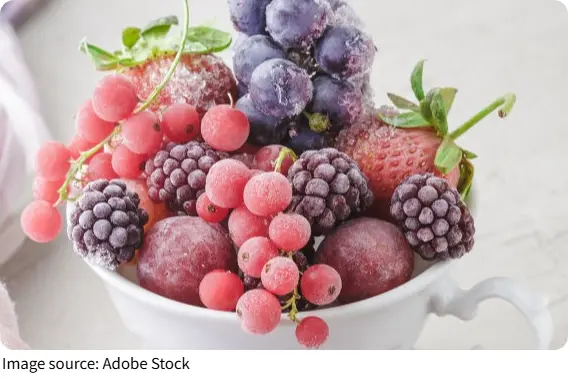
Why fresh is not always fresher
Fresh produce starts losing nutrients soon after harvest. During transport and storage, vitamin content can gradually decline, especially if the food travels long distances or sits for several days before being eaten. That means the “fresh” fruits and vegetables at the store may not actually be at their nutritional peak. Frozen produce, on the other hand, is usually picked when ripe and frozen soon afterward. Because of that, it can preserve a strong nutrient profile from the start. This is one reason frozen options can compare very well with fresh ones.
What studies have found
Research comparing fresh and frozen fruits and vegetables shows that differences in nutrition are often small. In many cases, frozen produce is similar to fresh in vitamins, minerals, and fiber. Some studies even found that frozen fruits and vegetables contained more of certain nutrients than fresh samples that had been stored in the refrigerator for several days. The biggest differences tend to depend on the type of produce, how it was handled after harvest, and how long the fresh version sat before being used.
According to Harvard T.H. Chan School of Public Health, both fresh and frozen fruits and vegetables can be nutritious choices, and eating a variety of fruits and vegetables regularly is more important than choosing one form over another.
Texture and taste matter too
Of course, nutrition is not the only thing people care about. Freezing can change texture, especially in produce with high water content. After thawing, some fruits and vegetables may become softer, which may not be ideal for every dish. Still, they work beautifully in soups, smoothies, stir-fries, sauces, and baked dishes. Frozen produce is also convenient, often more affordable, and available year-round, which can make it much easier to include more plant foods in everyday meals.
How to get the most from frozen produce
If you buy frozen fruits and vegetables, it helps to check the package and choose options without added sugar, heavy sauces, or extra salt. Keep them frozen until you are ready to use them, and cook them with as little water and heat as practical to help protect delicate vitamins. For fresh produce, using it soon after purchase is one of the best ways to retain nutrients. In the end, both fresh and frozen fruits and vegetables can support a healthy eating pattern, and choosing either is far better than skipping them altogether.
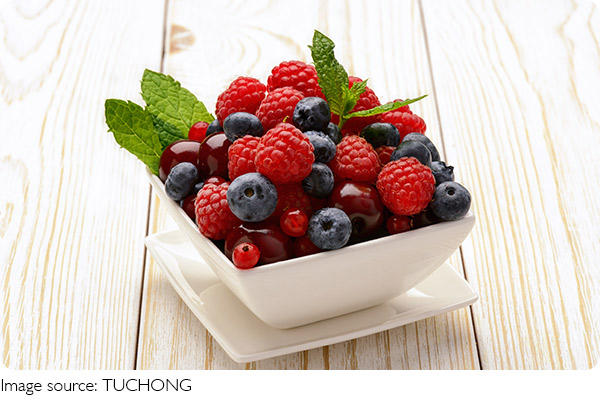
So, do frozen fruits and vegetables lose nutrients? Yes, a little, especially during processing steps like blanching, but not in a way that makes them a poor choice. The reassuring truth is that frozen produce can still be packed with nourishment and may sometimes be even better than fresh produce that has been sitting around too long. If frozen options help you eat more fruits and vegetables with less stress, that is a lovely and practical choice to feel good about.